
Best Ways to Remove Paintball Stains After a Game
A practical, cost-saving playbook for paintball field operators — clean faster, spend less, protect your rental inventory.
For a paintball field owner, stain removal is not a minor housekeeping detail — it is a direct operating cost. Every hour your staff spends scrubbing rental jerseys, masks, and vests is an hour not spent serving the next group. Every garment that gets stained beyond recovery is inventory you must replace. And every customer who walks away with a ruined shirt is a potential one-star review. Understanding the science behind paintball stain removal — and acting on it systematically — is one of the highest-return operational habits a field can develop.
This guide cuts through the noise and gives you what you actually need: proven removal methods sorted by stain type, fabric-specific advice, and a daily protocol that keeps your cleaning costs as low as possible.
Why Paintball Stains Behave Differently
Not all paintball stains are the same — and treating them as if they were is the most common and costly mistake field operators make. The behavior of a stain depends almost entirely on what’s inside the paintball: the fill material.
✅ PEG-Based Fill
- Water-soluble — rinses off most surfaces with plain water
- No detergent needed if cleaned promptly
- Food-grade dyes — generally wash out of fabrics
- Titanium dioxide residue may show on dark fabrics
- Neon pigments can linger in natural fibers if dried
- Long contact may cause fading on some textiles
⚠️ Oil-Based Fill
- Not water-soluble — detergent required every time
- Vegetable oil sets into fabric fibers quickly
- Creates greasy residue that attracts more dirt
- Untreated oil fill grows mold within 24–48 hours
- Leaves odor on gear if not fully removed
- Cheaper ball, far higher cleaning cost overall
💡 Operator Insight
The type of paintball you stock is the biggest variable in your stain removal workload. Industry data confirms that PEG-based paintballs are significantly easier to clean from gear and clothing than oil-fill or starch-fill alternatives. Switching paint suppliers can reduce your post-game laundry time by 30–50%.
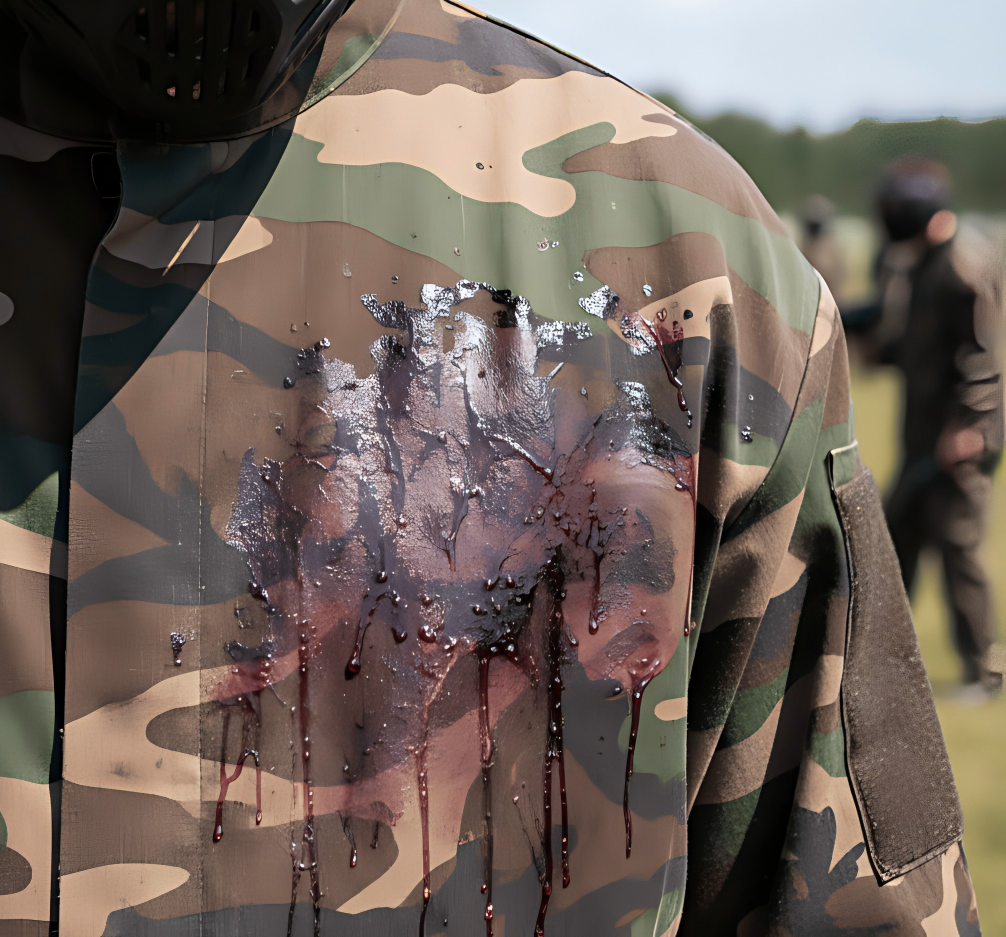
The Golden Rule: Time Is Everything
A fresh paintball stain takes 30 seconds to rinse. A dried one takes 30 minutes to treat.
The single most effective stain removal strategy costs nothing: act immediately. Paint fill begins bonding with fabric fibers within minutes of contact — especially on natural materials like cotton and linen. Once it dries completely, the dye pigments and titanium dioxide carrier lock into the fiber structure, making removal significantly harder and sometimes impossible without aggressive treatment that risks damaging the garment.
For field operators, this means building a same-session rinse station into your workflow — not waiting until end of day to deal with rental clothing. A simple cold-water hose or rinse trough positioned near your gear return point can prevent 80% of serious staining before it starts.
⚠️ Never Use Hot Water First
Heat sets paint stains permanently into fabric fibers. Always start with cold water for rinsing, regardless of fill type. Hot water can be introduced later for deep cleaning once the bulk of the paint has been flushed out.
Step-by-Step: How to Remove Paintball Stains from Rental Clothing
Follow this protocol for every rental jersey, vest, or garment after each session. It is designed for speed and efficiency — not for one-off home use, but for high-volume field operations.
Scrape — Don’t Rub
Use a dull plastic scraper, spatula, or the back of a spoon to lift excess wet fill off the fabric surface. Work from the outside of the stain inward to avoid spreading it. Rubbing at this stage pushes pigment deeper into fibers.
Cold Water Flush
Hold the stained area under cold running water from behind the fabric — this flushes paint outward through the fibers rather than pushing it further in. Rinse until the water runs mostly clear. For PEG-based fill, this step alone often removes 90% of the stain.
Pre-treat with Liquid Detergent or Dish Soap
Apply a small amount of liquid laundry detergent or dish soap directly to the stained area. Work it gently into the fabric with a soft-bristle brush or your fingers. Let it sit for 5–10 minutes. For oil-based fill, this step is mandatory — oil will not release without a surfactant.
Machine Wash — Cold, Gentle Cycle
Place garments in the washer on a cold, gentle cycle with standard laundry detergent. Cold water protects both the fabric and prevents any remaining pigment from setting. Wash rental garments separately from other items to avoid cross-contamination.
Inspect Before Drying — Always
Check every garment before placing it in the dryer. Heat permanently sets any remaining stain. If a mark is still visible, repeat the pre-treatment and wash cycle. Air dry if in any doubt.
For Stubborn Stains: Soak Overnight
Dissolve ½ teaspoon of dish soap and 1 tablespoon of white vinegar in 1 quart of cold water. Soak the garment for up to 8 hours, then re-wash. An ammonia-based soak (1 tbsp ammonia + 1 tsp dish soap + 1 cup warm water, 30 minutes) works well for neon pigment stains that persist after the first wash.
💡 Field Efficiency Tip
Set up a designated wet gear bin at your equipment return station. Staff drop rinsed rental garments directly into the bin after each group session. This keeps damp, pre-treated gear separated from dry inventory and prevents dried-in stains from forming between sessions.
Fabric Matters: Know Your Rental Gear Materials
The fabric composition of your rental clothing determines how aggressively you need to treat stains — and how likely a garment is to be permanently damaged. Understanding this helps you make smarter purchasing decisions when restocking inventory.
| Fabric Type | Stain Resistance | Cleaning Method | Field Recommendation |
|---|---|---|---|
| Polyester | Excellent | Cold rinse + normal wash | Best choice for rental gear |
| Nylon | Very Good | Cold rinse + normal wash | Recommended for vests & padding |
| Polyester / Cotton Blend | Moderate | Pre-treat + cold wash | Acceptable — treat promptly |
| 100% Cotton | Poor | Pre-treat + soak if needed | Avoid for rental inventory |
| Dark / Black Fabric | Moderate | Cold rinse — check for titanium dioxide white residue | Rinse immediately; white residue may persist |
| Light / White Fabric | Very Poor | Pre-treat immediately; neon pigments can be permanent | Not suitable for rental use |
The key takeaway for field owners: invest in dark-colored, synthetic-blend rental gear. Dark earth tones and synthetic fabrics provide the best combination of stain resistance, camouflage during gameplay, and longevity under repeated washing cycles.
Cleaning Paintball Masks, Markers & Hard Gear
Rental clothing is only part of the picture. Your paintball masks, markers, and protective equipment also accumulate fill residue after every session — and if left untreated, that residue costs you in replacement parts, mold growth, and equipment failure.
Paintball Masks
- Wipe down the frame with a damp microfiber cloth immediately after use.
- Use a soft microfiber cloth on lenses only — never paper towels or rough fabric, which cause micro-scratches that impair visibility.
- A diluted dish soap solution works for heavy fill residue on the frame. Rinse well and air dry completely before storage.
- Inspect the foam gasket around the lens for fill absorption — foam that has absorbed oil-based fill should be replaced, as it will develop odor.
Paintball Markers (Rental Guns)
- Run a barrel squeegee through the barrel after every game to clear internal fill residue and shell fragments.
- Wipe down all external surfaces with a damp cloth — never submerge the marker body.
- Use a cotton swab to clean around the feed neck and breach area where fill accumulates.
- At end of day: disassemble and inspect O-rings — PEG fill left on rubber O-rings degrades them over time.
Protective Vests & Padding
- Rinse padded vests with cold water after each session.
- Remove insertable foam pads and hand-wash separately with mild soap — foam retains fill and moisture and must dry fully before re-insertion.
- Never machine dry padding — heat degrades foam and foam adhesives.
The Fill Type That Changes Everything
No cleaning protocol, no matter how efficient, can fully compensate for a poor paintball choice. Oil-based fill cannot be removed with water alone — it requires detergent every time, on every surface, on every piece of gear. Left overnight, it develops mold and odor that is extremely difficult to eliminate from porous materials like foam padding and fabric.
PEG-based fill, by contrast, is water-soluble by nature. A timely cold water rinse — before the fill dries — is often all that is needed on hard surfaces and synthetic fabrics. This is not a minor difference: it is the difference between a 2-minute rinse and a 20-minute scrubbing session, multiplied across every piece of gear, every session, every day of operation.
💰 Cost Impact for Field Operators
According to field business cost analyses, cleaning and sanitation can account for 5–10% of a paintball field’s annual operating budget. Switching from oil-based to quality PEG-based paintballs, combined with a prompt rinse protocol, is one of the few operational changes that simultaneously reduces cleaning labor, extends gear lifespan, and improves the customer experience — with zero additional cost.
Daily Stain Management Protocol for Field Operators
Consistency beats intensity. A simple daily routine prevents stains from becoming permanent — and prevents your cleaning costs from quietly compounding over months of operation.
During Each Group Session
- Position a cold-water rinse station at the equipment return point.
- Have staff perform a quick wipe of masks and hard gear between groups.
- Drop rental garments into a cold-water soak bin immediately after return.
End of Each Day
- Machine wash all rental clothing — cold cycle, mild detergent.
- Inspect every garment before drying; re-treat any remaining stains.
- Air dry padding and foam components completely before storage.
- Wipe down all field bunkers and barricades with a damp cloth while fill is still moist.
- Run a squeegee through all rental marker barrels and apply a light coat of marker lubricating oil to O-rings and bolt components.
Weekly
- Deep-clean masks using a mild soap solution and microfiber cloth.
- Inspect rental garments for wear, permanent staining, or damage — retire and replace as needed.
- Assess foam padding for fill absorption and odor; replace foam inserts showing mold or persistent odor.
- Evaluate paintball supply quality — if fill residue is increasingly difficult to remove, investigate whether your supplier’s fill formulation has changed.
✅ Key Takeaways for Field Operators
Act within minutes — not hours. Always use cold water first, never hot. Choose dark synthetic fabrics for rental inventory; avoid cotton and light colors. Pre-treat with liquid dish soap or detergent before machine washing. Inspect before drying — heat permanently sets stains. Use PEG-based paintballs: they reduce your cleaning workload more than any product or protocol ever will. Build a rinse station into your post-game gear return workflow — it costs almost nothing and saves significant labor daily.