
Are Paintballs Easy
to Wash Off?
What every paintball field operator must know about paintball fill, cleaning costs, and choosing the right paintballs to protect their business.
If you run a paintball field, you’ve probably asked yourself: are paintballs easy to wash off? The short answer is — it depends entirely on the type of paintball you use. And the difference between the wrong choice and the right one could be quietly draining your profits, shortening the lifespan of your equipment, and driving away repeat customers.
Most field owners come to paintball from a recreational background, not an industrial one. Understanding what’s actually inside a paintball — and how that fill behaves on different surfaces — is one of the most overlooked operational decisions in the industry. This guide breaks it all down so you can make smarter purchasing decisions, streamline your post-game cleanup, and reduce long-term operating costs.
What Is Paintball Fill, and Why Does It Matter?
A paintball is a gelatin capsule containing a colored fill material. The fill composition directly affects how easy the paint is to clean, how long it lasts on surfaces, and whether it damages your gear over time — a fact confirmed by paintball manufacturers and field professionals alike.
There are two primary types of fill used in commercial paintballs:
- PEG-based fill — uses Polyethylene Glycol (PEG), food-grade dyes, and water-soluble ingredients. This is the gold standard.
- Oil-based fill — uses vegetable or mineral oils to reduce manufacturing cost. This is a false economy for field operators.
- Hybrid fill — some manufacturers mix PEG and oil, then market the product as “PEG paintballs.” This is a hidden risk.
💡 Key Insight
The fill composition is the single most important factor influencing your daily cleanup time, equipment lifespan, and facility maintenance costs — yet most field owners never research it.
PEG-Based Paintballs: The Field Owner’s Best Friend
PEG (Polyethylene Glycol) is a water-soluble compound widely used in cosmetics, pharmaceuticals, and food products. As the base ingredient in premium paintball fill, it gives quality paintballs their hallmark washability: in most cases, a plain water rinse is all you need immediately after a session.
For field operators, this translates directly into faster equipment turnaround between groups. Rental gear — markers, hoppers, masks, and protective padding — can be rinsed and dried quickly when PEG fill is used, allowing you to receive the next group without delay. This throughput advantage is real money.
But “Easy to Wash” Has Important Limits
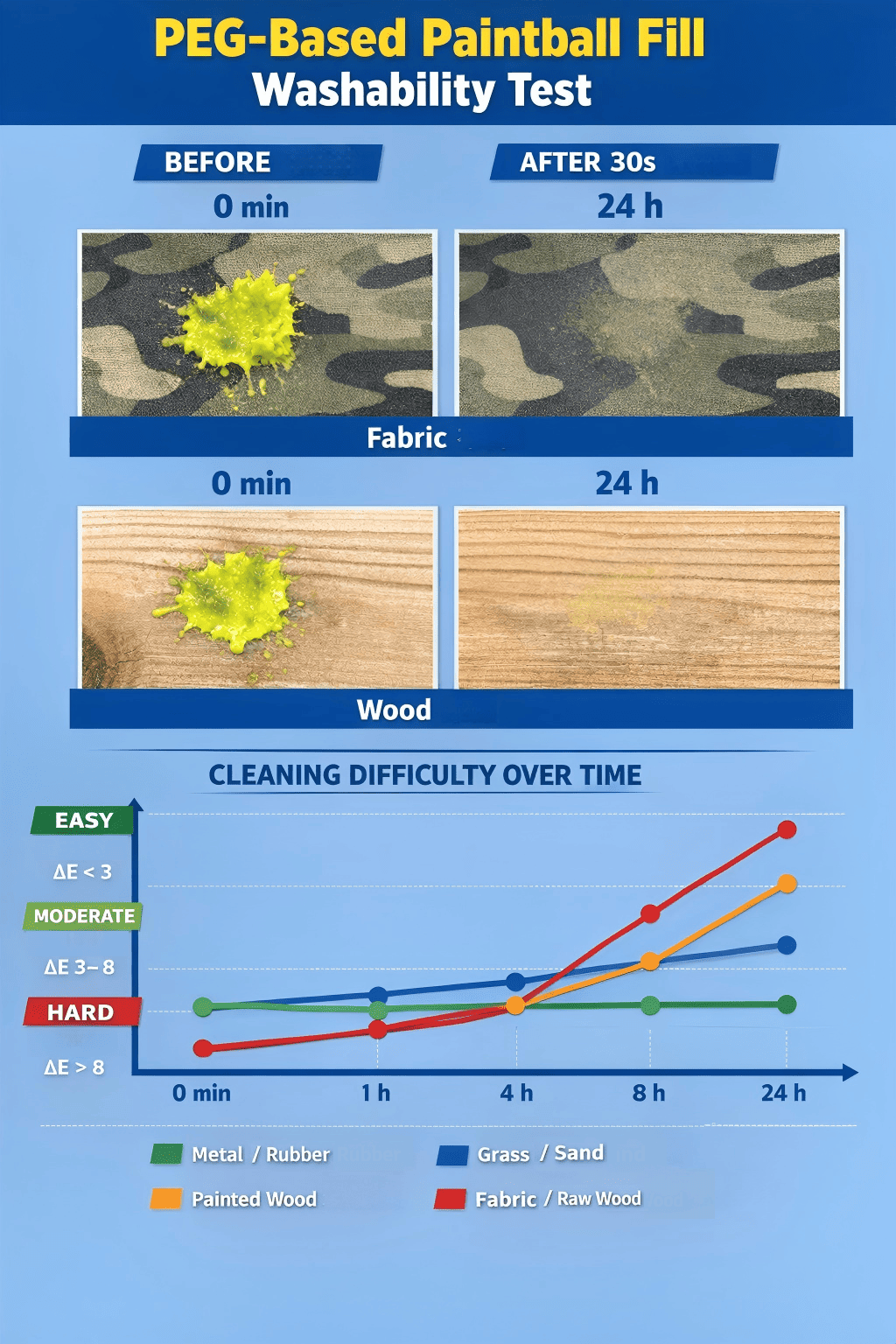
While PEG itself is water-soluble, the other components in paintball fill — primarily titanium dioxide (the white pigment carrier) and color dyes — behave differently depending on the surface material and how quickly you clean up. Here’s what field operators need to know:
Hard Plastic & Metal
Rinse with water immediately after play. PEG fill wipes clean with no detergent needed if addressed promptly.
Synthetic Fabrics
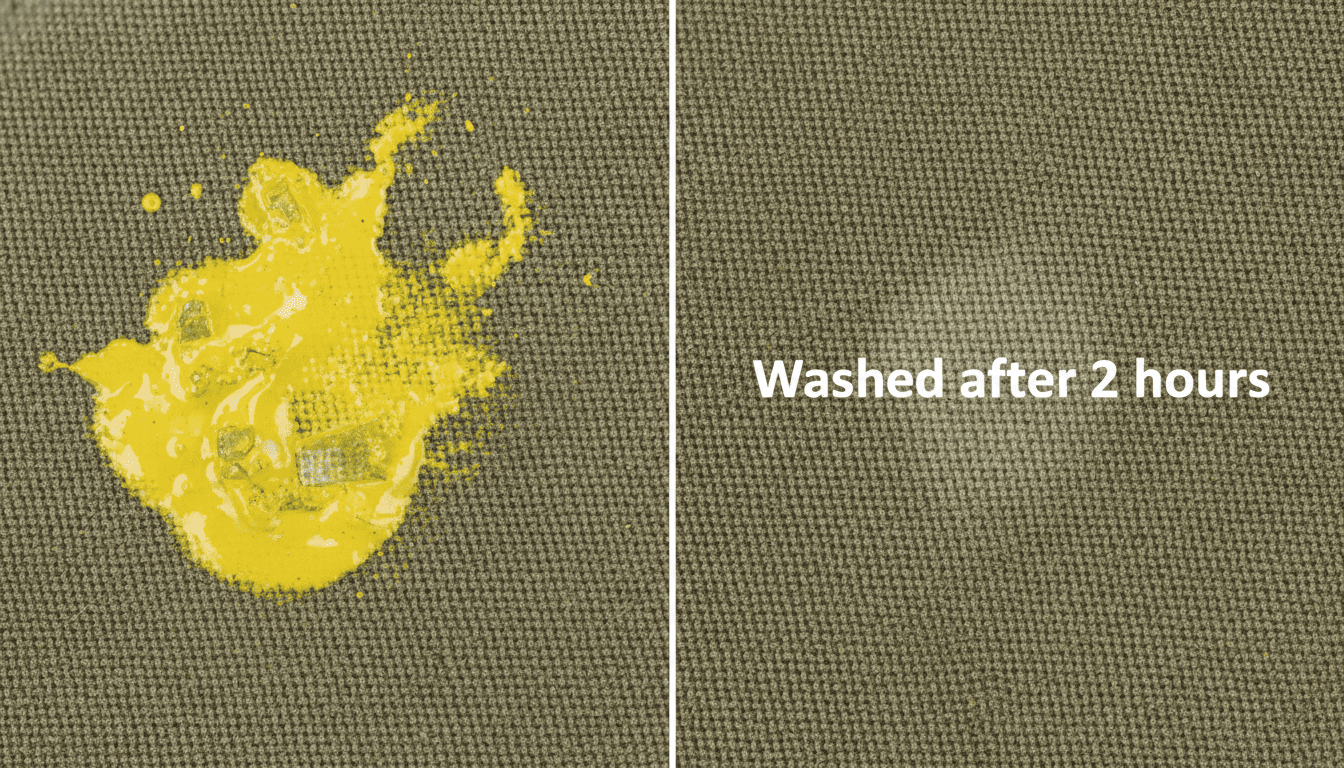
Polyester and nylon gear rinse well. Machine wash in cold water after play for a complete clean.
Cotton & Natural Fiber
Absorbs dye faster. Act immediately — rinse with cold water before laundering to prevent setting.
Wood Surfaces
Porous materials absorb pigment quickly. Wipe down with a damp cloth right after each game to prevent staining.
Rubber & Foam
Long-term PEG contact can cause color transfer and surface degradation on rubber soles, padding, and seals. Rinse promptly and dry thoroughly.
Dried-On Surfaces
Any fill left to dry becomes significantly harder to remove. End-of-day cleanup is not optional — it’s investment protection.
⚠️ Field Owner Alert: The Rubber Problem
PEG fill left in contact with rubber over extended periods can cause color change and surface degradation through ion exchange reactions. This affects rental shoe soles, marker O-rings, and protective padding. Regular rinsing after every session is non-negotiable — not just for cleanliness, but to extend the life of your rental inventory.
Oil-Based Paintballs: The Hidden Cost of “Cheap” Paint
Oil-based paintballs exist for one reason: to reduce the manufacturer’s cost. Vegetable oil is cheaper than PEG, and that saving gets passed along in the purchase price. For a field buying paint in volume, the per-unit cost difference looks attractive — until you factor in everything downstream.
The cheapest paintball you buy today may be the most expensive operational decision you make this year.
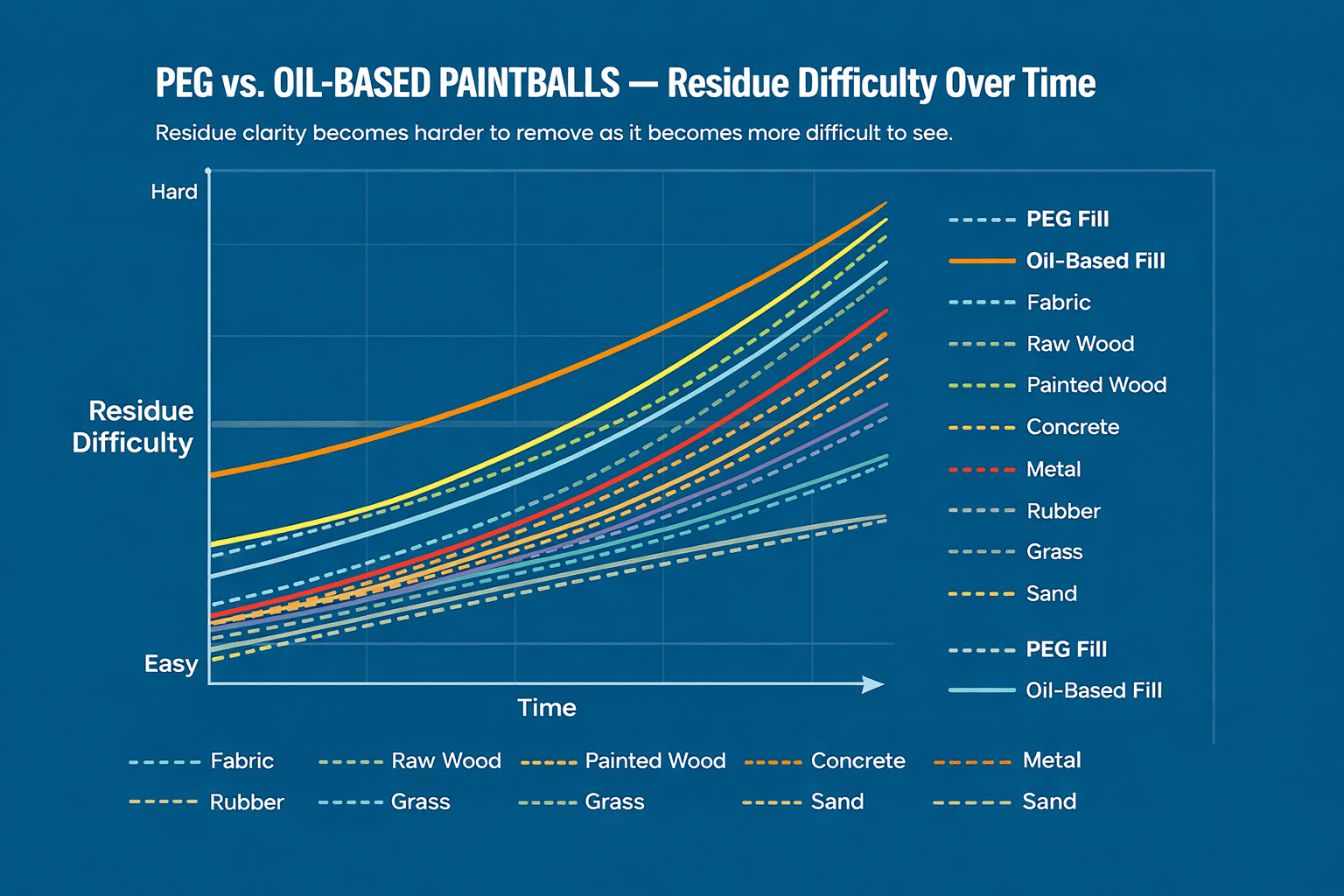
Unlike PEG fill, oil-based fill is not water-soluble. Cleaning requires detergent every single time, on every surface. Left unaddressed after a day’s operation, oil fill residue on walls, barricades, netting, and flooring will begin to grow mold. Within days, your facility may develop black staining and foul odors — the kind that drive away customers and earn you one-star reviews.
Field testing and player experience confirm that oil-fill and starch-fill paintballs are significantly harder to clean off gear and clothing, and that they accelerate the breakdown of the gelatin shell — reducing shelf life and increasing the rate of broken paintballs during storage and play.
PEG vs. Oil: The Full Comparison for Field Operators
| Factor | PEG-Based Paintballs | Oil-Based Paintballs |
|---|---|---|
| Washability | Water rinse usually sufficient | Requires detergent every time |
| Cleanup time per session | Fast — quick rinse & wipe | Slow — scrub with soap required |
| Mold / odor risk | Very low if rinsed promptly | High — mold forms within days |
| Equipment lifespan impact | Minimal with regular rinsing | Accelerates wear on markers & gear |
| Staining on fabric | Washes out if treated quickly | Oils can set permanently in fabric |
| Environmental safety | Biodegradable & non-toxic | Less biodegradable; toxic to animals |
| Unit cost | Higher upfront | Lower upfront (false economy) |
| True operational cost | Lower overall | Higher overall |
The Hybrid Deception: “PEG Paintballs” That Aren’t
Here’s a risk many field operators don’t see coming. Some paintball manufacturers produce fill using a mixture of PEG and oil — then market the product as “PEG-based” or “water-soluble.” Patent literature in the industry confirms this practice has existed specifically as a cost-reduction strategy.
A hybrid fill product gives you the worst of both worlds: some water solubility, but with an oil component that resists cleaning, accelerates equipment degradation, and creates the same mold and odor problems as fully oil-based paintballs. The only reliable way to protect your operation is to:
- Request a full ingredient disclosure from your paintball supplier — not just the marketing description.
- Prioritize manufacturers with verifiable, 100% PEG fill formulations.
- Test a new product batch on your own surfaces before committing to bulk purchase.
- Build a long-term relationship with a trusted manufacturer whose quality control is consistent.
💡 Operator Strategy
Finding a reliable, high-quality paintball manufacturer and establishing a long-term supply relationship is one of the most valuable operational decisions you can make. Consistent fill quality means consistent cleanup time, consistent equipment performance, and consistent customer experience — all of which directly protect your margins.
A Field Owner’s Post-Game Cleaning Protocol
Even with premium PEG paintballs, a structured cleaning routine is what separates high-performing fields from costly ones. Here’s a practical protocol:
After Each Group Session
- Rinse rental markers and hoppers with warm water; wipe down barrels and external surfaces with a damp cloth.
- Rinse masks and protective vests — cold water first, then dry with a microfiber cloth.
- Spot-clean any rental clothing with cold water before placing in the laundry.
- Wipe down high-impact barricade surfaces while fill is still wet.
End of Business Day
- Full rinse of all field fixtures — barricades, bunkers, and flooring where fill has accumulated.
- Machine wash rental garments in cold water with mild detergent.
- Inspect rubber components (O-rings, padding edges, shoe soles) and dry thoroughly to prevent PEG-related surface degradation.
- Allow all equipment to dry completely before storage to prevent mold (critical if oil-based fill has ever been used on the premises).
- Disassemble and oil paintball markers per manufacturer specification.
⚠️ Never Let Fill Dry on Porous Surfaces
Dried paintball fill — even water-soluble PEG fill — bonds to porous materials like wood, concrete, and natural fiber fabrics. Once dry, dye pigments and titanium dioxide can leave permanent marks that require significantly more labor to address. End-of-day cleaning is investment protection, not just housekeeping.
The Bottom Line: Paintball Fill Is a Business Decision
The question “are paintballs easy to wash off?” is really a business question dressed in operational clothing. The answer is: yes, if you use quality PEG-based paintballs and maintain a disciplined cleaning routine. But the wrong paintball choice — whether fully oil-based or a deceptive hybrid — creates compounding costs that erode your profitability quietly over time.
Higher guest throughput, lower equipment replacement costs, cleaner facilities, and better paintball field reviews all flow from a single upstream decision: choosing a verified, 100% PEG-based paintball from a manufacturer you trust.
It’s worth paying slightly more per case for paint that saves you hours of labor, protects thousands of dollars of equipment, and ensures every customer walks away with a great experience — not mold stains on their clothes and the smell of rancid oil in their hair.
✅ Key Takeaways for Field Operators
Choose 100% PEG-based paintballs from a verified manufacturer. Rinse all surfaces and equipment with plain water immediately after each session. Treat cotton, wood, and rubber surfaces with extra care — these absorb fill fastest. Avoid oil-based fill entirely: the low unit price hides steep cleaning, maintenance, and reputational costs. Vet hybrid “PEG” products carefully — request full ingredient disclosure before committing to a supplier.
![cstar logo -[paintball]](https://cspaintballs.com/wp-content/uploads/2024/10/cropped-cropped-c-star-logo.webp)
 English
  Spanish