
How to Store Paintballs?
The complete science-backed guide for field operators, importers, and players — because bad storage quietly destroys good paint, and most people blame the wrong thing.
Paintball quality complaints are one of the most common friction points between buyers and suppliers. Flat spots. Balls sticking together. Inconsistent velocity. Barrel breaks that won’t stop. In the majority of cases, the root cause is not a manufacturing defect — it is improper storage. Understanding why paintballs are so sensitive to their environment, and what that means in practice for your field, warehouse, or personal stock, is the single most underrated operational skill in the industry.
(15–25°C)
(RH target)
(6 mo peak performance)
and direct sunlight
Why Paintballs Are So Sensitive: The Material Science
To understand why storage conditions matter so much, you need to understand what a paintball actually is at the material level. The shell — the outer casing that holds everything together and must break reliably on impact — is made of gelatin: a protein polymer derived from collagen, chemically identical to the material used in pharmaceutical capsules and confectionery. The fill inside is primarily Polyethylene Glycol (PEG), combined with food-grade dyes, sorbitol, and glycerin.
Both the shell and the fill have physical properties that make them profoundly responsive to temperature and humidity changes — and that responsiveness is not a design flaw. It is what makes paintballs biodegradable and environmentally safe. The same properties that allow gelatin to break down naturally in soil are the ones that make it absorb moisture from the air on your warehouse shelf.
Gelatin is a hygroscopic material — it readily absorbs water molecules from the surrounding environment. This is not a slow, gradual process. Research on seamless gelatin capsules (structurally analogous to paintball shells) shows that sorption reaches saturation within two hours of exposure to elevated humidity. At 85°F with 70% relative humidity, measurable quality degradation begins within 20–30 minutes of unprotected exposure.
When gelatin absorbs moisture: the polymer chains swell as water molecules insert between them, increasing the shell diameter. The shell softens as its glass transition temperature drops below ambient temperature. The structural integrity that produces clean impact breakage is lost — replaced by either rubbery deformation (too soft, bounces off targets) or premature failure (breaks inside the marker).
When gelatin loses moisture in dry conditions: the polymer chains contract, the shell becomes brittle, and what was a perfectly calibrated break threshold becomes a fragile structure that shatters in the barrel before reaching the target.
The PEG fill compounds this dynamic. PEG itself is water-soluble and hygroscopic — when the shell absorbs moisture and softens, the fill also begins drawing in additional water, further changing the ball’s weight, diameter, and internal pressure distribution. This is why a paintball that was perfectly round when it left the factory can become oval, dimpled, or sticky after a week in the wrong environment.
A paintball behaves like a living, breathing thing. It absorbs, releases, swells, and contracts in response to everything around it — and it will do all of this while sitting in your warehouse if you let it.
The Six Storage Enemies: What Destroys Paintballs
Excessive Heat
Heat DamageAbove 86°F (30°C), gelatin shells soften rapidly. Paintballs become squishy, lose roundness, and may deform under their own weight. They bounce off targets instead of breaking and cause barrel jams. Common in vehicles, shipping containers, outdoor storage sheds, and sun-exposed warehouses.
Excessive Cold
Cold DamageBelow 50°F (10°C), gelatin loses flexibility and becomes brittle. Paintballs break prematurely inside loaders, hoppers, and barrels — not on target. Players experience barrel breaks every few shots. Cold also causes the fill to contract, pulling away from the inner shell wall and creating internal voids.
High Humidity
Humidity DamageAbove 60% relative humidity, gelatin shells begin absorbing atmospheric moisture. Shells swell, causing balls to stick together and jam in the feedneck. Dimples form where swollen balls press against each other. The fill absorbs water, altering weight and diameter. Even air-conditioned rooms often run at 70–80% RH — not safe enough for open storage.
Low Humidity / Dry Air
DesiccationBelow 30% relative humidity, gelatin shells dessicate — they lose moisture and shrink. Paintballs become undersized relative to their rated caliber, fall below the bore threshold, and roll out of the barrel unfired. The shell becomes brittle and develops a white powdery surface film — a visible sign of degraded gelatin structure.
Prolonged Static Pressure
DeformationPaintballs stored in the same position for weeks develop flat spots (flat points) where they rest against each other or a hard surface. Gravity concentrates weight along contact points, and the gelatin slowly deforms in response. Rotating stored bags every 2–3 weeks distributes contact pressure and prevents permanent shape deformation.
UV / Sunlight Exposure
UV DegradationUltraviolet radiation breaks down gelatin’s protein chain structure over time, weakening the shell from the outside in. Even indirect sunlight through a window accelerates shell degradation. UV exposure shortens usable shelf life by months, even when temperature and humidity are otherwise controlled. Always store in a dark location.
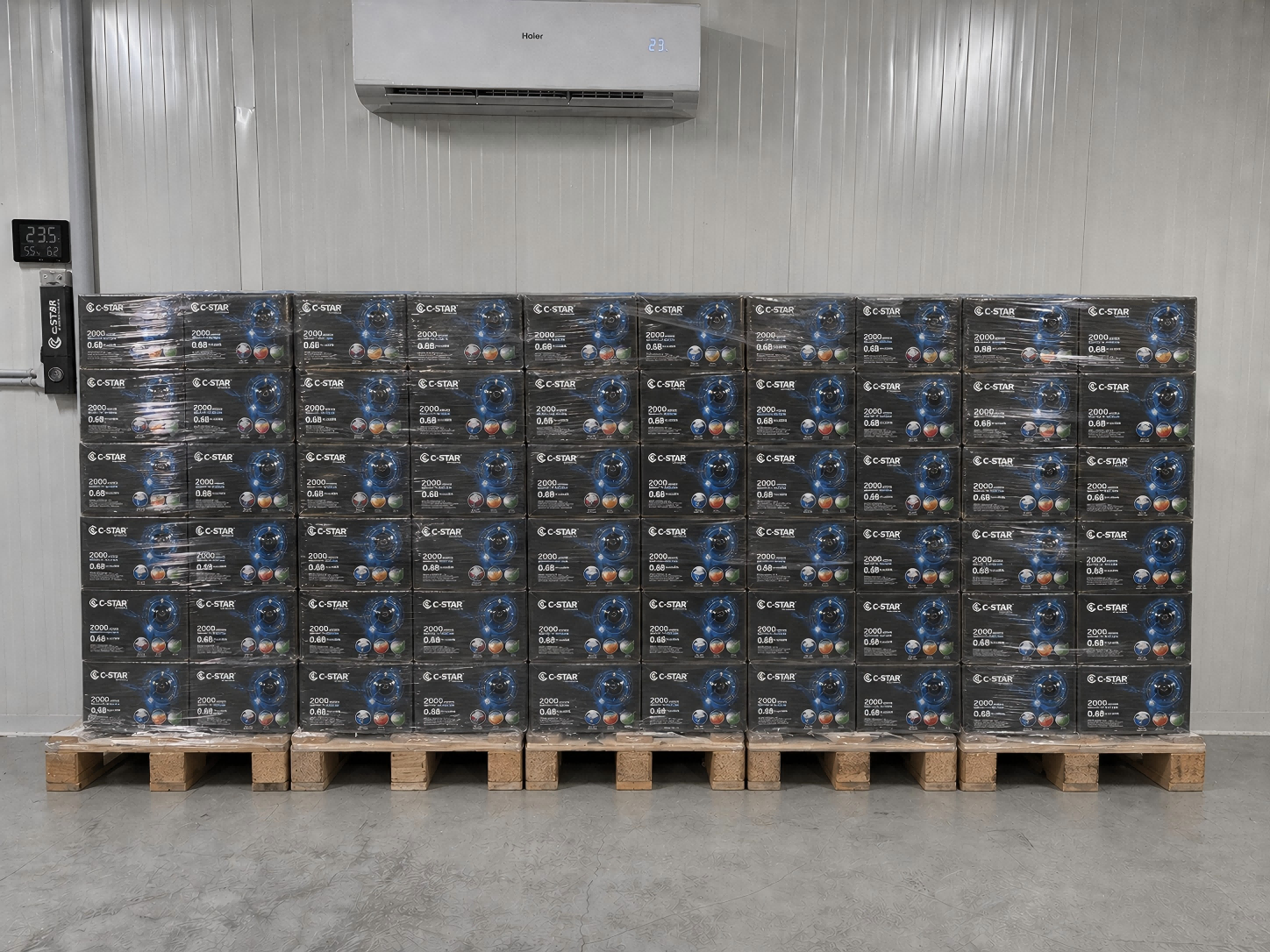
Storage Environment Reference: What Works and What Doesn’t
| Storage Location | Temperature | Humidity | UV Risk | Field Assessment |
|---|---|---|---|---|
| Climate-controlled interior room | Stable ✓ | Moderate ✓ | None ✓ | Best option |
| Dedicated storage room (HVAC) | Controlled ✓ | Monitor RH | Low ✓ | Excellent for bulk stock |
| Air-conditioned closet / shelf | Good ✓ | ~50–70% RH | Dark ✓ | Good — use sealed bags |
| Basement | Cool ✓ | Often 70–85% RH ✗ | Dark ✓ | Risky — monitor humidity |
| Garage | Extreme swings ✗ | Uncontrolled ✗ | Possible ✗ | Not suitable |
| Vehicle / car trunk | 130°F+ in summer ✗ | Swings ✗ | High ✗ | Unacceptable for storage |
| Outdoor shed | Extreme ✗ | Uncontrolled ✗ | High ✗ | Not suitable |
| Attic | 140°F+ in summer ✗ | Variable | Possible ✗ | Not suitable |
| Refrigerator (not freezer) | Cool & stable ✓ | Low & dry ✓ | None ✓ | Excellent short-term fix (max 60 min before playing) |
| Freezer | Too cold — ice formation ✗ | Ice crystals destroy shell ✗ | N/A | Never freeze paintballs |
| Shipping container (sea freight) | Uncontrolled ✗ | Often 80–100% RH ✗ | Low | High risk — use desiccants + insulation |
⚠️ Critical for Importers: Sea Freight Containers
Ocean shipping containers are among the most hostile environments for paintball storage. Container interiors regularly reach 130–160°F in tropical sun exposure, while humidity can spike to near-saturation as temperature cycles between day and night — a process called “container rain” where moisture condenses on the ceiling and drips onto cargo. For paintball shipments, insist on: sealed inner packaging with desiccant packets, foam or cardboard insulation to buffer temperature, climate-controlled container options for premium stock, and pre-agreed transit time limits with your freight forwarder. Any shipment exceeding 30 days without temperature control carries meaningful quality risk.
Diagnosing Storage Problems vs. Manufacturing Defects
This is the section that prevents the most supplier-buyer disputes. When paintballs perform badly, the first assumption is almost always that the manufacturer shipped defective product. In reality, the majority of field-level quality complaints — flat spots, sticking, barrel breaks, inconsistent velocity — trace back to storage and handling after the paintballs left the factory. Here is how to tell the difference:
Symptoms and Their Most Likely Root Cause
💡 The Diagnostic Question
Before contacting your supplier about a quality complaint, ask yourself: Were these paintballs stored in climate-controlled conditions between delivery and use? What were the transit conditions? How long were they in storage? If the honest answer involves a hot vehicle, an unconditioned warehouse, or more than 90 days at uncontrolled humidity — the problem is almost certainly storage, not manufacturing. The supplier’s product was correct when it left. The environment changed it.
The Correct Storage Protocol: Practical Steps
For receiving large shipments, the following protocol protects quality from delivery to use:
Receive and Inspect Immediately
As soon as a shipment arrives, inspect a sample from multiple boxes. Check roundness visually — good paintballs should be perfectly round with no dimples, flat spots, or seam irregularities. Feel shell hardness — firm but not brittle at room temperature. Any issues detected at this stage should be documented with photos and reported to the supplier before stock enters use. Issues detected weeks later are much harder to attribute to manufacturing.
Store in Climate-Controlled Space — Immediately
Move stock to your designated storage area on the day of arrival. Ideal conditions: 59–77°F (15–25°C) and 40–50% relative humidity. A spare interior room or HVAC-equipped storage space is preferred. Never leave bulk stock in a receiving area, loading dock, or outdoor storage overnight. Temperature exposure in transit adds to total exposure time — minimize further stress from the moment stock arrives.
Keep in Original Sealed Packaging Until Use
The factory-sealed inner bags are your primary moisture barrier. Do not open cases until they are needed for play. The sealed bag maintains a stable micro-environment around the paintballs regardless of ambient humidity fluctuations. Once opened, the clock starts running — use opened bags within 1–2 weeks, and reseal tightly after each session using the original twist tie or a zip-seal bag.
Elevate Off Concrete Floors
Concrete floors are temperature sinks — they are significantly cooler than ambient air in summer (causing condensation on packaging) and act as a cold radiator in winter. Store cases on wooden pallets, shelving units, or carpeted surfaces. Keeping paintballs off concrete prevents moisture migration through the base of the packaging.
Rotate Stock Every 2–3 Weeks
Gently turn or reposition cases every 2–3 weeks to redistribute internal contact points. This simple habit prevents flat spots from forming at the bottom of stacks where gravity concentrates pressure. For field operations storing multiple pallets, implement a first-in, first-out (FIFO) rotation system — older stock goes to the game floor first.
Label and Track Arrival Dates
Mark every case with its delivery date on arrival. Paintballs perform best within 6–9 months of manufacture; most manufacturers recommend use within 12 months of production. Without date tracking, older stock may remain in storage while newer shipments are deployed, unnecessarily aging the original inventory. FIFO discipline requires date awareness.
Control Humidity Actively for Large Volumes
For fields storing more than 50 cases, passive climate control is often insufficient. Add a humidity monitor (hygrometer) to your storage area and review it weekly. If humidity consistently exceeds 55%, deploy a dehumidifier. Adding silica gel desiccant packets inside case layers provides a secondary moisture buffer, particularly valuable for long-term inventory.
Field-Day Handling: Time-Limited Exposure
On game days, bring only the quantity of paintballs needed for each session from storage. Paintballs left in hoppers or open containers in summer heat degrade within 45–60 minutes of unprotected exposure. Refill loaders just before each session. Store the day’s remaining stock in a cooler bag between sessions. In high humidity, keep bags sealed until seconds before loading.
Shelf Life: How Long Do Paintballs Last?
Paintballs do expire — they are intentionally manufactured from biodegradable materials, which means degradation is built into their design. The question is not whether they will degrade, but how quickly. Storage conditions are the primary variable:
- Ideal conditions (59–77°F, 40–50% RH, sealed, dark, rotated): Peak performance up to 9 months; usable with minor performance reduction up to 12 months.
- Good conditions (stable room temperature, sealed, indoor): Peak performance 4–6 months; usable up to 9 months.
- Marginal conditions (moderate temperature swings, sealed): Performance degradation begins at 2–3 months; significant quality issues by 6 months.
- Poor conditions (uncontrolled garage, vehicle, high humidity): Measurable degradation within weeks; significant quality failure within 1–3 months.
- Opened bags in poor conditions: Quality deterioration begins within days. Use within 1–2 weeks maximum.
💡 The 3-Test Pre-Game Quality Check
Before each session, take 3–5 paintballs from the batch and run these checks: (1) Visual: perfectly round, no dimples, no flat spots, no white powdery surface film. (2) Touch: firm but with slight give — not mushy, not rock-hard or brittle. (3) Throw test: throw one at cardboard from 3–4 feet. It should break cleanly and consistently. If any ball fails these tests, do not use the batch in markers — it will cause barrel breaks and marker jams, not just poor accuracy.
For Importers: Managing Quality Across the Supply Chain
For businesses importing paintballs in volume — whether as distributors, field supply companies, or trading companies — the storage challenge extends across the entire supply chain from factory to end user. The paintballs that left the Chinese or US manufacturer in perfect condition face multiple high-risk environments before reaching the field:
Risk Points in the Import Supply Chain
- Factory-to-port transit: Trucks carrying paintballs in summer heat without refrigeration. Minimize by arranging pickup in cooler hours and requesting insulated wrapping for temperature-sensitive shipments.
- Port storage / container yards: Containers baking in tropical sun for days before loading. Request earliest loading date possible and specify “not to be stored in direct sun” in shipping instructions.
- Ocean transit: 20–45 day voyage with container temperature potentially cycling between 40°F nights and 140°F+ days in tropical zones. Use desiccant strips (1–2 units per cubic meter of cargo) inside cases, and consider thermal blankets for summer shipments.
- Destination port customs clearance: Containers may sit unclaimed for days. Pre-arrange customs broker and duty payment to minimize dwell time.
- Warehouse receipt and storage: Inspect immediately on arrival. Do not allow stock to sit in uncontrolled receiving areas. Move to climate-controlled storage on day of delivery.
- Last-mile distribution: Delivery trucks in summer heat. Provide distributors with your storage requirements and recommended conditions — their storage is part of your quality chain.
✅ The Complete Storage Summary
Temperature: 59–77°F (15–25°C). Never exceed 86°F or go below 50°F for extended periods. | Humidity: 40–50% relative humidity. Use a hygrometer to verify — don’t assume. | Light: Dark storage only. No direct or indirect sunlight. | Packaging: Keep sealed in original factory bags until use. Reseal opened bags immediately after sessions. | Position: Off concrete floors. Rotate cases every 2–3 weeks to prevent flat points. | Date management: Label arrivals, implement FIFO. Use within 6–9 months for peak performance. | Field day: Bring only what you need per session. Limit open hopper exposure to under 45 minutes in heat/humidity. | Before complaining to your supplier: Run the 3-test quality check and trace back the storage history of the batch first. Most quality issues that appear after delivery are storage issues, not manufacturing issues.