
How Do You Get Paintball Paint Out of Hair?
A science-backed deep dive into paintball fill chemistry, hair follicle biology, and why a simple shampoo is all you need — with the research to prove it.
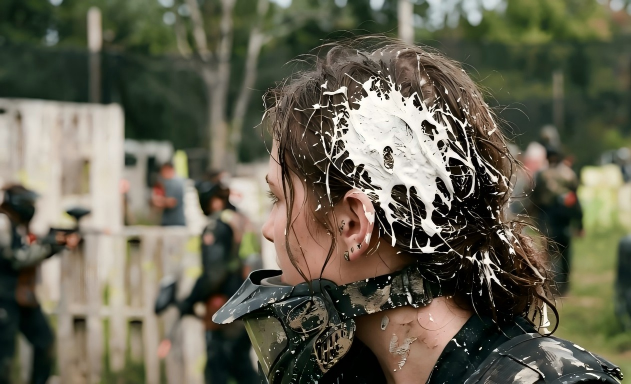
You just finished a paintball session and your hair is streaked with color. Before you reach for the scissors or start worrying about hair loss, take a breath. This guide explains exactly what is in paintball fill, how it interacts with your hair shaft and scalp at a biological level, and why — in virtually every case — the answer to removing it involves nothing more than your regular shampoo and warm water.
The plain-language answer: Paintball paint washes out of hair easily with regular shampoo and warm water. It is non-toxic, non-corrosive, and does not damage the hair shaft, scalp, or follicles. There is no scientific basis for concern about hair loss or scalp harm from paintball fill contact. Read on for the full evidence.
Section 1: What Is Paintball Fill? A Chemical Profile
The word “paint” in paintball is a commercial misnomer. The fill inside a paintball’s gelatin shell shares no chemistry with household, industrial, or artist’s paint. It contains no latex polymers, no acrylic resins, no solvent carriers, and no alkyd compounds. Instead, it is a water-soluble, food-grade compound engineered for three properties: visibility on impact, rapid dissolution in water, and biological safety on contact.
The primary ingredients in quality, PEG-based paintball fill are:
- Polyethylene Glycol (PEG) — the base carrier. A synthetic, water-soluble polymer used in pharmaceutical laxatives, cosmetics, and skin creams. Molecular weights used in paintball fill (PEG 400–1000) are classified as non-toxic by oral and dermal exposure.
- Food-grade dyes — the same colorant class used in beverages, confectionery, and medications. Water-soluble and non-reactive with keratin.
- Sorbitol and glycerin — humectants derived from plant sources. Both are common food additives and skincare ingredients with well-established safety profiles.
- Gelatin (shell) — a protein polymer derived from collagen. Fully biodegradable and identical to the material used in pharmaceutical capsules and food products.
- Titanium dioxide — an inert white pigment carrier used in sunscreen and toothpaste. Not reactive with biological tissue.
A 2015 systematic review published in Toxicological Research (Korean Society of Toxicology, PMC4505343) evaluated PEG compounds across dermatological applications and concluded that PEG derivatives are “broadly utilized in cosmetic products as surfactants, emulsifiers, cleansing agents, humectants, and skin conditioners” with a well-established safety profile for topical use. A 2024 review in PubMed Central (PMC11927971) further confirmed that PEG is “commonly used in dermatology due to its excellent solubility, nontoxic nature” in applications ranging from moisturizing creams to wound healing formulations.[1,2]
In plain terms: the primary active ingredient in paintball fill is the same class of compound your dermatologist might prescribe for your skin. Brief, incidental contact with hair and scalp during a paintball session represents a fraction of the concentration and duration used therapeutically.
Section 2: The Anatomy of Your Hair and Scalp
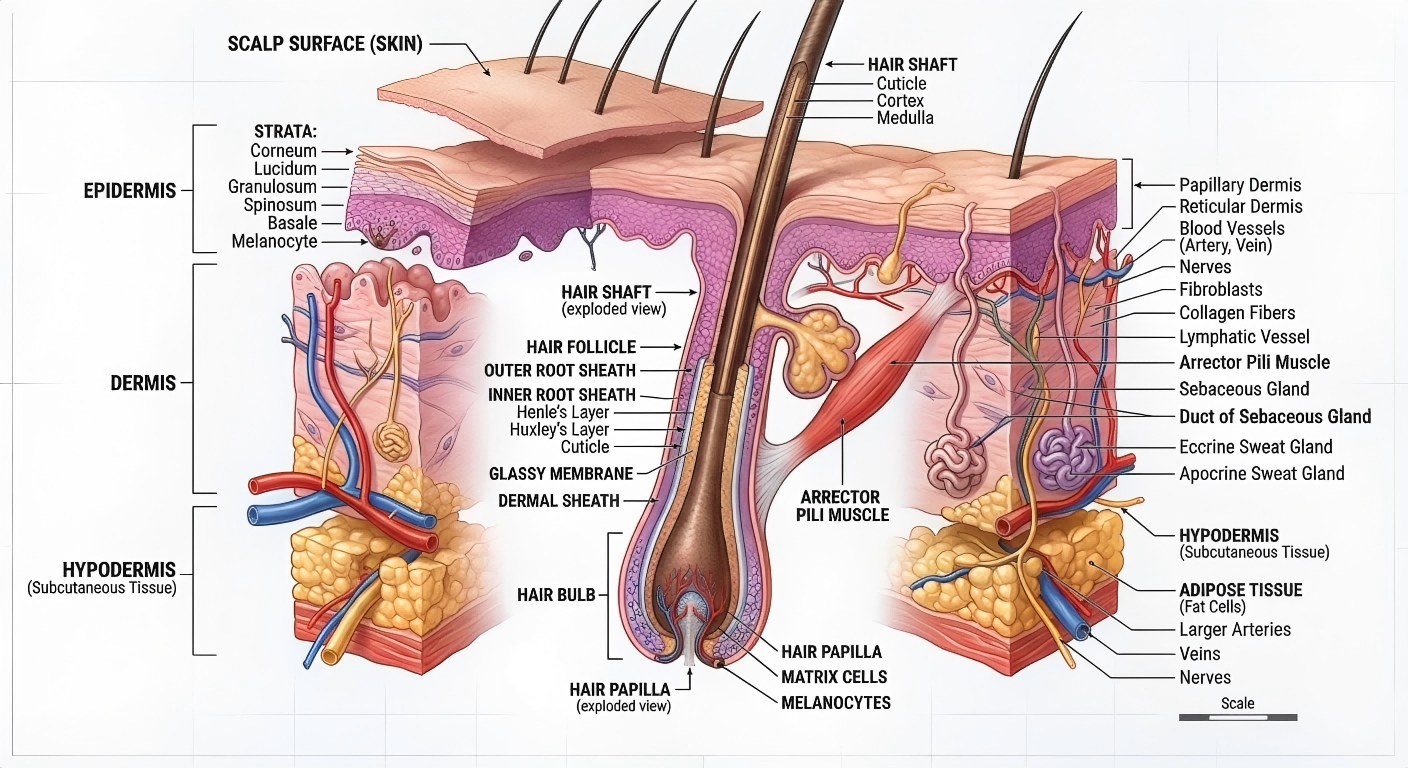
To assess whether any substance can harm hair or cause hair loss, we must first understand what hair actually is — and crucially, which parts of it are biologically active. According to the NIH/StatPearls physiology review, the human hair system consists of two structurally and functionally distinct components:
Hair Shaft
The visible strand above the scalp. Composed entirely of dead, keratinized cells. Contains no nerves, blood supply, or active biology. Cannot be “damaged” in a metabolic sense — only mechanically or chemically altered in texture.
Hair Follicle
The living structure beneath the scalp surface. Contains the dermal papilla (nutrient hub), matrix cells (growth engine), and stem cells in the bulge region. This is where hair growth is controlled.
Hair Bulb
Located 3–7 mm below the scalp surface at the base of the follicle. Contains melanocytes (pigment) and keratinocytes (shaft-building cells). The functional origin of all new hair growth.
Scalp Epidermis
The outermost skin layer protecting the follicle. A physical and chemical barrier function. Sebum from sebaceous glands conditions both scalp and shaft.
Hair Cuticle
The outermost layer of the hair shaft: 8–10 overlapping scales of keratinized cells. Hydrophobic — naturally repels water and binds preferentially to oils. The surface where external substances first make contact.
Cortex & Medulla
Inner layers of the shaft responsible for strength and color. Protected by the cuticle. Cannot be reached by surface substances without prior cuticle disruption (e.g., from bleach or permanent color).
TeachMeAnatomy (University of Leicester curriculum) and NIH StatPearls Histology both confirm that the hair shaft above the scalp is entirely composed of non-living, keratinized cells. Substances that contact the shaft cannot trigger cellular responses, inflammatory reactions, or follicular damage — because there are no living cells to affect. Hair loss requires disruption of the follicle, specifically the dermal papilla and matrix cells, which sit 3–7 mm below the scalp surface and are protected by multiple tissue layers.[3,4]
Section 3: Does Paintball Fill Interact With Hair Chemistry?
Hair is approximately 90% keratin — a fibrous structural protein stabilized by disulfide bonds between cysteine residues. The cuticle surface is hydrophobic (water-repelling), which means it naturally resists aqueous substances and preferentially binds to lipids. This is the same property exploited by conditioners and hair oils.
The hair shaft is dead tissue. It cannot be “harmed” by paintball fill the way living skin can — there are no cells to damage.
PEG-based paintball fill is hydrophilic (water-attracting) — the chemical opposite of the cuticle surface. This means paintball fill does not preferentially bind to the hair shaft. It coats the surface loosely on contact and, because it is water-soluble, releases readily when warm water is applied. This is not a coincidence; it is fundamental chemistry.
The food-grade dyes in paintball fill are ionic compounds designed for aqueous environments. Unlike the oxidative, alkaline dye chemistry used in permanent hair coloring — which opens the cuticle scales via an alkaline swelling reaction and deposits color into the cortex — paintball dyes sit on the surface of the cuticle without penetrating it. They are mechanically removed by the physical action of shampooing, not chemically processed.
Hair dyeing products cause cortex-level color changes through alkaline pH (typically pH 9–11) and peroxide oxidation, which disrupts disulfide bonds and forces open cuticle scales. The cuticle’s hydrophobic surface prevents aqueous, neutral-pH substances from penetrating beyond the outermost scale layer. Paintball fill operates at approximately neutral pH with no oxidizing agents — it cannot open the cuticle, cannot reach the cortex, and therefore cannot alter hair color, structure, or integrity at the fiber level.[5]
Section 4: Can Paintball Paint Cause Hair Loss?
This concern comes up often, and it deserves a direct, evidence-based answer: No. There is no biological mechanism by which paintball fill contact with hair or scalp surface can cause hair loss, and there are no documented clinical cases of alopecia attributed to paintball fill.
Hair loss (alopecia) occurs through one of several pathways: autoimmune disruption of the follicle (alopecia areata), androgenetic miniaturization of the follicle (pattern hair loss), scarring alopecia from trauma or inflammation, or toxic damage to matrix cells from systemic chemical exposure. Per NIH StatPearls on hair follicle anatomy, surface-contact substances must first cross the scalp epidermis, then the dermal tissue, before reaching the matrix cells and dermal papilla in the hair bulb — the only structures whose disruption can cause hair loss.
PEG at cosmetic-use concentrations has no established capacity to cross intact skin in clinically significant amounts, and is used routinely in scalp-contact products (shampoos, conditioners, medicated scalp treatments) without inducing follicular damage. The concentration present in paintball fill during brief, incidental exposure is orders of magnitude lower than therapeutic or cosmetic product use.
🔬 Plain Language Conclusion
Paintball fill sits on the outside of your hair (the dead part) and on the surface of your scalp skin. It cannot reach the living follicle cells that control hair growth. It is chemically incapable of causing hair loss. The concern is biologically unfounded.
Section 5: How to Remove Paintball Paint from Hair — Step by Step
Armed with the science, the practical answer is exactly what you’d expect. Warm water and regular shampoo remove paintball fill from hair efficiently in most cases, because the fill is water-soluble and does not bond with the keratin surface.
Act Promptly — Don’t Let It Dry Completely
Fresh paintball fill is significantly easier to remove than dried residue. If you can rinse your hair with water at the field before driving home, do it. Even a quick cold-water rinse prevents the dye from setting at the cuticle surface.
Warm Water Rinse First
Start with warm (not hot) water. Warm water helps PEG fill dissolve and releases the water-soluble dye from the cuticle surface. Run water through the affected sections for at least 60 seconds, working with your fingers to loosen the fill from the strand surface.
Shampoo — Standard or Clarifying
Apply your regular shampoo generously to the affected area. Lather well and work through the hair for 2–3 minutes. The surfactants in shampoo lift both the residual dye and the PEG carrier from the cuticle surface. For most PEG-fill exposure, a single shampoo application is sufficient. A mild clarifying shampoo works especially well for any residual color tint.
Rinse Thoroughly
Rinse with warm water until the water runs completely clear. Ensure no shampoo residue remains, as this can leave the cuticle scales slightly open and cause temporary dullness in appearance.
Conditioner (Optional but Recommended)
Apply a light conditioner and rinse. This smooths the cuticle scales back down, restoring shine and reducing any temporary roughness from the cleaning process. Conditioner also helps if any residual dye tint remains — it lubricates the surface and assists final pigment removal.
If Neon Color Persists: Repeat or Use Baking Soda Paste
Neon paintball fill pigments (especially pink and orange) contain more concentrated fluorescent dyes that may leave a faint tint on light or blonde hair after one wash. Repeat the shampoo cycle, or apply a paste of baking soda and shampoo, leave for 2 minutes, then rinse. The mild alkalinity gently lifts residual pigment from the cuticle surface without chemical damage.
✅ What You Do NOT Need
You do not need acetone, paint thinner, rubbing alcohol, bleach, or any harsh chemical solvent. These substances can damage the cuticle layer and are entirely unnecessary for water-soluble paintball fill. Their use would cause more disruption to your hair than the paint itself ever could.
Section 6: Special Considerations
Colored, Bleached, or Chemically Treated Hair
Hair that has been bleached or chemically processed has a disrupted cuticle — scales that are partially lifted or damaged. This makes the surface more porous and slightly more likely to retain any colored substance, including paintball fill. If you have blonde, bleached, or highly porous hair, treat it promptly with the protocol above, and use a purple or silver shampoo afterward if any yellow or orange tint remains. The fill still washes out — it may simply require an extra cycle.
Scalp Sensitivity and Skin Conditions
Players with conditions like seborrheic dermatitis, psoriasis, or contact dermatitis on the scalp should be aware that any new substance on the scalp — however gentle — can potentially cause irritation on already-compromised skin. If you experience unusual scalp irritation after a session, wash thoroughly and apply your usual scalp care product. Significant or persistent irritation should be assessed by a dermatologist, though this outcome is rare given PEG’s established tolerance profile in topical dermatology.
Long or Thick Hair
Players with long or very thick hair may find that fill works deeper into the hair mass and requires a longer rinse time. Dividing hair into sections and working the shampoo through each section thoroughly, rather than treating the hair as a single mass, is the most efficient approach.
The Bottom Line: Simple Science, Simple Solution
Paintball fill is a water-soluble, food-grade compound that sits on the surface of the hair shaft — a structure made entirely of dead cells that cannot be biologically harmed. The living follicles responsible for hair growth are protected 3–7 mm below the scalp surface, inaccessible to surface-contact substances. There is no chemical, anatomical, or clinical basis for concern about hair loss, follicular damage, or scalp harm from paintball play.
The removal protocol is exactly as simple as the biology suggests: warm water, regular shampoo, and a rinse. For stubborn neon pigments, a second wash or a mild baking soda treatment resolves the issue. Your hair will be the same after washing as it was before you stepped onto the field.
✅ The Complete Summary
Is it toxic? No. PEG fill is food-grade and pharmaceutical-grade safe. | Does it damage hair? No. It contacts the dead outer shaft only — it cannot penetrate or disrupt the cuticle at neutral pH. | Can it cause hair loss? No. Hair loss requires follicular damage; follicles are protected beneath the scalp surface and unreachable by surface fill. | How to remove it? Warm water + regular shampoo. One or two cycles. Done. | When to seek advice? Only if you have a pre-existing scalp condition and experience unusual irritation — which is rare.
Scientific References
- Kim, H. et al. (2015). “Safety Evaluation of Polyethylene Glycol (PEG) Compounds for Cosmetic Use.” Toxicological Research, 31(2), 105–136. PMC4505343
- Role of Polyethylene Glycol in Dermatology. (2024). PubMed Central. PMC11927971
- Physiology, Hair. StatPearls, NIH National Library of Medicine. NBK499948
- Histology, Hair and Follicle. StatPearls, NIH National Library of Medicine. NBK532929
- Hair Follicle Anatomy and Structure. TeachMeAnatomy — University of Leicester curriculum resource.
![cstar logo -[paintball]](https://cspaintballs.com/wp-content/uploads/2024/10/cropped-cropped-c-star-logo.webp)