
Which Paintballs Work Best in Cold Weather?
Choose a winter formula built around both shell and fill, then check how it performs in your field’s actual conditions. Here is what to look for—and where C-STAR Winter Paintballs fit.
The best cold-weather paintballs match the temperature, the marker and the job.
Start with purpose-built winter paintballs whose shell and fill are both designed for cold conditions. Ask for a documented playing-temperature specification, confirm the correct caliber, and test the supplied batch in your own markers. The target is reliable feeding and firing together with appropriate break-on-target performance—not simply the toughest shell.
C-STAR Winter Paintballs are one option for this shortlist. C-STAR’s product information describes a reinforced gelatin shell and a low-freezing-point fill engineered for play down to −25°C (−13°F). This is the manufacturer’s stated capability; confirm the test conditions and storage instructions before buying for your climate.
What makes a paintball suitable for winter?
A winter label should lead to a useful specification. What was the paint designed to tolerate? How was it conditioned before testing? Does the description cover both the gelatin shell and the fill? These questions tell a buyer more than shell color or a seasonal name.
Established manufacturers describe winter formulation as a shell-and-fill problem. For example, G.I. Sportz describes its FROSTBITE winter range in those terms. That supports checking both components; it does not establish identical performance across brands.
1. Shell behavior
Look for a winter-specific shell intended to tolerate loading and firing in low temperatures. Ask how the supplier balances that durability with break-on-target behavior.
2. Fill behavior
Ask whether the fill is formulated for the same playing conditions. “Low freezing point” needs context: it is not a complete specification for the finished paintball.
3. Equipment fit
Confirm caliber and assess the sample in the markers and loaders you actually use. Keep equipment within its manufacturer’s operating instructions.
4. Batch evidence
Link the sample result to a batch code, conditioning history and agreed acceptance criteria. A winter trial becomes much more useful when a repeat order can be traced.
Thicker is not a universal buying rule. Shell thickness is one design choice. Select the finished paintball for its behavior in your conditions, including both in-marker reliability and marking performance.
Winter paintballs vs. regular paintballs: what should buyers compare?
“Regular,” “field” and “tournament” describe different things across product ranges. Grade and seasonal suitability should be checked separately. Use this procurement comparison instead of assuming every product in one category behaves alike.
| Buying question | Unspecified or warm-weather paint | A winter candidate should provide |
|---|---|---|
| Is it intended for our coldest sessions? | Seasonal suitability has not been established. | A stated playing-temperature specification and an explanation of test conditions. |
| Are shell and fill addressed? | The label alone does not answer this. | A winter formulation description covering both components. |
| Will it work in our rental fleet? | Prior results in warmer weather are not a winter trial. | A sample tested in representative markers and loaders under recorded conditions. |
| Does it still mark appropriately? | Price or grade alone cannot settle this. | An assessment of target breaks as well as feeding and firing. |
| Can we investigate a complaint? | Unidentified stock makes comparison difficult. | Batch identification, handling instructions and an agreed reporting process. |
Why are my paintballs breaking in cold weather?
If breakage appears when the weather changes, seasonal suitability belongs on the investigation list. So do paint condition, sizing, loading, equipment settings and maintenance. Use the troubleshooting guidance for your specific marker rather than diagnosing every break as a paint defect.
The following photographs were supplied as examples of problems encountered with paint unsuitable for winter use. They show visible residue and broken paint. They do not, by themselves, establish the temperature, the batch, or the root cause.
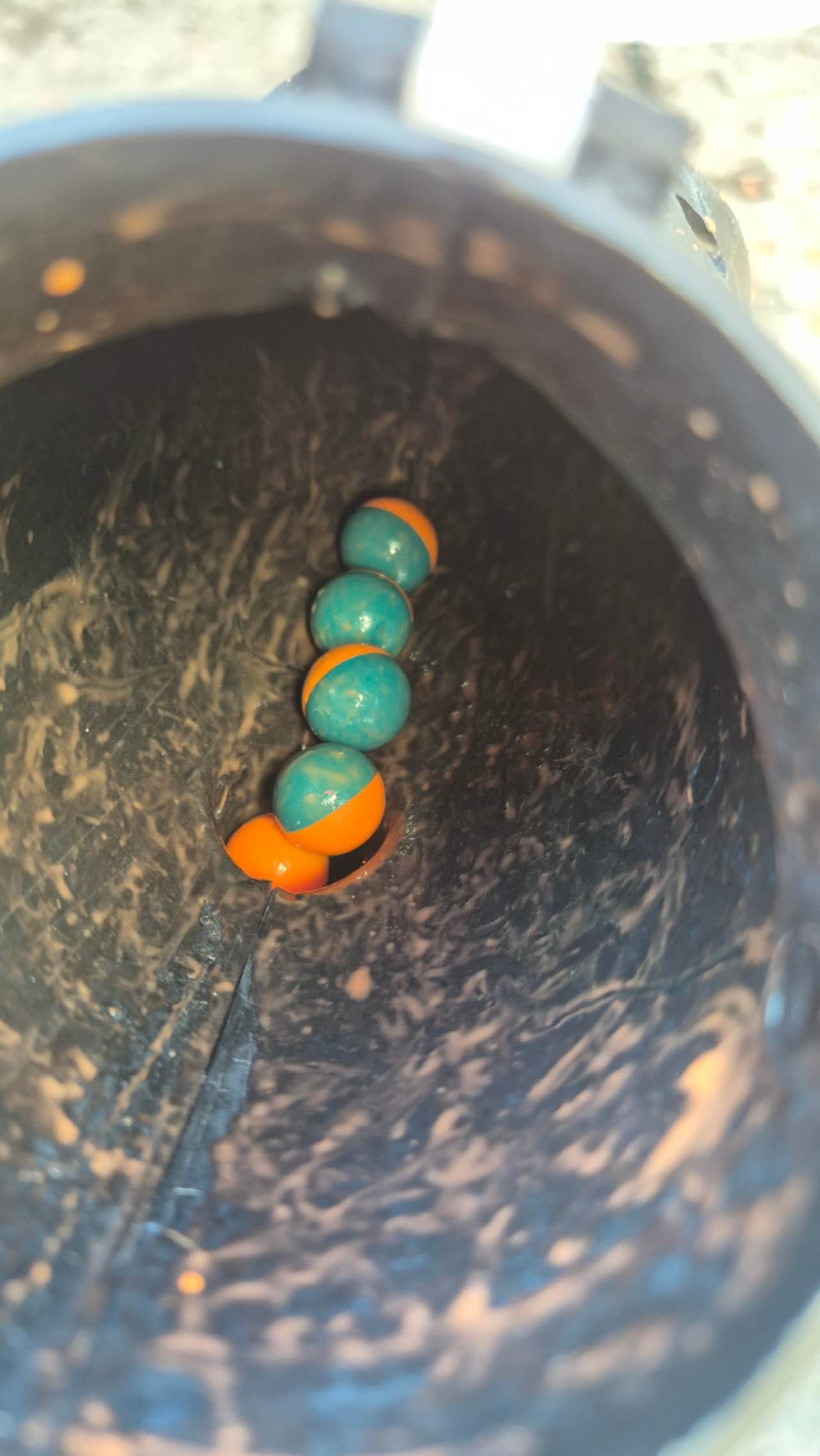
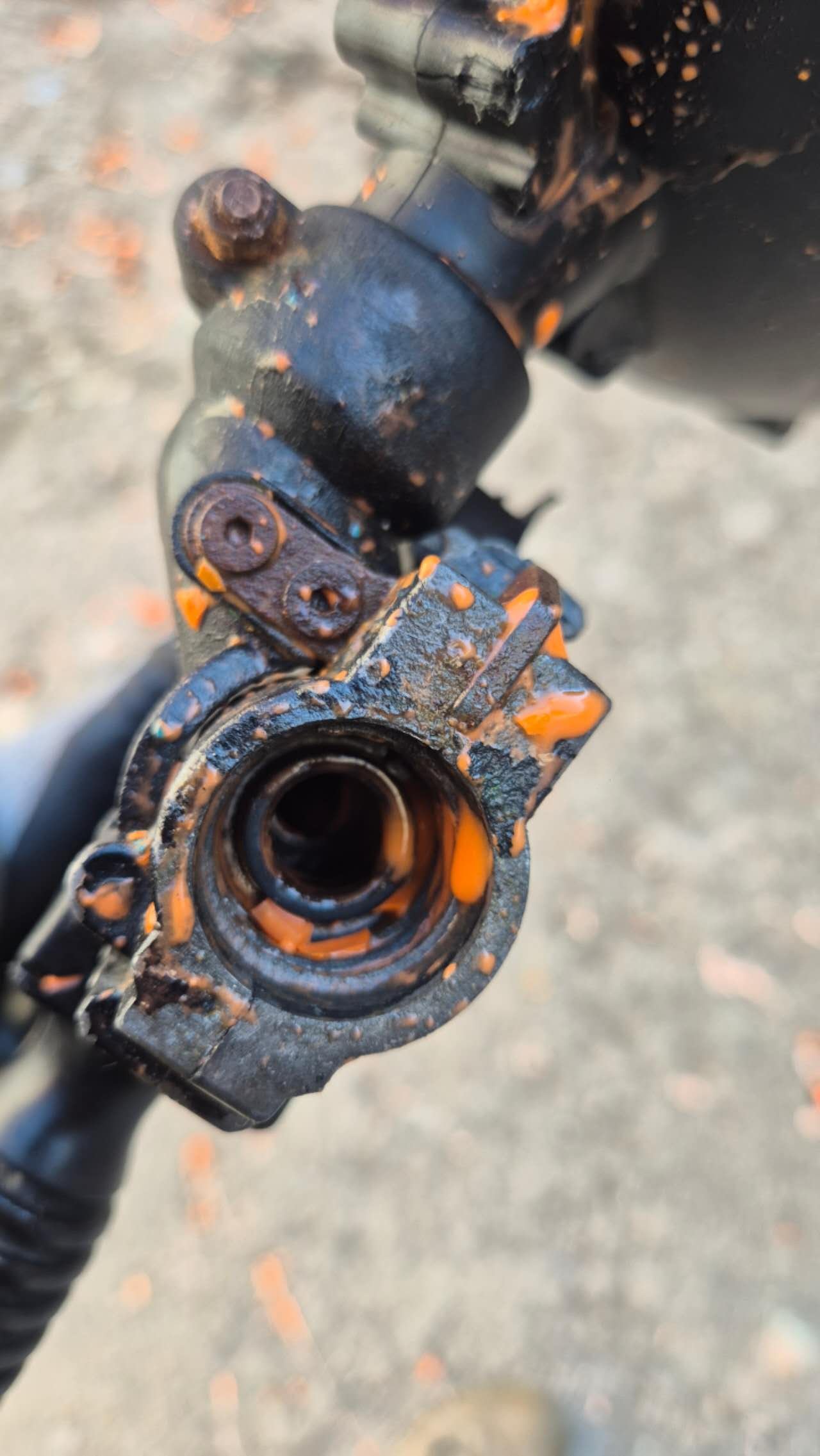
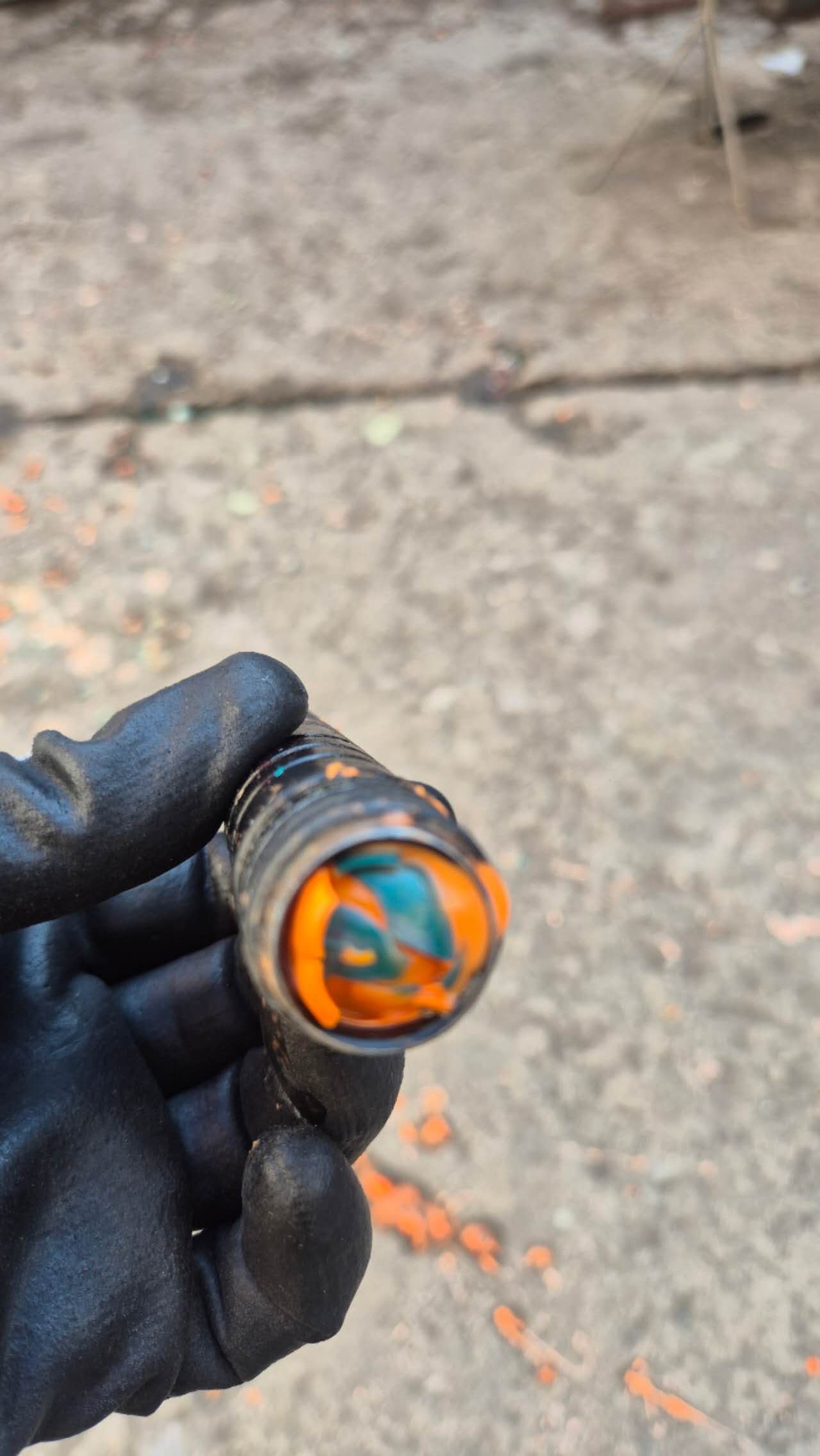
Use a symptom → check → conclusion sequence. “Orange residue in the feed path” is an observation. “This batch became too brittle after cold exposure” is a hypothesis that needs a recorded comparison. Keep those statements separate in supplier reports.
C-STAR Winter Paintballs: built for the cold
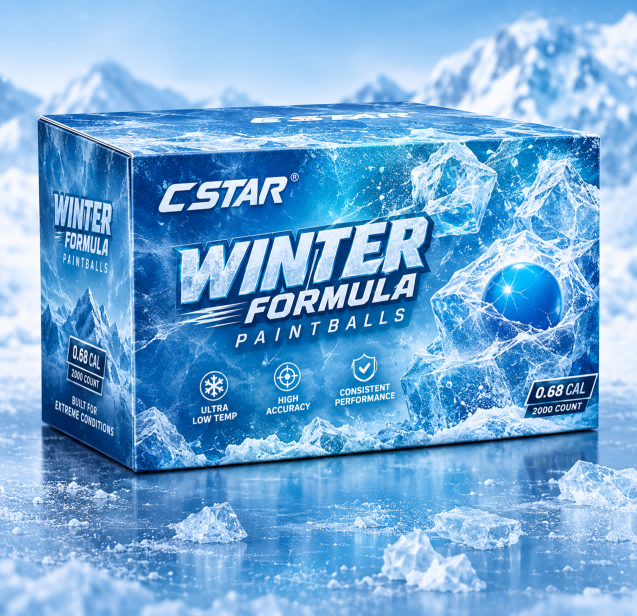
Built for the Cold. Made to Keep You Playing.
C-STAR’s winter formula combines a reinforced gelatin shell with a low-freezing-point fill. According to the C-STAR Winter Paintballs product description, the thicker, winter-specific shell is designed to retain flexibility in low temperatures and withstand loading and firing stresses, helping reduce premature breaks inside the marker.
The cold-tolerant fill complements that shell formulation, while a bright, dual-color shell gives the paint a distinctive appearance. For fields and distributors planning a winter range, the practical aim is fewer cold-related interruptions and more time in the game.
- Intended use
- Cold-weather paintball play
- Stated temperature capability
- Down to −25°C (−13°F)
- Shell
- Reinforced, winter-specific gelatin shell
- Fill
- Low-freezing-point formulation
- Appearance
- Bright, dual-color shell
- Confirm when ordering
- Available caliber, current batch specification, test conditions, storage guidance and supply terms
The temperature statement is a C-STAR product claim, not an independent comparative test result. It does not establish a shelf-storage temperature, an exposure duration, or a zero-breakage guarantee.
There is no controlled comparison in this guide that establishes a single best brand for every field. Treat C-STAR Winter Paintballs as a purpose-built option to evaluate against your temperature profile and equipment.
How to test winter paintballs before a bulk order
Agree a practical acceptance trial with your supplier before you commit to winter stock. The following is a suggested field workflow, not a standardized laboratory method or a substitute for manufacturer instructions.
- Write down the use case. Record your typical and lowest intended playing temperatures, game format, marker and loader models, and required caliber.
- Identify the sample. Keep the batch code and packaging details. Ask when it was produced and how it should be stored and conditioned.
- Agree the exposure conditions. Distinguish air temperature from measured paint temperature. Record exposure duration and the handling sequence; avoid an improvised freezer test.
- Start with clean, correctly maintained equipment. Follow the equipment manual and field procedures. Chronograph as required by your venue; do not increase velocity to force a desired break.
- Count outcomes. Record rounds attempted, stoppages, where breakage occurred, cleanup minutes and target-break observations under the agreed setup.
- Compare fairly and decide. Keep the comparison conditions consistent and repeat a questionable result before drawing conclusions. Agree acceptance criteria and how a later delivery will be checked.
Keep a winter batch record
Use one log for each sample: batch code · air and paint temperature · exposure time · marker/loader · rounds attempted · stoppages · location of breaks · cleanup minutes · target-break observations.
Separate a feed stoppage from a confirmed broken ball. Consistent definitions make two sample results easier to compare and give the supplier a clearer starting point for investigation.
Does a winter formula change storage and handling?
Do not treat a low playing-temperature claim as permission to leave cartons outdoors throughout the season. Request the storage temperature, humidity guidance, shelf life and handling instructions for the exact product you order.
- Protect reserve stock. Keep it in the supplier’s specified storage conditions and avoid unnecessary exposure before use.
- Agree temperature transitions. Ask how sealed bags should be handled between storage and the playing area, especially where moisture may be an issue.
- Avoid improvised heating. Do not microwave paintballs or apply direct heat. Ask the supplier for an approved conditioning method.
- Keep batch identities intact. Separate a suspect delivery and retain packaging, photographs and handling records for review.
- Plan the route as well as the game. For imports and long deliveries, agree packaging, exposure precautions, arrival checks and the complaint process before dispatch.
The procurement distinction is simple: playing specification, storage specification and transport instructions are three separate questions. Get an answer to each.
For fields, compare the cost of usable paint
A carton price cannot tell you how a winter session will run. Add the costs you can actually measure: unusable paint, paid cleanup time and any documented service recovery. This helps you compare a purchase price with the result on your field.
A simple comparison formula
Cost per 1,000 usable rounds = (landed paint cost + attributable cleanup labor + other documented incident costs) ÷ usable rounds × 1,000This is a suggested internal costing model, not C-STAR performance data. Use the same definition of “usable rounds” for each trial, include only attributable costs and avoid counting the cost of discarded paint twice.
Distributors can use the same discipline with field feedback: record the climate, equipment and batch before deciding whether a complaint indicates a formulation mismatch, a handling issue or something still unresolved.
Cold-weather paintball FAQs
What type of paintballs should I use in cold weather?
Start with a purpose-built winter formula whose shell and fill are intended for your playing temperatures. Confirm caliber, handling instructions and equipment compatibility, then test the supplied batch in representative conditions.
Can I use regular paintballs in winter?
Only if the product’s specification and your field checks support the conditions. A regular or tournament label does not establish cold-weather suitability. Ask the supplier about the exact formula rather than assuming every paintball is suitable below freezing.
Are thicker paintballs always better in cold weather?
No. Thickness alone does not establish winter performance. Evaluate the finished paintball for feeding, firing and appropriate break-on-target behavior in your conditions. Shell formulation, fill and equipment compatibility also need consideration.
Can C-STAR Winter Paintballs be used at −25°C?
C-STAR states that its Winter Paintballs are engineered for play down to −25°C (−13°F). Confirm the applicable test conditions, exposure duration, batch specification and equipment suitability with C-STAR. This statement is not a zero-breakage guarantee or a storage instruction.
Should I heat or freeze paintballs before playing?
Do not use a household freezer or direct heat to improvise a conditioning method. Follow the paint supplier’s handling instructions. For a cold-weather trial, agree a controlled procedure and keep a record of temperature and exposure time.
What should a field ask before buying winter paintballs in bulk?
Ask for the playing-temperature specification, shell-and-fill description, available caliber, storage and shipping instructions, batch traceability and sample terms. Agree acceptance criteria using your markers, loaders and expected winter conditions.
Keep winter games moving.
Tell C-STAR your destination, lowest intended playing temperature, marker and loader models, required caliber, estimated volume and delivery window. Ask for the current Winter Paintballs specification and discuss a sample trial before placing a bulk order.
Request Winter Paintball Details ↗Explore the C-STAR paintball range for related product and procurement options.
Sources and evidence notes
- C-STAR Paintballs: winter product description. Source for the stated shell, fill, appearance and −25°C capability; also supplied directly for this article.
- G.I. Sportz: FROSTBITE product information. Manufacturer context for treating winter shell and fill together; not an independent comparison with C-STAR.
- Planet Eclipse: marker manuals. A source of model-specific operating and troubleshooting instructions. Use the manual for your own equipment.
Sources reviewed on 17 November 2026. The photographs document visible symptoms only. This guide contains no independent product temperature test, comparative brand ranking or verified reduction in breakage, downtime or cost. Field trials and costing tools are suggested workflows, not published test results.