
What Is Paintball Sweating? Normal Surface Bloom vs Real Leakage
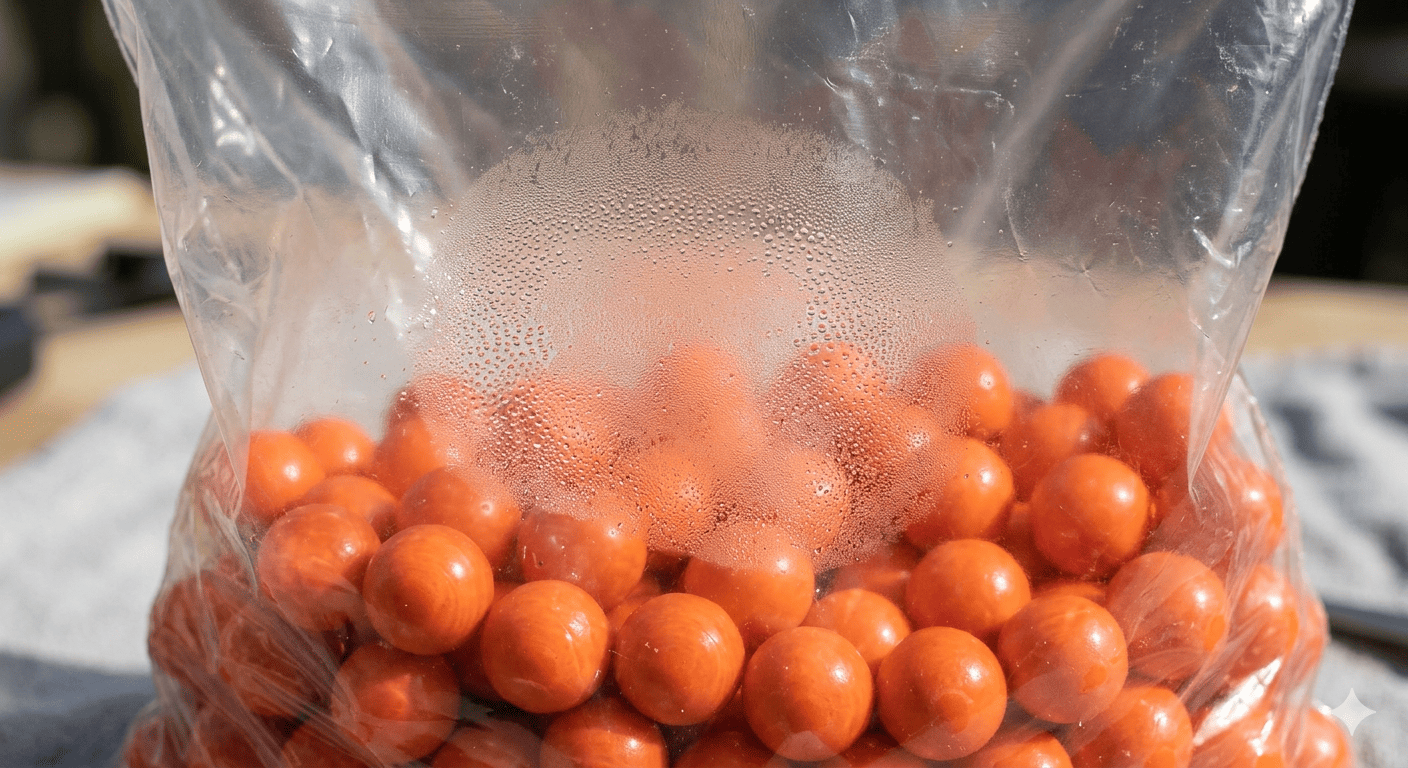
You open a fresh case of paintballs and notice the shells look slightly damp. Some have a faint residue on the surface. Your first thought is that the paint is leaking or defective. Before returning the case or filing a claim, it is important to understand the difference between two very different phenomena: surface bloom and real leakage.
Paintball sweating is a general term for any moisture or residue on the shell surface. It covers two distinct conditions: normal surface bloom (harmless) and real fill leakage (a quality issue). Knowing the difference saves you from returning good paint or using damaged paint.
Bloom What is surface bloom?
Surface bloom is a natural phenomenon that occurs in gelatin-based products. It is caused by plasticizers — glycerin and sorbitol — that are added to the gelatin shell during manufacturing to control flexibility. Over time, or when temperature changes occur, these plasticizers can migrate to the surface of the shell, creating a light, slightly oily film.
Bloom is harmless. It does not affect the structural integrity of the shell, the diameter, or the break reliability of the paintball. It is purely cosmetic. Many paintball users have seen bloom and mistaken it for damage, returning perfectly good paint.
Compare Bloom vs leakage: side by side comparison
| Indicator | Normal Surface Bloom | Real Fill Leakage |
|---|---|---|
| Appearance | Light, clear, uniform moisture | Concentrated wet spots, colored liquid |
| Residue on touch | Slight dampness, clear or white | Colored fill, sticky, may have smell |
| Location | Even across multiple shells | Individual broken or cracked shells |
| Case interior | Dry, no pooled liquid | Wet spots, pooled fill, stained cardboard |
| Wipe test | Wipes off, no residue | Wipes off with colored fill |
| Shell integrity | Intact, normal feel | Cracked, broken, or thin spots |
| Performance effect | None | Possible barrel breaks, unreliable break |
| Root cause | Plasticizer migration | Physical damage, factory defect, heat |
Causes What causes bloom and leakage
What causes bloom
- Temperature changes. When paintballs warm up after being stored in a cool environment, the plasticizers in the shell can migrate to the surface. This is the most common trigger for bloom.
- Age. As paintballs age, plasticizers naturally migrate. Older paintballs may show more bloom than fresh ones. Bloom does not mean the paint is too old to use.
- Humidity changes. Rapid changes in ambient humidity can also contribute to surface bloom formation.
What causes leakage
- Damaged shells. Cracks, thin spots, or impacts that create a path for the fill to escape.
- Heat damage. High temperatures soften the shell, which can lead to fill seeping through weak areas.
- Factory defects. Improperly sealed fill holes or thin shell areas that fail during handling.
Check How to test for bloom vs leakage
Here is a simple field test to determine whether the moisture on your paintballs is bloom or leakage:
- Touch test. Rub your finger across the surface of a damp-looking ball. Bloom feels slightly damp but leaves no colored residue. Leakage leaves colored fill on your finger.
- Wipe test. Wipe the surface with a dry paper towel. Bloom leaves a clear or white residue that looks like dried water spots. Leakage leaves a colored mark matching the fill color.
- Inspect the case interior. Look at the inside of the case or bag. Bloom leaves the interior dry. Leakage will show colored liquid, wet spots, or stained cardboard.
- Individual ball inspection. Pick up a ball that looks suspicious and squeeze it gently. A ball with leakage will have a visible crack, thin spot, or damaged seal where the fill is escaping.
Action What to do about bloom and leakage
If you have surface bloom: The paint is fine. You can wipe the bloom off if desired, but it is not necessary. The paintballs will perform normally. Bloom is a cosmetic issue, not a quality defect.
If you have real leakage: Isolate the leaking balls. They should not be used because the fill volume is compromised and the remaining shells may have integrity issues. If more than 1% of a case shows leakage, it indicates a batch quality issue that should be reported to the manufacturer.
? Frequently Asked Questions
Is paintball bloom a sign of poor quality?
No. Bloom is a natural phenomenon that occurs in all gelatin-based products to varying degrees. It is not an indicator of quality. Some premium paintballs may show more bloom than budget paintballs because they use different plasticizer formulations that migrate more readily. Bloom alone should not be used to judge paintball quality.
Does bloom affect the shelf life of paintballs?
No. Bloom does not affect shelf life. It is a surface phenomenon that does not change the structural properties of the shell. Paintballs with bloom will last as long as paintballs without bloom under the same storage conditions. Bloom is not a sign of aging or degradation.
Can I return paintballs that have surface bloom?
Most manufacturers will not accept returns for bloom because it is a normal condition, not a defect. If you are concerned, document the bloom with photos and send them to your supplier. A reputable manufacturer will confirm whether what you are seeing is normal bloom or something else that requires investigation.
Does wiping bloom off paintballs improve performance?
No. Wiping bloom off does not improve performance because bloom does not affect performance in the first place. It may improve the cosmetic appearance of the paintballs, but it will not change how they fly, break, or mark. Wiping is optional and purely cosmetic.
+ The short version
Paintball sweating can be either normal surface bloom (harmless plasticizer migration that creates a light, clear film on the shell) or real fill leakage (shell damage that allows colored fill to escape). The two are easily distinguished: bloom wipes off clear, appears uniform across the batch, and leaves no residue. Leakage shows colored fill, is concentrated on individual damaged balls, and leaves colored residue on your fingers.
Bloom requires no action — the paint is fine to use. Leakage requires isolating and discarding the damaged balls and investigating the cause. When in doubt, the 2-second touch test (rub your finger on the surface) tells you everything you need to know.
Not sure if what you are seeing is bloom or leakage? Contact CS Paintballs for expert assessment and quality support.