
Procurement · Specifications · Order Control
Paintball Purchase Order Specification Checklist for Sourcing Managers
A practical sourcing checklist for connecting product, packaging, inspection, document, traceability, and change requirements in one controlled order package.
July 9, 2026 · C-STAR Paintballs · 8 min read
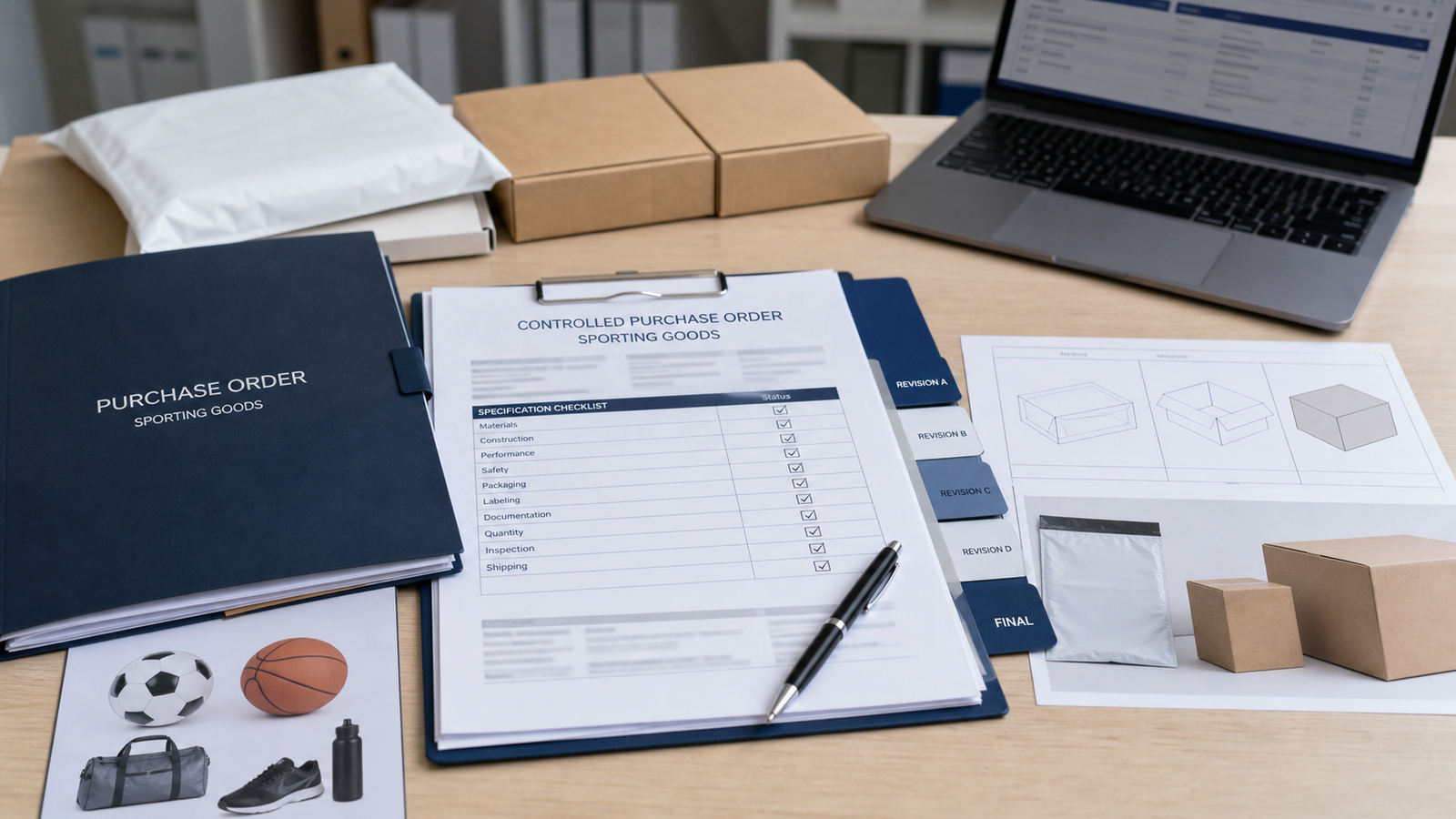
A paintball purchase order should do more than confirm a product name, quantity, and price. For an importer or private-label brand, the order package should identify the exact product specification, approved sample, packaging revision, inspection requirements, shipment documents, and change-control rules that apply. If those references remain scattered across messages, both buyer and supplier can believe they agreed to different things.
The practical goal is a controlled order baseline. A sourcing manager should be able to hand the package to production, inspection, logistics, receiving, and finance teams without asking them to reconstruct the agreement from old conversations.
Before releasing a PO: confirm that every referenced attachment has a title, revision or date, owner, and clear relationship to the order.
Separate the Purchase Order from the Product Specification
The PO records the transaction. The specification explains what the buyer expects to receive. Combining everything into one document may work for a simple order, but a private-label program often needs controlled attachments for product, packaging, inspection, and shipping instructions.
The PO should list those attachments and state which versions apply. A file called “final artwork” is not a strong reference because another file may later use the same name. A dated or revision-controlled identifier gives purchasing and supplier teams a common baseline.
Sourcing managers should also define an order of precedence. If the PO, quotation, specification, approved sample, and email contain inconsistent information, which record controls? This is a commercial and legal question that the buyer should settle with appropriate advice rather than leaving it to interpretation after a dispute.
Start with Order Identity and Commercial Scope
Basic fields still matter. The legal buyer and supplier names, PO number, issue date, currency, product references, quantities, agreed price basis, and delivery terms should be clear. Payment, delivery, and trade terms should match the commercial agreement. Do not use an abbreviation unless both parties understand it in the same way.
Identify the destination market and receiving location because they may affect packaging, documents, labels, and logistics planning. The supplier should not be expected to infer market requirements from a shipping address. Buyers remain responsible for confirming applicable obligations and communicating relevant requirements.
Reference the Product Baseline
A product name alone may not distinguish grade, color, fill, packaging format, or other agreed characteristics. The PO package should reference a controlled product specification and, where relevant, an approved sample. Avoid adding technical values that have not been agreed and verified.
The specification can define observable requirements, prohibited substitutions, identification needs, and the evidence expected at release. If the buyer uses a physical sample, label it with an identifier and connect it to the specification. State whether the sample controls appearance only or other agreed attributes as well.
Questions for the Product Section
- Is the product reference unique within the buyer’s system?
- Does the specification match the supplier’s quotation?
- Is the approved sample clearly identified and retained?
- Are substitutions prohibited unless approved in writing?
- Are inspection criteria observable and understandable?
- Are uncertain claims removed instead of copied from marketing material?
Control Private-Label Packaging and Marks
Packaging instructions should cover each level the order uses: sale unit, inner pack, master carton, pallet, and any inserts. Link the approved artwork files and identify who owns barcode data, regulatory text, importer details, warnings, and market-specific content.
Carton marks should support receiving and warehouse control. Relevant fields may include buyer item reference, product description, quantity, batch or lot identifier, carton sequence, and handling information that has been agreed. The exact content depends on the buyer’s system and destination requirements.
[INTERNAL LINK: Private Label Paintball Packaging Approval Checklist]
Do not release packaging from a screenshot alone. Use a controlled artwork file and require a final proof that shows the complete layout before production.
Define Inspection and Release Evidence
The PO package should tell the supplier and inspector what will be checked, against which reference, and what evidence is expected. Avoid vague instructions such as “quality must be good.” Use agreed, observable criteria and identify who makes the final release decision.
Inspection instructions may cover product identification, packaging, quantities, carton condition, marks, batch-code visibility, and document readiness. Any sampling method or acceptance rule should be selected by a qualified party and written clearly. This article does not prescribe a specific sampling level or result.
The supplier should know whether photographs, packing records, a batch list, or other agreed evidence must be supplied before shipment. Evidence should identify the order and goods it represents.
[INTERNAL LINK: Paintball Pre-Shipment Inspection Checklist for Importers]
Paintball PO Release Checklist
| Control area | Confirm before release | Typical record |
|---|---|---|
| Parties and order | Names, PO number, product references, quantity, price basis | Purchase order |
| Product baseline | Specification and approved sample reference | Controlled specification |
| Packaging | Artwork revisions, pack levels, carton marks | Artwork approval and packing instruction |
| Inspection | Criteria, method, evidence, release authority | Inspection instruction |
| Traceability | Code meaning, location, and record links | Batch-code instruction |
| Documents | Required documents, data fields, review timing | Document checklist |
| Logistics | Agreed shipment and receiving instructions | Logistics instruction |
| Changes | Notice, evidence, written approval, affected order | Change-control requirement |
List Documents by Name and Required Data
A document request should be more precise than “send all shipping documents.” List each required record and the information it must contain. Confirm who reviews drafts, when corrections are due, and whether originals or another format are needed. Requirements vary by transaction and destination, so importers should confirm them with appropriate logistics, customs, and compliance professionals.
Check consistency across the PO, invoice, packing list, carton marks, and batch records. Differences in names, quantities, product descriptions, or identifiers can create avoidable questions even when the physical goods are correct.
[INTERNAL LINK: Paintball Import Document Checklist for Distributors]
Connect the PO to Traceability and Receiving
The order should define how the supplier identifies relevant batches or lots and where that identifier appears. Receiving staff then need a field to capture the same code. If the warehouse uses an internal code, preserve the link to the supplier’s identifier.
Also define how partial shipments, split deliveries, or mixed revisions will be recorded if they are allowed. The goal is for the PO baseline to remain visible after goods enter the warehouse, not disappear at shipment.
[INTERNAL LINK: Paintball Batch Traceability Guide for Importers]
Add Change Control Before the Order Is Accepted
The PO should prevent unapproved substitutions or relevant changes. Ask the supplier to notify the buyer in writing before changing an agreed product, material, process, site, subcontracted activity, package, mark, code, or document format that may affect the order.
The buyer can then assess the proposed change and request proportionate evidence. State who has authority to approve. A sales conversation or silence should not accidentally become approval.
Supplier Questions Before PO Release
- Have you reviewed every referenced specification and attachment?
- Do any requirements conflict with your quotation or normal process?
- Which points need clarification before order acceptance?
- Can you identify the approved artwork and sample revisions?
- How will batch information connect cartons and shipment records?
- Which evidence can be provided before shipment?
- Who will notify us of a proposed change?
- Can you confirm the complete order baseline in writing?
Frequently Asked Questions
Can a supplier quotation replace a paintball specification?
A quotation records the supplier’s offer, but it may not contain all buyer requirements. The PO should identify the agreed quotation and every controlling specification or attachment.
Should the PO include exact quality limits?
Only include criteria that are agreed, supportable, and suitable for the product and risk. Qualified parties should select technical limits and inspection methods.
Who owns packaging compliance text?
The parties should define responsibilities in writing. The importer or brand should independently confirm destination-market requirements rather than assume artwork approval transfers responsibility.
What if the supplier finds a conflict after accepting the PO?
Pause the affected activity, document the conflict, agree a controlled revision, and identify which orders or goods are affected.
Release One Controlled Order Package
A strong PO package reduces interpretation. It connects commercial terms with the exact product, packaging, inspection, document, logistics, traceability, and change-control records that apply. Before release, check every reference, remove obsolete files, resolve contradictions, and obtain written supplier confirmation.
Contact C-STAR Paintballs to discuss your destination market, expected order volume, packaging format, and sample requirements.