
Field Operations / Paintball Supply
Paintball Quality Consistency: What Field Owners Should Know
A low case price can look like a win until a new batch creates barrel breaks, cleaning delays, player complaints, and a weekend your staff spends explaining what went wrong.

If you operate a field, you have probably lived this scenario: one order shoots cleanly and earns compliments; the next shipment of apparently similar paint creates frustration. The difference is not always caused by the paintball factory. Storage, weather, marker setup, and handling matter. But when the problem repeats by lot, it is reasonable to look closely at paintball quality consistency and the manufacturing system behind it.
Why Paintball Quality Can Vary From Batch to Batch
A paintball is a small, filled projectile with a shell, a fill, and a performance window. It must feed through a marker, survive the trip from factory to field, fly acceptably, and break reliably on the intended target. That balance is difficult because the variables interact. A change that makes a shell tougher in one condition may alter the way it behaves in another.
Material inputs
Shell ingredients and fill properties need repeatable incoming specifications. Small variation in material behavior can become visible when a high-volume batch runs.
Process control
Shell formation, fill delivery, drying or curing, and packing must stay inside defined operating windows. Good factories record and react to drift.
Life after production
Compression, transit time, heat, cold, humidity, and warehouse practice can change the condition in which paintballs reach your field.
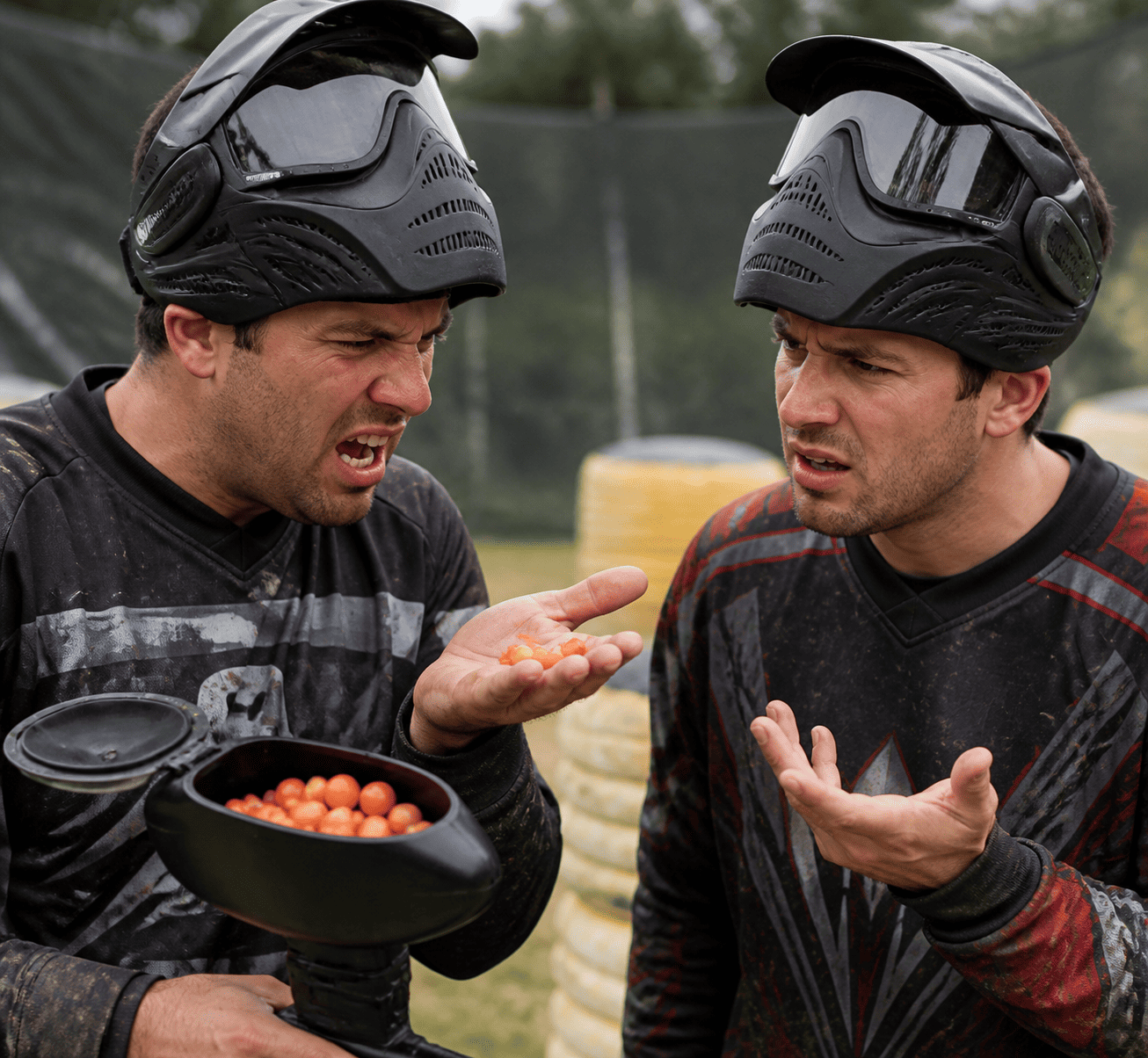
Players usually describe the symptoms in practical language: “paintballs breaking in barrel,” “bad paint,” “inconsistent accuracy,” or “paintballs for cold weather.” Those terms are useful, but they do not identify a single cause. A barrel break can be connected to paint condition, bore mismatch, loader force, detents, bolt speed, or marker maintenance. A quality-minded field avoids declaring a root cause before collecting evidence.
The Machine Is Not Enough
Paintball production equipment may be available to buy, but availability does not mean the equipment was designed, tuned, or operated for the outcome a commercial field needs. Some encapsulation equipment originates in adjacent applications. That can provide a starting point, not a finished paintball manufacturing process.
The important distinction is between owning hardware and owning a process. Experienced technical teams learn which settings work together, which early warning signals matter, and when a machine requires adjustment or modification. Their knowledge is often captured in work instructions, process logs, maintenance routines, and corrective-action records. Without that discipline, two nominally identical orders can behave very differently.
What a Dependable Paintball Quality System Looks Like
A reliable paintball supplier should be comfortable describing its quality controls in business terms. You are not asking for trade secrets. You are asking whether the supplier can consistently identify, check, protect, and support the product it sells.
| Area | Weak answer | Evidence of a mature quality system |
|---|---|---|
| Lot traceability | “It is all the same paint.” | A visible lot or batch ID tied to production and packing records. |
| Product grade | One vague product description for every climate and player type. | Clear guidance on the intended use, conditions, and trade-offs of each grade. |
| Release checks | “Our workers check it.” | Defined checks, sampling method, release criteria, and a record that can be reviewed. |
| Complaint handling | Automatic blame on the marker or warehouse. | A request for facts, retained samples where possible, and a written corrective-action path. |
| Storage and transit | No instructions after the cartons leave the factory. | Clear handling guidance, packaging protection, shipping awareness, and stock rotation advice. |
Quality control should not be treated as a marketing adjective. In a B2B relationship, it is a system of evidence. Your supplier should be able to show how it keeps lots identifiable, how it protects product during shipment, and what it does when a verified issue appears. That is more meaningful than a broad promise of “premium paintballs.”
A Five-Check Incoming Batch Protocol for Field Owners
Here is a practical method your staff can use before mixing a new shipment into existing inventory. It is intentionally simple enough to run on a busy field day and structured enough to support a fair supplier conversation.
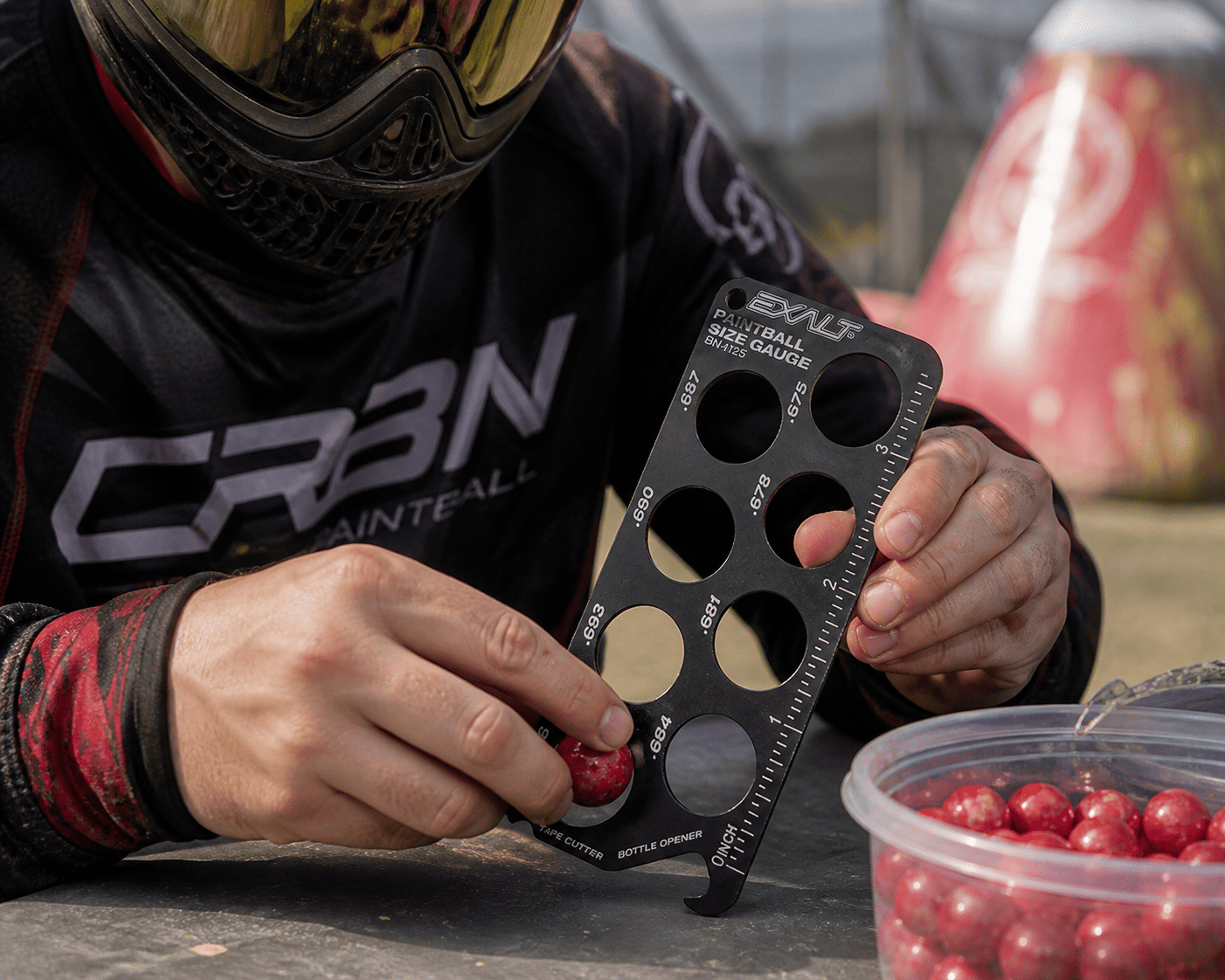
- Record the lot and conditions. Photograph labels and cartons. Note date received, storage location, approximate weather, and any transit damage.
- Inspect before loading. Look for crushed cartons, visible leaks, oiling issues, unusual deformation, or obvious inconsistency. Keep the original packaging until the lot is accepted.
- Use a representative sample. Pull from more than one case and more than one bag. Do not judge an entire shipment from a single handful.
- Run a controlled field check. Use clean, maintained markers that your staff knows well. Record marker model, barrel setup, loader, and test conditions. This helps distinguish a paint issue from a setup issue.
- Choose a disposition. Accept, hold for further test, segregate for a different use, or open a supplier case with facts. Do not blend a questioned lot into good stock.
Calculate Usable Cost, Not Just Case Price
Cheap bulk paintballs are not necessarily expensive, and premium paintballs are not necessarily good value. The correct comparison is the cost to deliver usable, reliable paint to paying players. That cost includes the operational effects of inconsistent product.
Field-owner cost model
Landed usable cost = purchase price + freight + handling + cleaning labor + downtime + credits/refunds + unusable inventory
This is not a universal accounting formula. It is a decision tool. Assign values that fit your field, then compare two suppliers over several documented lots. A lower purchase price stops being attractive when it generates repeat cleaning, staff intervention, and frustrated first-time players.
For example, a field that runs a mixed rental fleet should value reliability and clean operation highly. A tournament venue may place more weight on consistency and predictable performance within its rules and event conditions. An importer may focus on lot traceability, container conditions, and complaint rate. The best reliable paintball supplier is the one whose product grade and support model fit the job you need done.
12 Questions to Ask Before You Buy Bulk Paintballs for a Field
- What is the lot or batch identification method?
- What field use and environmental conditions is this grade designed for?
- What release checks are completed before shipment?
- What sample and complaint process applies to a suspected bad batch?
- What storage range and stock-rotation practice do you recommend?
- What is the production date or best-before policy?
- How are cartons protected against transit compression and heat exposure?
- Can you provide a pilot order before a large seasonal purchase?
- Can you keep product grade and lot information consistent on repeat orders?
- What is your response time when a field reports a quality issue?
- For importers: what documentation accompanies the shipment?
- For private label paintballs: who owns the approved specification and change-control process?
These questions are useful even when you already have a supplier. A serious manufacturer or distributor should welcome a clearer specification because it reduces surprises on both sides. For importers and private-label buyers, put the answers into the purchase specification and require notice before material changes are made.
Where Standards, Events, and Community Fit In
Field owners should separate product quality from broader safety obligations. In the United States, ASTM Committee F08.24 lists standards covering paintball and equipment, including ASTM F1979 for projectiles used in paintball and standards related to field operation. Check the current applicable version and local requirements rather than relying on a supplier’s informal claim.
Competitive paint also has its own procurement signals. The NXL U.S. paint vendors page shows that event paint selection is an active operational consideration, not an afterthought. Players discuss practical symptoms on communities such as r/paintball and PbNation. These are useful listening channels, but they are not controlled testing environments. Use them to identify questions, then validate those questions with lot records and field testing.
Frequently Asked Questions
Why do paintballs vary from batch to batch?
Variation can come from material inputs, process settings, equipment condition, curing or drying, packing, transport, storage, and the way performance is tested. A credible supplier can trace the lot and explain the checks used to release it.
Do more expensive paintballs always perform better?
No. Evaluate landed usable cost, not only the case price. The right product depends on your marker fleet, storage conditions, weather, player mix, and the operational cost of breaks, cleaning, complaints, and unusable stock.
What should a field owner do when paintballs are breaking in the barrel?
Stop short of assigning blame. Document the lot, inspect product and packaging, test a representative sample with maintained markers, and check bore fit, loader force, detents, bolt speed, and storage conditions. Segregate the questioned lot and contact the supplier with evidence.
What should I ask a paintball manufacturer or distributor?
Ask about lot IDs, intended conditions, production or best-before dates, storage guidance, release checks, sample policy, transit protection, and the written complaint process. For private label paintballs, also define specification ownership and change control.
Sources and Further Reading
- ASTM International, Subcommittee F08.24 on Paintball and Equipment. Consult the current standards and their full text for compliance decisions.
- National Xball League, U.S. Paint Vendors. Example of organized event-level paint sourcing.
- C-STAR Paintballs video. Visual context for the production process and manufacturing expertise.
- How Products Are Made, “Paintball”. Background reading on conventional paintball production.
- r/paintball. A listening source for recurring player questions, not a substitute for controlled testing.
Editorial note: This guide is operational education, not a safety standard, laboratory test protocol, or legal advice. Verify applicable laws, standards, and manufacturer instructions for your market.