
Paintball Shell Color Selection: Branding, Visibility, and Choices
When most people think about paintball color, they think about the fill — the bright yellow, pink, or orange mark that appears when a ball breaks on a target. But the shell itself has a color too, and that color affects several things that matter to manufacturers, field owners, and players.
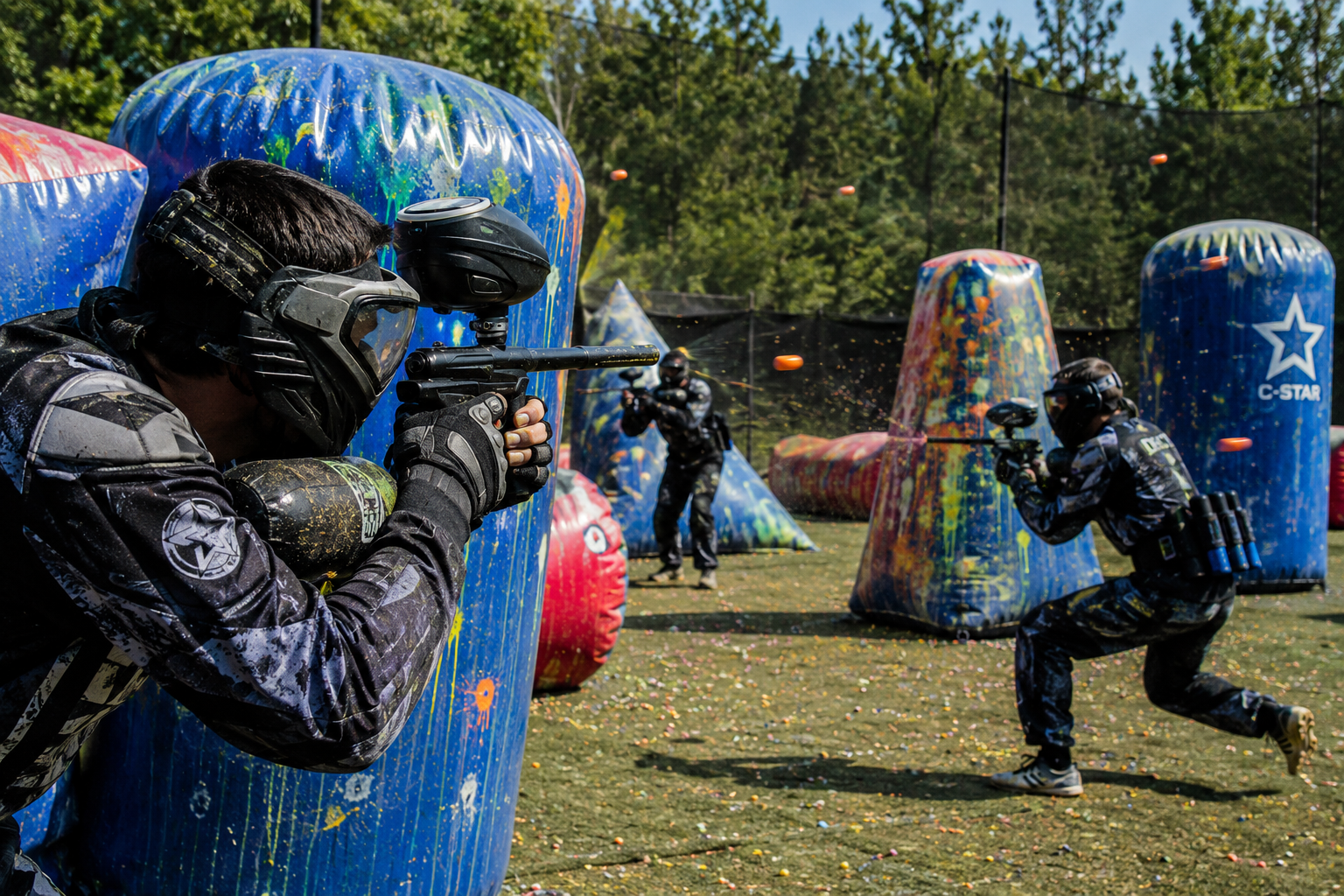
The shell color is what players see when the ball is in their hopper, when it flies through the air, and when it lands without breaking. It is also the first thing a customer sees when they open a case. Paintball shell color selection is a product design decision with implications for visibility, branding, and manufacturing.
‘Basics Shell color vs fill color: what is the difference?
It is important to distinguish between shell color and fill color because they serve different purposes and involve different manufacturing processes.
| Feature | Shell Color | Fill Color |
|---|---|---|
| Location | The gelatin capsule exterior | The liquid inside the capsule |
| Purpose | Product ID, flight tracking, branding | Marking targets, visibility on impact |
| Pigment type | Gelatin-compatible pigment mixed into shell | Water-soluble dye in the fill liquid |
| Manufacturing | Added to gelatin before shell formation | Mixed into fill solution before filling |
| Visibility | Seen during flight and in hopper | Seen after break on target |
Shell color and fill color can be the same or different. A white-shell paintball with yellow fill looks one way in flight and another way on impact. A pink-shell paintball with pink fill is consistent in both. The choice depends on your priorities for visibility and branding.
Visibility Why shell color matters for player visibility
Players track paintballs in flight by watching the shell. The shell color determines how visible the ball is against different backgrounds. This matters for both gameplay and safety.
Branding Shell color as a brand identity element
Shell color is one of the most visible elements of a paintball product. Unlike case design, which is seen at the point of sale, shell color is seen during gameplay — every time a player loads a pod, looks at their hopper, or watches a ball fly through the air. This repeated exposure makes shell color a powerful branding tool.
A distinctive shell color creates instant recognition. A player who sees a bright orange shell flying past knows it is your brand before they see the impact mark. Over time, that recognition builds brand equity that no amount of case printing can replicate.
For private label and OEM buyers, shell color is one of the specifications you can control. If your brand colors include a specific shade that can be matched in the gelatin, your paintballs become a mobile brand advertisement. The manufacturing constraint is that deep, saturated shell colors require higher pigment loading, which can affect shell properties if not formulated correctly.
Manufacturing How shell color affects manufacturing
Adding pigment to the gelatin shell is not as simple as mixing in food coloring. The pigment must be compatible with the gelatin formulation and must not affect the shell’s structural properties.
- Pigment type. Shell pigments must be gelatin-compatible and food-grade. Titanium dioxide is commonly used for white shells. Iron oxides provide earth tones. Organic pigments provide brighter colors.
- Pigment loading. Adding pigment changes the viscosity of the liquid gelatin. Higher loading (for deeper, more saturated colors) requires adjustment of the gelatin formulation to maintain shell thickness and uniformity.
- MOQ impact. Custom shell colors require a dedicated production run, similar to custom fill colors. The mold line must be purged between color changes. MOQ for custom shell colors is typically 200-500 cases.
- Batch consistency. Shell color should be consistent across batches. Color matching between production runs requires careful documentation of the pigment formula and concentration.
- Shelf life. Shell pigments used in paintballs are light-stable and do not fade significantly during the product’s 6-12 month shelf life. However, prolonged exposure to direct sunlight can cause fading.
Options Popular shell colors and their trade-offs
Decision Choosing the right shell color for your product line
Use these questions to guide your shell color decision:
- Where will the paint be used? Outdoor fields with green foliage favor white, pink, or yellow shells. Indoor fields with dark walls favor white or bright shells. Night games favor clear or translucent shells.
- Who is the customer? Tournament players expect white or clear shells. Rental players are used to pink or yellow. MILSIM players may prefer green or earth tones. A distinctive color can attract attention on the shelf.
- What is your brand color? If your brand has a recognizable color, consider matching the shell to it. The color becomes part of the brand experience from case to impact.
- What fill color are you using? White shells work with any fill color. Clear shells let the fill color show through. Colored shells combined with contrasting fill colors can create distinctive visual effects.
- What is your budget and MOQ? Standard colors (white, pink, yellow) have the lowest MOQ and cost. Custom colors require higher MOQ and may cost more per case.
? Frequently Asked Questions
Can I have different shell colors for different product tiers?
Yes. Many brands use shell color to differentiate tiers: white for tournament-grade, pink for field-grade, and a custom color for premium or limited editions. This visual differentiation helps customers and staff quickly identify products.
Does shell color affect the break pattern?
No, not when properly formulated. Shell break pattern is determined by shell thickness, gelatin bloom strength, and curing process, not by the color pigment. A well-formulated colored shell breaks identically to a clear shell of the same thickness and formulation.
What is the most popular shell color globally?
White is the most popular shell color worldwide, especially for tournament and premium paint. Pink and yellow are the most common for field-grade and rental paint. Custom colors represent a small but growing segment driven by private label and event branding.
Can shell color hide shell defects?
Yes, and this is both an advantage and a concern. A colored shell can make minor surface imperfections, seams, or dimpling less visible to the naked eye. While this can improve the cosmetic appearance of the paint, it should not be used to hide quality defects. The underlying shell quality should meet the same standards regardless of color.
+ The short version
Paintball shell color is a product design decision with real implications for player visibility, brand recognition, and manufacturing. White is the safest choice for most applications, offering the best visibility and widest manufacturing compatibility. Pink and yellow are proven alternatives with good visibility and lower cost.
Custom shell colors offer differentiation for brands that want to stand out, but they come with higher MOQ and potential manufacturing adjustments. The key is matching the shell color to your product’s intended use, target customer, and brand identity.
Interested in custom shell colors for your paintballs? Contact CS Paintballs to discuss color options, MOQ, and lead times.