
The Best Paintballs for Indoor Fields: What Actually Works Under the Fluorescents
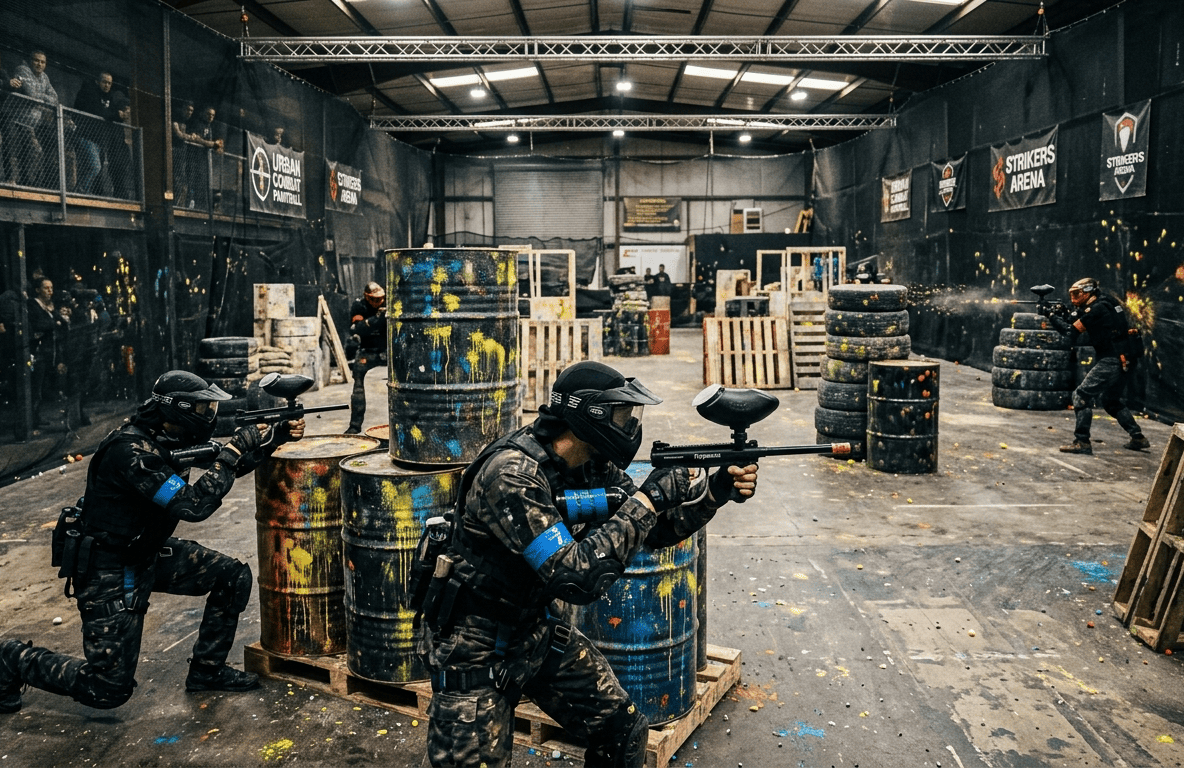
Walk into any indoor paintball arena and the first thing you notice is how different the game feels. The lighting is artificial. The shots echo off corrugated walls. The engagement distances shrink from a hundred feet to twenty. And the paint — the paint is nothing like what you’d load into your marker at a woodsball scenario.
If you’ve ever wondered why your local indoor field insists on selling you their paint instead of letting you bring your own, or why .50 caliber seems to dominate every CQB arena you visit, you’re asking the right question. The best paintballs for indoor fields are not simply “the expensive ones” or “whatever the field sells.” There’s a real engineering story here — one that affects break reliability, safety, cleanup, and ultimately whether you walk off the field grinning or frustrated.
This guide is built for players who want to understand the gear — not just a list of product names, but the why behind indoor paintball ammunition. Whether you’re a field owner deciding what to stock, a regular looking to get the most out of your entry fee, or a first-timer who wants to know what you’re shooting, we’ve got you covered.
Why Indoor Paintball Demands Different Ammunition
Indoor paintball is a fundamentally different sport from its outdoor cousin — and it all comes down to physics and environment.
Close Quarters Change Everything
Outdoor fields routinely see firefights at 80 to 150 feet. Indoor arenas compress that to 15 to 50 feet. At those distances, a paintball traveling at 280 FPS would be genuinely unsafe — which is why indoor fields cap velocities at 250 to 265 FPS. Lower velocity means less kinetic energy on impact. Less energy means your paintball’s shell needs to be brittle enough to break on target at reduced speed, or you’ll spend the day watching paint bounce off opponents.
Artificial Light, Artificial Demands
Outdoor fields enjoy natural light that makes even mediocre fills visible on impact. Indoors, you’re under fluorescents or dim tactical lighting. The fill inside your paintball needs to be bright, high-contrast, and opaque — a thin, watery, or translucent fill will disappear against dark bunkers and make referees’ jobs a nightmare. The best indoor paintballs use fills specifically formulated to pop under artificial light: think neon yellows, hot pinks, and electric oranges.
Ricochet and Surface Concerns
Indoor fields are built from hard surfaces — plywood bunkers, concrete floors, metal grates. Outdoor paintballs with thicker, tougher shells are more likely to ricochet off hard cover and keep flying. Indoor-optimized shells are engineered to shatter on contact with any hard surface, minimizing dangerous bounces and keeping the playing environment predictable.
Caliber Showdown: .68 vs .50 vs .43 — Which One Belongs Indoors?
If you’ve been around paintball for a while, you remember when .68 caliber was the only option. Today, the landscape is more nuanced — and indoor fields have largely moved on.
| Caliber | Weight | Typical Indoor FPS Cap | Impact Energy | Best For |
|---|---|---|---|---|
| .68 cal | 3.0 – 3.3 g | 250 – 265 FPS | ~8.5 – 10.5 J | Tournament indoor arenas, experienced players |
| .50 cal | 1.2 – 1.4 g | 250 – 280 FPS | ~3.5 – 5.5 J | Indoor Standard — most CQB fields, recreational play |
| .43 cal | 0.8 – 0.9 g | 240 – 260 FPS | ~2.0 – 3.0 J | Low-impact sessions, youth groups, first-timers |
.50 Caliber: The Indoor Gold Standard
Ask any indoor field operator what they stock, and .50 caliber is the answer roughly 80% of the time. It hits the sweet spot: roughly half the mass of .68 means significantly less sting on impact (huge for retaining first-time players), while still carrying enough energy to deliver a satisfying, audible break. The smaller diameter also means tighter shot groupings at indoor engagement distances, which experienced players appreciate.
From a field economics perspective, .50 caliber cases are lighter to ship, cheaper to produce, and the lower impact means less wear on bunkers and netting. Players get through fewer rounds per game because the accuracy demands smarter shooting — a win for everyone’s wallet.
.43 Caliber: The Low-Impact Revolution
.43 caliber entered the mainstream through JT’s SplatMaster line and has since been adopted by dedicated low-impact brands. It’s specifically designed for the player who would never consider traditional paintball: kids as young as 8, corporate team-building groups, and anyone who hears “paintball” and thinks “bruises.” The impact is genuinely negligible — comparable to a firm flick — while the break is still satisfying enough to call your hits.
.68 Caliber Indoors: Still Has a Place
Don’t write off .68 caliber entirely for indoor play. Tournament-oriented indoor facilities — especially those hosting NXL-style speedball under a roof — still run .68 because that’s what competitive players train with. The heavier round performs better against wind (if the facility has ventilation), and the larger fill volume produces unmistakable elimination marks. If you’re a tournament player training indoors, .68 is what you want — just expect the field paint prices to reflect the premium.
Shell Brittleness: The Engineering Variable That Makes or Breaks Indoor Play
Shell brittleness is the single most misunderstood variable in paintball ammunition — and indoors, it’s the one that matters most.
Paintball shells are made from a gelatin-and-plasticizer compound, manufactured to a precise brittleness specification. The metric that matters is break force: how much impact energy is required to fracture the shell. Outdoor paintballs typically target a higher break force because they need to survive a 300 FPS launch and still explode on a soft target 100 feet away. Indoor paintballs can (and should) target a lower break force because:
- Engagement distances are shorter, so the round retains more velocity at impact
- Velocity caps are lower, so the shell doesn’t need to withstand as much barrel stress
- Hard indoor surfaces punish overly tough shells with ricochets that fly back into play
The ideal indoor shell breaks reliably at 250-260 FPS on a human target at 20 feet while surviving the firing cycle without barrel breaks. That’s a narrow engineering window, and it’s why the best indoor paintball manufacturers invest heavily in quality control.
Storage and Handling: The Hidden Brittleness Killer
Paintball shells absorb moisture from the air. In a humid indoor facility (and many are, thanks to poor ventilation and sweat), paintballs left sitting in open bags can swell and soften within hours, becoming dimpled and prone to barrel breaks. Conversely, paint stored too cold becomes brittle and shatters prematurely. The best indoor fields rotate their paint stock quickly and store it in climate-controlled conditions. If you’re buying paint at a field and the bags feel sticky, swollen, or dimpled, ask for a fresher batch — you’re paying for it.
Fill Types That Shine Under Fluorescent Lights
The fill inside a paintball is not just colored water. It’s a formulated suspension of pigment, thickener, and (in some cases) polyethylene glycol. For indoor play, three fill characteristics separate the great from the mediocre:
1. Opacity and Brightness
Indoor lighting is garbage for referees. Fluorescent tubes cast a flat, even wash that makes subtle colors disappear. The best indoor fills are high-opacity neons — fluorescent orange, hot pink, lime green, and bright yellow. These colors create unmistakable contrast against dark clothing and dark bunkers. Avoid dark fills like navy blue or forest green; they’re practically invisible under indoor lighting.
2. Viscosity and Cleanup
Indoor fields have to scrub their bunkers, floors, and netting after every session. Water-based fills with low oil content are the standard here — they wipe clean with a damp cloth and don’t leave permanent stains on rental gear. Oil-based fills (more common in tournament-grade outdoor paint) are a field operator’s nightmare indoors. They stain everything and require solvent-based cleaners. If a field tells you their paint is “tournament grade,” ask whether it’s oil-based or water-based before buying.
3. Fill Volume
.50 and .43 caliber paintballs carry less fill volume than .68 — that’s just physics. But the percentage of the shell that’s filled matters. The best indoor paintballs run a high fill ratio (85%+ of internal volume), producing a satisfying splatter even from the smaller caliber. Under-filled rounds produce weak, streaky marks that referees struggle to call.
The Best Paintballs for Indoor Fields: Brand-by-Brand Breakdown
There are five manufacturers that consistently produce paintballs worth loading in an indoor marker. Each has a specific niche.
| Brand | Best Indoor Line | Caliber | Shell Profile | Price Range (per case) | Standout Feature |
|---|---|---|---|---|---|
| GI Sportz | 3-Star / Field | .50, .68 | Medium-brittle, highly consistent | $55 – $75 | Industry Standard — the benchmark for quality control |
| HK Army | Level / Premier | .50 | Brittle, tournament-grade | $50 – $70 | Exceptionally bright fills, designed for indoor visibility |
| Valken | Graffiti / Infinity | .50, .68 | Balanced, good all-rounder | $40 – $60 | Best value-to-performance ratio for recreational indoor |
| Empire | Premium / Hot Spot | .50, .68 | Medium, slightly thicker than GI | $45 – $65 | Thick fills with excellent opacity; great for dimly lit arenas |
| Nelson | Nel-Splat (.43 low-impact) | .43 | Ultra-brittle, low-impact engineered | $30 – $50 | Low-Impact King — the .43 caliber benchmark |
GI Sportz: The Consistency Champion
GI Sportz dominates indoor paintball for a reason: their quality control is the tightest in the industry. Their 3-Star line (in .50 caliber) delivers round-after-round consistency in both shell brittleness and fill brightness. You won’t get random bounces from thick-shelled outliers, and you won’t get barrel breaks from thin ones. For field owners, GI Sportz paint reduces referee disputes and player complaints — which is why so many facilities standardize on it. The 3-Star is the premium pick; the Field grade is the budget-friendly alternative that still performs admirably.
HK Army: Built for Visibility
HK Army approached indoor paint from the player’s perspective: make the break impossible to miss. Their Level and Premier .50 caliber lines use a proprietary fill formula that’s slightly thicker and intensely pigmented — it practically glows under fluorescent light. The shell is tuned on the brittle side, so it breaks dramatically even at the lower end of indoor velocity ranges. The tradeoff: HK Army paint is more sensitive to storage conditions, so buy it fresh and keep it cool.
Valken: Best Bang for Your Buck
Valken’s Graffiti line (available in .50 caliber) is the best value play for recreational indoor paintball. It won’t outshine GI Sportz in round-to-round consistency, but it delivers 90% of the performance at roughly 70% of the price. For weekend walk-ons, birthday parties, and casual sessions, Valken Graffiti is the smart money. The Infinity line is a step down in shell consistency — fine for rental markers, but players with their own gear should spring for Graffiti.
Empire: The Dark Arena Specialist
Empire’s Premium and Hot Spot lines deserve a mention for one specific strength: their fills are the thickest and most opaque on the market. If you play at an indoor field with particularly dim lighting (black-light arenas, tactical low-light scenarios, or just poorly lit CQB courses), Empire paint produces breaks that referees can actually see. The shell is slightly thicker than GI Sportz, so you may see an occasional bounce at extreme close range — but under low-visibility conditions, the fill advantage outweighs that tradeoff.
Nelson: The .43 Caliber Standard
Nelson Paintballs (of Nel-Splat fame) basically invented the modern low-impact category. Their .43 caliber paint is engineered from the ground up for the ultra-low velocity window (240-260 FPS) and is the standard against which other .43 options are measured. If your indoor field runs .43 caliber sessions — and more facilities are adding them every year — there’s a strong chance they’re using Nelson paint. It’s the default recommendation for youth programs and first-timer experiences.
10 Pro Tips for Getting the Most Out of Indoor Paint
- Buy paint at the field, not online. Paintballs are perishable. Fresh field paint that’s been stored properly will outperform three-month-old online orders every time. Indoor fields move through inventory quickly — that freshness is worth the markup.
- Inspect your bags before you pay. Open the bag and check for dimples, swelling, or a sticky residue. Dimpled paint is moisture-damaged. Swollen paint will jam in your loader. Sticky paint will break in your barrel. A good field will swap out a bad batch without question.
- Match your bore to the paint. Indoor paintballs (especially .50 caliber) are more sensitive to bore mismatch than .68. A barrel that’s too tight will shred brittle indoor shells. A barrel that’s too loose will produce inconsistent velocity. Use a barrel kit with inserts and size to the paint you’re shooting that day.
- Don’t overbore indoors. Some players swear by overboring for efficiency, but indoors — with brittle shells and short engagement distances — underboring or a matched bore produces better accuracy and fewer barrel breaks.
- Keep your paint cool, not cold. Ideal storage temperature is 55-70°F (13-21°C). Don’t leave paint in a hot car, and don’t throw it in a cooler with ice directly against the bags. Condensation kills paintballs faster than anything.
- Rotate your pods between games. Paint sitting in pods between rounds settles and can develop flat spots. Rotate pods so no batch sits for more than 30 minutes in a pod. Give pods a gentle roll before loading to redistribute the fill.
- Clean your marker and loader between sessions. Indoor fields are dusty environments. A dirty bolt face or breach will shred brittle indoor shells. A five-minute wipe-down before you play saves you from a day of barrel breaks.
- Know your field’s FPS limit and chrono honestly. Shooting hot with brittle indoor paint is a recipe for barrel breaks — and it’s unsafe. Chrono at the field’s limit, not above it. The paint is designed for that velocity window.
- Ask what paint the field stocks before you book. If you’re an experienced player with a preference, call the field. Some facilities will tell you the exact brand and grade they’re running that week. Use this guide to decide whether that paint matches your expectations.
- For field owners: sample before you commit to a bulk order. Paint performance varies by batch, season, and shipping conditions. Always test a case from a new shipment on your actual field markers before ordering pallets. What worked last month may not work this month.
Frequently Asked Questions
What caliber paintballs do most indoor fields use?
Most indoor fields today run .50 caliber, with a growing number adopting .43 caliber for low-impact sessions. Traditional .68 caliber still appears at tournament-oriented indoor arenas, but .50 has become the indoor standard because it reduces ricochet risk and works better under artificial lighting. Always check with your specific field before arriving — showing up with your own .68 marker to a .50-only facility means you’re renting gear.
Do indoor paintballs hurt less than outdoor paintballs?
Yes, significantly — and it’s by design. Indoor fields almost always use smaller calibers (.50 or .43) with lighter fills and field-imposed velocity caps (typically 250-265 FPS versus the outdoor standard of 280-300 FPS). The combination of smaller mass, lower velocity, and closer-range break characteristics means hits are noticeably gentler while still providing clear elimination confirmation. A .43 caliber round at 250 FPS carries roughly one-quarter the impact energy of a .68 round at 285 FPS.
Can I use outdoor paintballs at an indoor field?
Almost never — and don’t try to sneak them in. Indoor fields have strict field-paint-only policies for several reasons: outdoor paintballs typically have thicker shells that don’t break reliably at indoor velocities, they may use oil-based fills that permanently stain indoor surfaces, and most critically, fields need to control what ammunition enters their facility for safety, insurance, and liability compliance. Using outside paint at a field-paint-only facility can get you ejected.
How much should I expect to pay for indoor paintballs?
Indoor field paint typically runs $40 to $75 per case of 2,000 rounds for .50 caliber, with premium tournament-grade indoor paint reaching $65-$85. .43 caliber low-impact paint is usually priced at $30-$50 per case of 2,000. Most indoor fields bundle paint into entry packages, so the per-case price is often lower when purchased as part of a group deal. Keep in mind: that field markup pays for the climate-controlled storage and rapid inventory turnover that keeps the paint fresh.
Which brand makes the best indoor paintballs?
GI Sportz and HK Army are the two dominant names in indoor paintball ammunition, and for good reason. GI Sportz’ .50 caliber 3-Star and Field lines are the quality-control benchmark — virtually no dimpled rounds, no random bounces from thick shells, no barrel breaks from thin ones. HK Army’s Level and Premier .50 caliber paint delivers the brightest fills under artificial light. Valken Graffiti is the best value pick, and Nelson Nel-Splat is the undisputed .43 caliber standard. Your best bet: play with what your field stocks for a day, then decide if you want something different.
What is shell brittleness and why does it matter for indoor play?
Shell brittleness refers to how easily a paintball’s gelatin shell fractures on impact — measured as break force (the energy required to rupture). Indoor fields demand higher brittleness because engagement distances are shorter (often 15-50 feet), and velocities are capped lower (250-265 FPS). A paintball that’s too tough won’t break on target, producing frustrating bounces. One that’s too brittle will shatter inside the marker’s breach or barrel. The best indoor paintballs strike a precise balance: brittle enough to break reliably at close range and low FPS, durable enough to survive the firing cycle. This is where manufacturing quality control separates premium brands from budget paint.
The Bottom Line: What Should You Actually Shoot Indoors?
If you want the shortest possible answer, here it is: shoot fresh .50 caliber GI Sportz 3-Star or HK Army Premier from a clean marker chronoed to your field’s limit, and you’ll have zero complaints.
But the real answer is more interesting. The best paintballs for indoor fields are the ones that match your specific arena’s conditions — lighting, velocity cap, cleanliness, and crowd. A dimly lit tactical arena benefits from Empire’s ultra-opaque fills. A youth-oriented facility running .43 caliber should be on Nelson Nel-Splat. A competitive indoor speedball field where everyone brings their A-game? GI Sportz 3-Star or HK Army Premier, every time.
The common thread across every recommendation in this guide: freshness and consistency matter more than brand name. The most expensive paint in the world will perform terribly if it’s been sitting in a hot warehouse for six months. Buy from fields that move product, inspect your paint before you pay, and store it properly between games. Do those three things, and you’ve already solved 80% of the indoor paintball performance equation.
Now get out there, keep your mask on, and call your hits.