
Paint Keeps Breaking in Your Barrel? Here Is Why — and Exactly How to Fix It
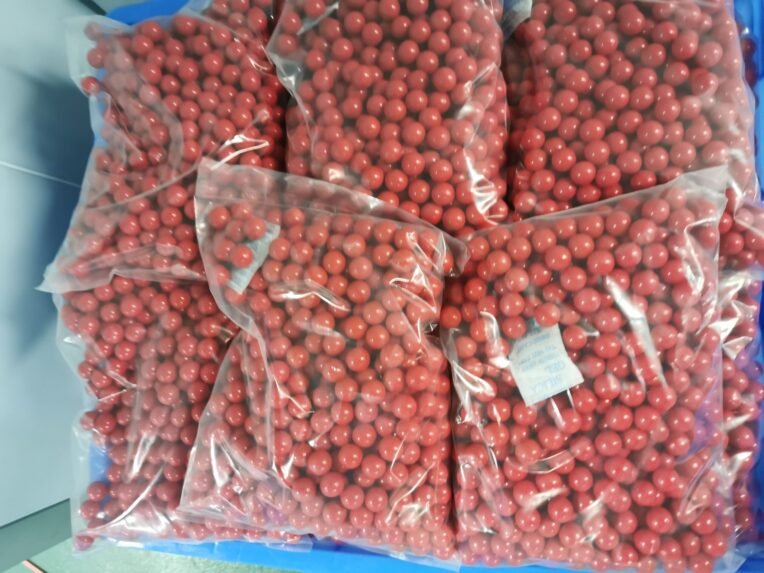
You pull the trigger. A wet spray of fill and shell fragments blows out the front of your barrel. You wipe it down. Load a fresh hopper. Fire one shot and — same thing. By the time you clear the fourth barrel break, you have spent more time cleaning than shooting, and the paint inside your loader is already starting to swell from the moisture of previous fragments.
Every paintball player has been here. The frustrating part is that paintball breakage prevention is not complicated. Barrel breaks and chops are almost never mysterious. They have specific, identifiable causes — and every single one has a direct fix.
This guide covers every common reason paint breaks in the barrel or breech, in order of how often they actually happen. If you work through this list in sequence, you will solve the problem before you finish reading.
01Cause Your barrel bore and your paint diameter do not match
This is responsible for more barrel breaks than every other cause combined. Here is why:
- If your paint is smaller than your barrel bore, the ball can roll past the detent under its own weight or loader pressure. It drifts forward into the barrel before the bolt returns, and the returning bolt clips the back of the ball — chopping it in the breech.
- If your paint is larger than your barrel bore, the ball gets squeezed as it enters the barrel. The friction is too high, the shell compresses unevenly, and either it breaks from the stress or it jams and the next ball stacks into it.
02Cause Fix Bolt speed is faster than your paint can settle
This is the classic stacked chop. The marker fires, the bolt cycles back, a new ball drops into the breech, and the bolt returns to chamber it. If the bolt returns too fast, it catches the ball while it is still falling into place. The result: the bolt shears the ball in half inside the breech.
03Cause Fix Your detents are worn or missing
Detents are small rubber nubs inside the breech that hold the paintball in place until the bolt chambers it. Over time, they wear down, harden, or break off. Once they lose their grip, the paintball drifts forward under gravity or loader pressure, and the returning bolt catches the edge of the ball instead of the center — chopping it.
04Cause Fix The paint itself is the weakest link
Sometimes the paint is fine for the marker and the player, and the problem is the paint itself. This is where paintball batch consistency comes in. If the shells in a case have uneven wall thickness, weak seams, or have been damaged by heat, they will break on impact with the barrel wall — regardless of how well you have tuned your marker.
05Cause Fix Your loader is pushing too hard
Force-feed loaders (Dye Rotor, Spire 4, HK Sonic, etc.) apply constant tension to push paint into the breech. If that tension is too high, it forces paint past the detents, deforms soft shells before they reach the barrel, or creates so much stack pressure that the ball at the bottom of the feed neck gets crushed by the weight of the balls above it.
06Cause Fix Temperature made the paint brittle or soft
Paint that is too cold becomes brittle and shatters on impact with the bolt, the barrel wall, or the ball ahead of it. Paint that is too hot becomes soft and deforms under bolt pressure, breaking inside the breech or barrel.
| Temperature | Effect on Paint | Breakage Pattern |
|---|---|---|
| < 50°F (10°C) | Shell becomes brittle; shatters on impact | Shattering in breech; balls break just from bolt contact |
| 50–80°F (10–27°C) | Ideal range; shell is firm but not brittle | Normal breakage only |
| 80–95°F (27–35°C) | Shell softens; deforms under pressure | Barrel breaks; balls deform in feed neck; stack pressure damage |
| > 95°F (35°C) | Permanent shell damage; gelatin crosslinks break | High break rates; paint dimples and deforms in case |
Quick troubleshooting flow: diagnose in 60 seconds
Next time paint starts breaking, run this checklist in order. Stop when you find the cause.
- Stop firing. Remove the barrel. Look into the breech. Is a ball sitting forward of the detent? That is a bore or detent issue. Move to step 2.
- Drop one ball through the barrel. Does it fall freely? If yes, your bore is too large for this paint. Switch to a smaller insert.
- Inspect the detents. Do they look flat or glazed? If yes, replace them.
- Fire one slow shot. Does it break? If no, the problem is bolt speed or loader tension — not the paint itself.
- Fire five fast shots. Do only the fast shots break? That is bolt speed. Reduce dwell by 2-3 ms.
- Open the loader. Is there broken paint inside the hopper? That is loader tension. Back it off.
- If none of the above solved it, test a different case of paint. If the new case shoots clean, the original paint batch is the problem.
Frequently Asked Questions
How do I know if my bore size is causing breaks?
The simplest test: load a single ball and tilt the marker forward. If the ball rolls out of the barrel on its own, your bore is too large and the ball is not being held by the detent properly. A correctly matched bore holds the ball in place against gravity.
Is it the paint or the gun?
Run this test: load a fresh hopper from a known good batch of paint. Fire 20 shots. If there are breaks, it is the gun. If there are zero breaks, load the suspect paint. If breaks appear, it is the paint. This isolates the variable in under two minutes.
Can bad paint quality cause barrel breaks even with a perfect setup?
Yes. Paint with thin shells, weak seams, or heat damage will break in even the best-tuned marker. The shell is the weakest mechanical link in the entire firing system. If the manufacturer’s batch consistency is poor, no amount of marker tuning will compensate.
How often should I replace my detents?
Every 10-15 cases of paint under normal use. If you play frequently or practice with high-ROF markers, check them monthly. Detents are a consumable part, not a permanent one. Replace them proactively before a tournament to eliminate one variable from your breakage troubleshooting.
The short version
Paint breaks in the barrel for a handful of reasons, and nearly every one has a cheap, fast fix. Bore mismatch is the most common culprit. Bolt speed is second. Worn detents are third. Paint quality and temperature round out the list. If you diagnose in that order, you will find the problem in under five minutes.
The best prevention strategy, though, starts before the paint ever reaches your hopper: work with a manufacturer that produces consistent, heat-resistant shells with tight wall thickness tolerances. That way, when you do the troubleshooting above, the paint is never the variable.
Need paint that holds up in your marker? Contact CS Paintballs for batch-level QC data on our current production runs.