
Paintball Inventory Planning: How Smart Fields Stock Before Peak Season
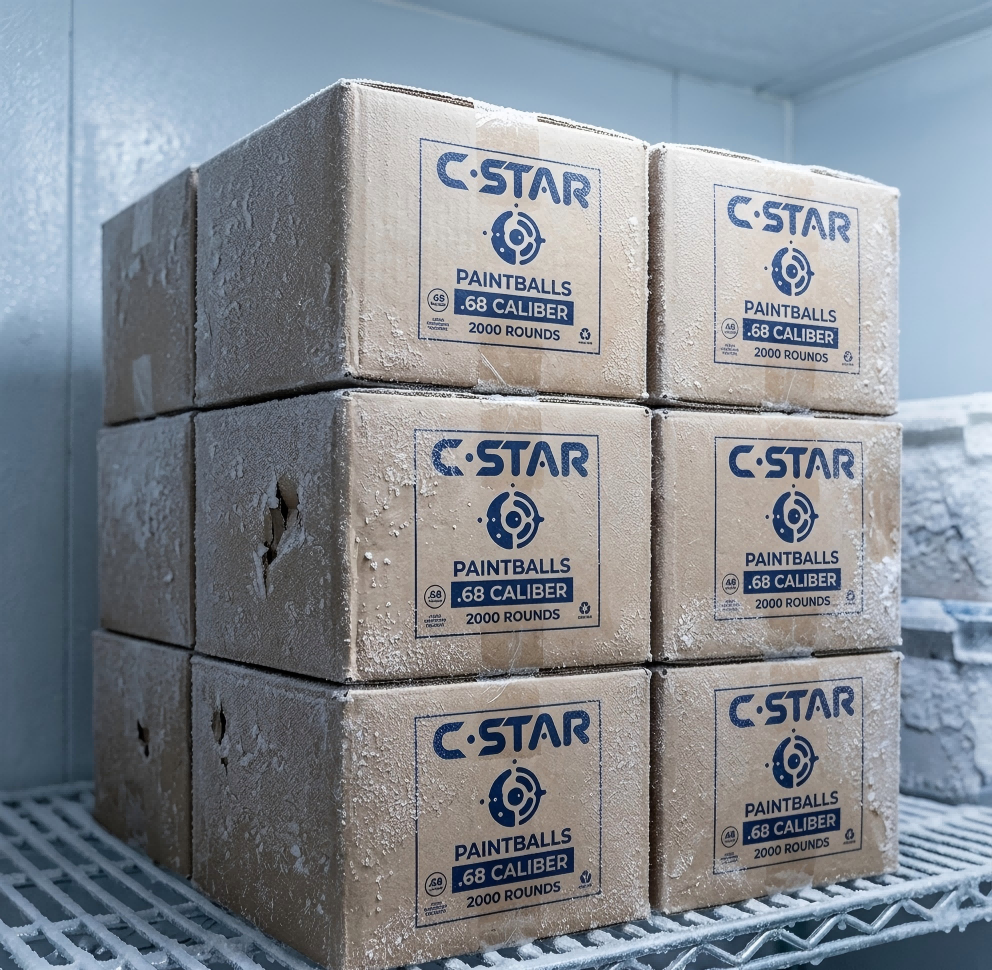
Every paintball field operator knows the panic. It is Saturday morning in July. The first rentals are arriving. You check the paint closet and realize you have sixty cases left for a weekend that will sell a hundred and fifty. Your next container does not arrive for three weeks. You start making phone calls to distributors who know you are desperate and price accordingly.
This scenario repeats every summer at fields across the country. And it is almost always preventable. Paintball inventory planning for peak season is a straightforward process — one that takes more calendar discipline than financial sophistication. This guide walks through every phase of the planning cycle, from forecasting in the off-season to managing reorders during the busiest months.
Phase 1 Forecast: 4 to 6 months before peak
The planning window opens in late winter or early spring for a summer peak season. This is when you have the most time and the least urgency. Use it wisely.
- Pull last year’s monthly sales data. You need numbers for your peak month (likely June, July, or August) plus the shoulder months before and after.
- Calculate your growth multiplier. If your field grew 15% year over year, multiply last year’s peak month by 1.15. If you added new rental markers or expanded capacity, factor in an additional 5-10%.
- Check the calendar. A season with more weekend days or holiday Mondays drives higher demand. Compare the number of operating days in the coming peak month to the same month last year.
- Account for events. If you are hosting tournaments, corporate events, or group bookings during peak season, add their expected paint consumption to your forecast.
Phase 2 Order: 2 to 4 months before peak
With your forecast in hand, it is time to place orders. This is where lead time math matters most.
| Lead Time Component | Typical Duration | Notes |
|---|---|---|
| Manufacturing lead time | 3–5 weeks | Longer for custom color or private label orders |
| Ocean freight (China to US) | 2–4 weeks | West Coast is faster; East Coast + inland adds 1–2 weeks |
| Customs clearance | 1–5 days | Longer if documentation is incomplete |
| Inland drayage | 3–7 days | Port to warehouse |
| Total minimum lead time | 6–10 weeks | Buffer: add 2 weeks for safety |
Use this formula to determine your core peak season order:
Example: A field sold 280 cases in July last year. Forecasted peak month = 280 x 1.2 = 336 cases. Safety stock = 80 cases. Current inventory = 40 cases. Order = 336 + 80 – 40 = 376 cases.
Phase 3 Receive and store: 1 to 2 months before peak
When your first peak season shipment arrives, the work shifts from ordering to preparing.
- Inspect every pallet for water damage, crushing, or signs of heat exposure before signing the delivery receipt.
- Check production dates. Confirm the paint was manufactured recently enough to last through the entire peak season. Paint older than 6 months should be flagged for priority use.
- Test a sample case. Run 20-30 balls through a chrono. Fire them into cardboard to check break consistency. If the batch has issues, you want to know before peak season starts, not during it.
- Log the inventory into your tracking system with production dates and pallet locations.
Phase 4 Manage during peak season
Peak season is when planning pays off. The goal is to never touch your safety stock unless you actually need it.
- Set a reorder trigger. When your active inventory drops to the level of your safety stock, it is time to place a reorder. For most fields, this is around 2-3 weeks of expected demand remaining.
- Track weekly consumption. Post a whiteboard in the paint storage area. Mark cases sold each day. Compare to forecast weekly. If you are burning through inventory 30% faster than predicted, adjust your reorder timing accordingly.
- Monitor paint quality. The cases that have been in storage longest should be used first. As peak season progresses, check older inventory for signs of heat damage or shell degradation.
- Communicate with your supplier. If you need to accelerate a reorder, your manufacturer needs as much notice as possible. A supplier who knows your seasonal plan can prioritize your reorder over a new customer’s first order.
➕ Post-peak: review and plan
When the season winds down, take the time to review what happened. The data you collect now makes next year’s forecast more accurate than this year’s.
- Compare forecast to actual. How close was your peak month forecast? If you were off by more than 15%, identify why. Did an event drive extra traffic? Did weather reduce walk-ins?
- Check your safety stock. Did you use it? If you never touched your safety stock, you over-ordered. If you dipped into it in the first month, you under-forecasted or ordered too late.
- Evaluate supplier performance. Did the paint arrive on time? Was the quality consistent across all shipments? Did the manufacturer respond quickly to reorder requests? Grade your supplier — peak season is the true test of their reliability.
- Document everything. Create a one-page peak season summary with actual sales, order quantities, lead times, and lessons learned. Next year’s planning starts with this document.
? Frequently Asked Questions
What if I do not have last year’s sales data because my field is new?
Use conservative estimates based on your field’s capacity. If your field can handle 200 rental players per weekend day and each player goes through 500 paintballs, that is 100,000 paintballs per weekend day — roughly 200 cases per weekend. Start with 60-70% of that capacity estimate for your first peak season, and add safety stock of 4-6 weeks to protect against running out.
Should I order all paint at once or in multiple shipments?
Multiple shipments are better for most fields. A single massive order creates storage pressure, ties up cash, and risks a large batch developing quality issues in storage. Splitting into 2-3 shipments over 6-8 weeks spreads the risk and gives you flexibility to adjust quantities based on actual demand.
How much storage space do I need for peak season inventory?
A pallet of paintballs typically holds 40-60 cases and takes up about 4 square feet of floor space. A field ordering 400 cases needs roughly 7-10 pallets — about 30-40 square feet of storage, plus aisle space for accessing older cases.
What paint-to-player ratio should I plan for?
A typical rental player goes through 400-600 paintballs per session. A recreational regular uses 500-800. A tournament player practicing can use 1,000-2,000. Calculate based on your player mix. If 80% of your weekend traffic is rentals and 20% is regulars, a weighted average of 550-650 balls per player is a reasonable planning number.
+ The short version
Peak season inventory planning is not complicated, but it requires calendar discipline. Start 4-6 months before your first peak weekend. Forecast based on last year’s same month, not last month. Add a growth factor and safety stock. Split your orders across multiple shipments. And use the post-season review to make next year’s plan even better.
The fields that plan ahead never scramble in July. The difference between a smooth peak season and a stressful one is usually just a calendar reminder six months earlier.
Planning your peak season order? Contact CS Paintballs for current lead times and bulk pricing for summer delivery.