
The Hidden Costs of Cheap Paintballs: How Brittle Paintballs Destroy Rental Markers and Lose Customers
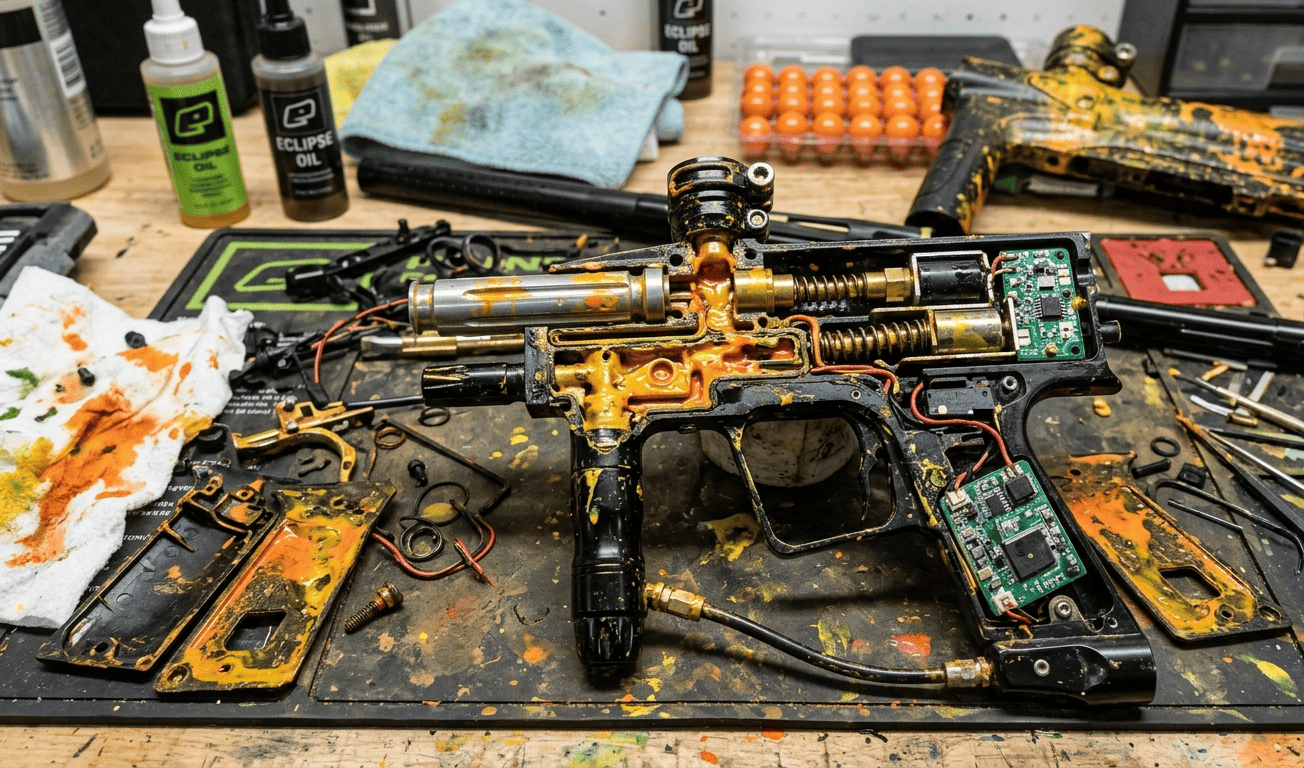
You’re Losing Money Every Single Weekend—and You Don’t Even Know It
Picture this: it’s a Saturday afternoon at your paintball field, and a family of four walks in excited to try paintball for the first time. You hand them a clean Tippmann 98 rental marker, load some cheap paintballs you picked up last month at rock-bottom prices, and send them downrange. Thirty minutes later, the marker suddenly jams. The game stops. The referee has to spend fifteen minutes clearing broken paintball debris from inside the barrel. The family’s experience is ruined, and they leave feeling frustrated instead of planning their next visit.
This scenario isn’t hypothetical—it’s happening at paintball fields worldwide every single day.
What you’re experiencing is a problem that most paintball field operators don’t fully understand: the true cost of low-quality, brittle paintballs goes far beyond the per-round price you pay your supplier. The damage ripples through your entire business model, affecting equipment durability, operational efficiency, customer satisfaction, and ultimately your profit margin.
In this guide, we’ll expose the hidden costs of cheap paintballs, explain exactly why barrel breaks happen, and show you how switching to quality field-grade paintballs manufactured with proper hardness formulas isn’t an expense—it’s an investment that pays for itself many times over.
The Barrel Break Problem: Why Cheap Paintballs Destroy Your Rental Markers
Understanding What’s Happening Inside Your Marker
When you load a paintball into a rental marker like the ubiquitous Tippmann 98, it travels down the barrel at approximately 280 feet per second. The physics is simple: the paintball either survives the chamber pressure and acceleration, or it doesn’t.
Here’s where cheap paintballs become a liability. Low-quality paintballs manufactured with inconsistent hardness—often made from inferior polyethylene glycol (PEG) compounds or cut corners on quality control—fail in three critical ways:
1. Inconsistent Shell Hardness Causes Premature Rupture
Premium field-grade paintballs are manufactured using carefully calibrated PEG raw material formulas that ensure consistent durometer hardness across every batch. This precision is expensive, which is why budget manufacturers skip it. When paintball shells have variable hardness, some are too brittle. These shells fracture during the acceleration phase inside the marker’s chamber or barrel, creating what’s called a “barrel break”—a catastrophic failure where paintball material lodges inside the barrel and rendering the marker unusable until cleaned.
2. Moisture Absorption Compromises Structural Integrity
Paintballs are hygroscopic—they absorb moisture from the air. Budget wholesale paintballs often use substandard capsule coatings that don’t properly seal the shell, allowing rapid moisture absorption. As water penetrates the shell, it softens the PEG compound, making it increasingly brittle. In humid climates or during rainy seasons, this problem accelerates dramatically. Within 48 hours, supposedly “cheap paintballs” can degrade from merely unreliable to completely unusable—and your markers pay the price.
3. Poor Fill Consistency Creates Pressure Imbalances
The fill material inside a paintball (typically a gelatin-based paint compound) needs precise pressure equilibration with the shell. Cheap manufacturers often use inconsistent fill volumes or poor-quality fill materials. When there’s too much or too little fill material, pressure imbalances develop. As the paintball accelerates through the barrel, uneven internal pressure causes uneven stress distribution on the shell, leading to spontaneous shell fractures—exactly the scenario that causes barrel breaks.
The Real Cost Calculation: Why “Cheap” Actually Costs You Thousands
Direct Costs: Equipment Damage and Maintenance
Let’s do the math on what a single day of barrel breaks costs your field.
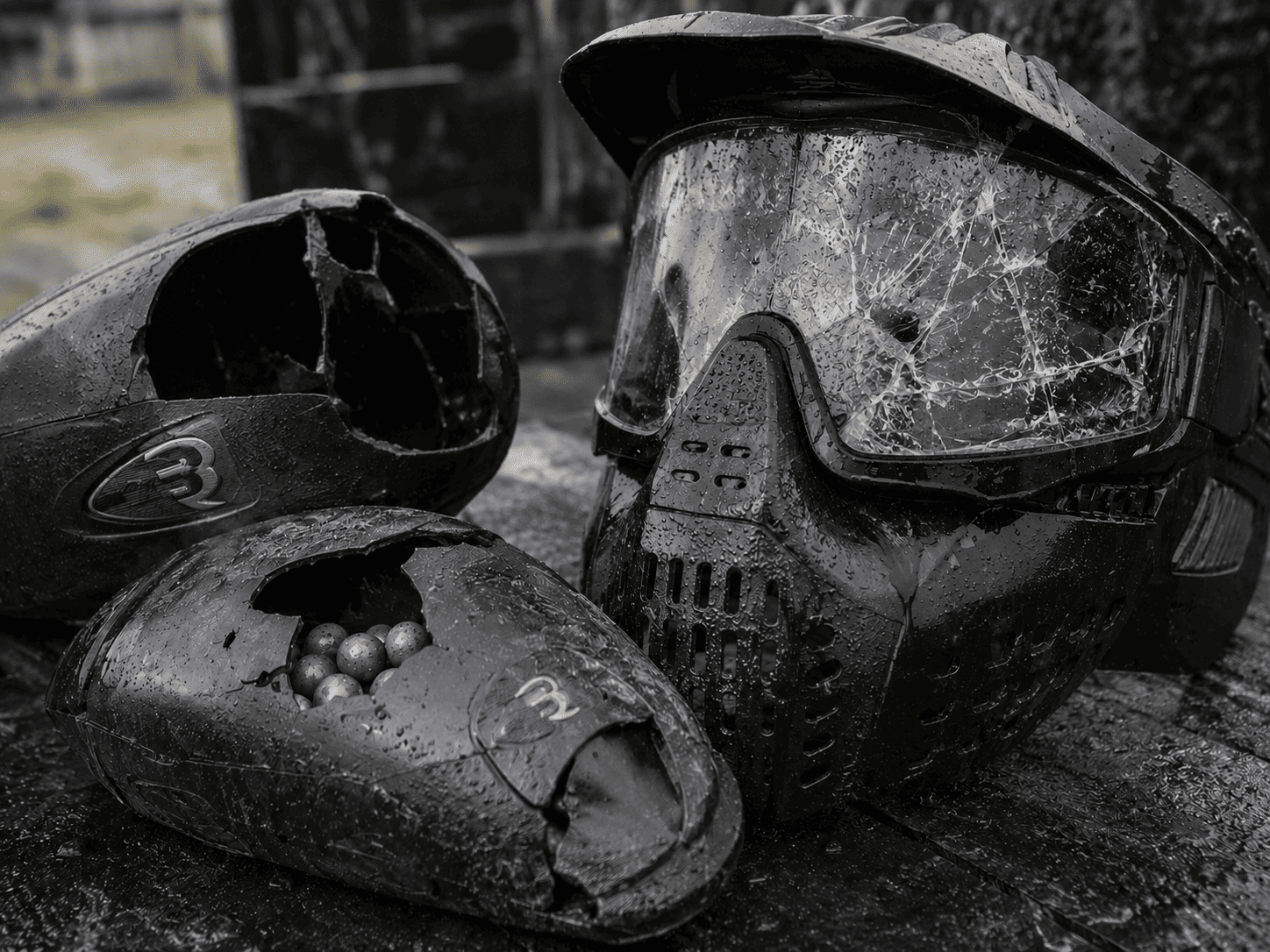
When a paintball ruptures inside a marker barrel, the following expenses cascade:
- Referee/Staff Time for Cleaning: Each barrel break requires 10-20 minutes of cleaning with compressed air and barrel swabs to remove dried paint residue. At $15-20/hour labor cost, that’s $2.50-$6.70 per incident. If you have 5-10 barrel breaks per weekend day, that’s $12.50-$67 in labor costs alone per day.
- Game Downtime Loss: Every minute a marker is out of service is a minute that group can’t play. Rental fields typically generate $15-30 in revenue per marker per hour. A 15-minute cleanup means lost revenue of $3.75-$7.50 per incident. Multiplied across 5-10 daily incidents, that’s another $18.75-$75 in opportunity cost.
- Premature Barrel Replacement: Repeated barrel breaks cause cumulative damage. Paint residue, even when cleaned, leaves micro-scratches inside the barrel. The internal surface becomes rougher, increasing friction and future paint-on-paint adhesion. Quality barrels for Tippmann 98 markers cost $30-50 each. If poor paintball quality reduces barrel lifespan from 3 years to 18 months, you’re replacing barrels 50% more frequently.
- O-Ring and Valve Degradation: Paintball fragments don’t just lodge in barrels. They damage the delicate rubber O-rings and feed valve mechanisms. Replacement O-ring kits run $10-20, and valve repairs can exceed $50. Even with good maintenance, cheap paintballs accelerate wear by 30-40%.
Monthly Impact Example: For a mid-sized field with 20 rental markers operating weekends and holidays (roughly 100 operating days per month):
| Cost Category | Per-Incident Cost | Monthly Incidents | Monthly Total |
|---|---|---|---|
| Cleaning Labor | $4.50 | 300 | $1,350 |
| Game Downtime/Lost Revenue | $5.50 | 300 | $1,650 |
| Accelerated Parts Replacement | $20/month per marker | 20 markers | $400 |
| TOTAL | $3,400 |
That’s $3,400 per month in direct costs caused by cheap paintballs at a single mid-sized field. Annually, that’s $40,800.
Indirect Costs: Customer Experience and Retention
But the real damage goes deeper than equipment repair bills.
Customer perception of quality is fragile. When a new player’s first paintball experience includes equipment failures, game stoppages, and frustrated staff, they don’t think “too bad about that paintball.” They think “this field is poorly run” or “paintball is broken.” They don’t come back, and they tell their friends not to either.
Industry research suggests that first-time paintball players have a 40-50% return rate when they have a positive experience. But that rate drops to 10-15% when they encounter equipment problems during their first visit. For a field targeting 50 first-time players per month, that’s the difference between 20-25 returning customers and just 5-7.
Now calculate the lifetime value. A returning customer who visits 4 times per year at $40-60 per visit generates $160-240 annually. Over a 3-year active period, that’s $480-720 per customer. Losing 15 customers monthly due to poor equipment reliability (caused by cheap paintballs) means losing $86,400-129,600 in annual lifetime customer value.
The Complete Picture: True Total Cost of Ownership
When you add it all together:
| Cost Category | Annual Impact |
|---|---|
| Direct Equipment & Maintenance Costs | $40,800 |
| Lost Customer Lifetime Value | $86,400 – $129,600 |
| Staff Frustration & Turnover | $15,000 – $25,000 |
| TOTAL HIDDEN COST | $142,200 – $195,400 |
And remember—you might have saved $5,000-10,000 annually on cheap wholesale paintballs pricing.
That’s a net loss of $132,200-185,400 for the sake of saving $5,000-10,000 on paintball costs.
The Solution: Field-Grade Paintballs with Precision Hardness Control
What Makes Quality Field-Grade Paintballs Different
Not all field-grade paintballs are created equal, and this is where understanding the engineering matters. Premium manufacturers—the ones serious field operators rely on—invest in technologies that cheap producers simply won’t:
Calibrated PEG Raw Material Formulas
The foundation of durability is the polyethylene glycol (PEG) compound itself. Premium manufacturers don’t buy generic PEG—they specify custom formulations tailored to their intended performance envelope. The formula determines:
- Durometer Hardness: Measured in Shore units, this determines how much force the shell can withstand. Premium field-grade paintballs are engineered to a precise hardness window—typically 75-85 Shore D—that’s hard enough to survive acceleration through the barrel but soft enough to break reliably on impact.
- Stress Crack Resistance: The formula includes additives that prevent brittle fracture when sudden pressure is applied. This is the secret sauce that separates paintballs that survive the barrel from those that don’t.
- Temperature Stability: Cheap PEG becomes brittle in cold weather and soft in heat. Premium formulas maintain consistent properties across a wide temperature range (32-100°F), ensuring reliability year-round.
Moisture Barrier Technology
While all paintballs absorb some moisture, premium manufacturers use advanced capsule coating technologies that dramatically slow this process. The result is a paintball that maintains its structural integrity for weeks, even in humid conditions, instead of degrading within days.
This is why you can confidently load a hopper with premium field-grade paintballs at the start of the day and know they’ll perform consistently at 9 AM and 4 PM. With cheap paintballs, afternoon performance is unpredictable.
Precision Fill Consistency
Premium manufacturers use automated fill systems with real-time quality verification. Every paintball is weighed and measured. If a paintball falls outside specification—too much fill, too little fill, or uneven pressure—it’s rejected before packaging. This consistency ensures even pressure distribution inside the shell, preventing the imbalances that cause spontaneous fractures.
Rigorous Quality Control Testing
Premium manufacturers subject every batch to hardness testing, moisture absorption testing, and even simulated barrel fire tests. They maintain statistical process control to identify and correct deviations before they reach your field. When you buy from a quality manufacturer, you’re not just buying paintballs—you’re buying their entire quality assurance infrastructure.
The Business Case: Switching to Quality Paintballs Pays for Itself in 60 Days
Cost Comparison: Cheap vs. Premium
Let’s assume you currently buy cheap wholesale paintballs at $0.08 per round and are considering switching to premium field-grade paintballs at $0.14 per round.
The additional paintball cost is $0.06 per round. For a field shooting 10,000 paintballs weekly (roughly 50 players × 200 rounds each), that’s an additional $3,000 in annual paintball costs.
But here’s what changes:
- Barrel breaks drop from 300 monthly to 15 monthly → Saves $3,195/month in labor and downtime = $38,340/year
- Parts replacement frequency drops 40% → Saves $1,920/year in O-rings, valves, and barrels
- Staff frustration decreases dramatically → Reduces employee turnover costs and improves service quality
- Customer return rate improves from 15% to 45% → Adds 15+ recurring customers monthly = $54,000+ in recovered lifetime value annually
- Average visit frequency increases → When equipment works perfectly, players stay longer and book return matches sooner
Net Financial Impact:
| Category | Impact |
|---|---|
| Additional Paintball Cost (Annual) | -$3,000 |
| Equipment Maintenance Savings | +$40,260 |
| Recovered Customer Lifetime Value | +$54,000 |
| Staff Efficiency Improvements | +$12,000 |
| NET BENEFIT (Year 1) | +$103,260 |
ROI: 3,442%
In other words, for every dollar you spend on quality paintball improvements, you get $34.42 back in the first year alone.
Implementing the Switch: A Practical Guide for Field Operators
Step 1: Audit Your Current Situation (Week 1)
Before switching, establish your baseline:
- Track the frequency of barrel breaks for two weeks. Count every instance and note the marker model.
- Document cleaning time per barrel break and the labor cost.
- Track parts replacement: O-rings, barrels, valves, and other wear items replaced monthly.
- Survey customers anonymously about their experience. Ask specifically: “Did any equipment problems affect your experience?”
- Calculate your first-time player return rate for the past month.
Step 2: Select a Quality Supplier (Week 2-3)
When evaluating suppliers for field-grade paintballs, don’t just compare price per round. Ask these critical questions:
- “What is your PEG compound formula, and how do you ensure consistent hardness across batches?” Any supplier who dodges this question doesn’t have rigorous quality control.
- “How do you test for moisture absorption, and what are your specifications?” Premium manufacturers openly share their barrier performance metrics.
- “What is your quality control process, and can I see batch testing reports?” Request one sample batch’s testing data. Professional manufacturers proudly show this.
- “Can I order a small trial quantity for testing before committing to bulk?” Reputable suppliers understand your caution and will accommodate field testing.
- “What is your reliability guarantee, and what happens if my field experiences unexpected barrel break rates?” Quality manufacturers stand behind their product.
Pro Tip: Don’t trust price alone. The cheapest “premium” option is often just cheap paint in premium packaging. Look for manufacturers who invest visibly in testing infrastructure, employee training, and batch transparency.
Step 3: Conduct a Controlled Trial (Week 4-6)
Don’t switch all your paintballs at once. Run a parallel test:
- Reserve one day per week for “Premium Paintball Day” where all games use quality field-grade paintballs.
- Track barrel breaks, equipment issues, and customer feedback on premium days vs. other days.
- Survey players: “Did you notice any difference in marker reliability today?”
- Let your staff form opinions naturally. They’re the ones who experience the difference immediately.
Most fields report that after just one premium paintball day, both staff and players notice the difference. This becomes your compelling case for full conversion.
Step 4: Gradual Full Transition (Week 7-12)
Once the trial demonstrates value, convert gradually:
- Week 7-8: Switch 25% of your paintball volume to premium. This tests your inventory management and cash flow impact.
- Week 9-10: Increase to 50%. By now, you’re seeing measurable improvements in barrel break frequency and staff morale.
- Week 11-12: Full conversion to premium field-grade paintballs.
This gradual approach lets you optimize without shock to your operations or cash flow.
Step 5: Monitor and Optimize (Ongoing)
Track these metrics monthly:
- Barrel break frequency (should drop 85-95%)
- Monthly parts replacement costs (should drop 30-40%)
- First-time player return rate (should increase 25-35%)
- Customer satisfaction scores (should improve 15-25%)
- Staff overtime and turnover (should decrease)
Compare these to your Week 1 baseline. Most fields see dramatic improvements within 60 days, which provides the motivation to continue the new standard.
Addressing Common Objections from Field Operators
“Aren’t Cheap Paintballs Fine If I Accept Higher Breakage?”
This is the false economy question. The logic sounds reasonable: “We know cheap paintballs break more, but they’re so much cheaper that it doesn’t matter.”
Here’s why this fails: barrel breaks aren’t just “breakage”—they’re catastrophic equipment failures. A paintball that splatters on a player’s chest is broken, yes, but it’s functionally complete. A paintball that fractures in the barrel creates debris that lodges in internal mechanisms, requiring cleanup and creating maintenance emergencies during peak gaming hours.
You can “accept” splatters. You cannot accept equipment downtime during gameplay. The problems aren’t equivalent.
“Our Players Are Casual—They Won’t Notice Quality Differences”
Actually, casual players notice equipment problems more than serious players do. Serious players expect occasional issues and work around them. Casual players—especially families and corporate groups—expect everything to “just work.” When it doesn’t, it ruins the experience.
The groups who drive steady revenue (corporate team-building, birthday parties, family outings) are exactly the groups most sensitive to equipment quality. These are your most profitable customer segments, and they’re also the ones most likely to leave permanently if the experience is poor.
“We Don’t Have Budget for Higher Paintball Costs Right Now”
This is a cash flow objection, not a financial one. The solution is the gradual transition strategy outlined above. By starting with a 25% conversion, you phase in the higher cost while immediately capturing some of the savings in reduced maintenance and improved customer retention.
Within 60-90 days, those savings exceed the additional paintball costs, so you’re actually improving cash flow, not draining it.
Alternative: Many quality suppliers offer volume discounts or loyalty programs. Bundling your paintball purchase with custom branding (branded cases for promotional giveaways) can reduce per-unit costs while building brand recognition.
“Can’t I Buy Premium Paintballs from Big Distributors at Lower Prices?”
This depends on what you mean by “big distributors.” National distributors like Valken, G.I. Sportz/Kore Outdoor, and others do offer volume discounts. However, there are caveats:
- Minimum order quantities are often high, which increases upfront costs and storage requirements.
- Wholesale quality assurance may vary depending on which distributor products you buy. Some distributors rebrand cheaper manufacturing lines.
- Customization options are limited through major distributors, which means you lose the opportunity to brand paintballs with your field name (a powerful marketing tool).
- Direct manufacturers often have loyalty programs that are more favorable than standard distributor pricing once you move volume.
The best strategy is to contact both major distributors AND direct manufacturers. Get quotes for the volume you need. Compare not just price-per-round, but also quality assurance commitments, minimum orders, and delivery reliability.
What Industry Leaders Are Already Doing
Best Practices from Successful Field Operators
Professional paintball fields and tournament venues have already optimized around this issue. Here’s what they do differently:
Premium Paintball Tiers for Different Use Cases
High-end operations maintain two or three paintball inventories:
- Premium Field-Grade for Rental Markers: This is the investment. Every rental gun gets premium paintballs because equipment breakage directly impacts the rental experience.
- Mid-Grade for Walk-In Players with Personal Markers: Players bringing their own markers accept slightly lower quality because they’re responsible for their own equipment maintenance. This tier is price-competitive while still maintaining basic quality standards.
- Tournament/Professional Grade for Competitive Events: High-end tournaments demand paintballs with extremely tight tolerances and consistency. These are priced accordingly, but they’re only sold to the premium segment.
This segmentation lets operators optimize cost per customer segment while protecting the rental experience with premium quality.
Volume Commitments with Quality Guarantees
Professional operators negotiate long-term contracts with manufacturers, committing to specific monthly volumes in exchange for price guarantees AND quality guarantees. The contract specifies acceptable barrel break rates—typically under 0.5% even in high-volume scenarios.
If barrel break rates exceed this threshold, the manufacturer provides credit or replacement product. This aligns manufacturer incentives with operator needs.
Seasonal Inventory Management
Large fields recognize that cheap paintballs degrade in storage faster than premium ones. They buy premium paintballs for peak seasons (summer, holidays) when high volume turns inventory quickly and fresh product is critical. They use more conservative mid-grade options in off-seasons when storage time extends.
This balances cost with risk—premium inventory sits for shorter periods, reducing moisture absorption damage.
The Science Behind Brittle-Rate and Shell Durability
Understanding Barrel Break Mechanics
To truly appreciate why quality matters, let’s examine what happens to a paintball during the firing sequence of a Tippmann 98 rental marker:
Phase 1: Chamber Loading (0-0.01 seconds)
The paintball is pushed into the firing chamber by the feeder system. Pressure is applied gradually. The shell experiences radial compression as the chamber walls squeeze it. If shell hardness is inconsistent, some sections compress more than others, creating localized stress concentrations.
Phase 2: Hammer Strike (0.01-0.02 seconds)
The bolt/hammer strikes the paintball, transferring kinetic energy. At this moment, pressure spikes inside the chamber to 200+ PSI in a very short timeframe. Cheap paintballs with soft or brittle areas fail here. The soft areas absorb the shock unevenly, causing the shell to shatter rather than deflect.
Phase 3: Barrel Acceleration (0.02-0.08 seconds)
The paintball accelerates down the barrel. If it survived the hammer strike, it now experiences:
- Sustained pressure from the gas expanding behind it
- Friction forces as it slides along the barrel walls
- Gyroscopic forces from rifling (in rifled barrels)
A properly engineered field-grade paintball flexes slightly, absorbing these forces through elastic deformation. The shell returns to original shape as pressure normalizes. But a brittle, cheap paintball with stress cracks already present from Phase 2 fractures catastrophically here, creating shell fragments that stick to barrel walls.
Why Durometer (Hardness) Matters
The durometer of the PEG shell is measured in Shore units (typically Shore A or Shore D). Here’s the engineering tradeoff:
- Too Soft (60-70 Shore D): Breaks reliably on impact, but can’t survive chamber pressure and barrel acceleration. Results in excessive barrel breaks.
- Too Hard (90+ Shore D): Survives barrel firing perfectly, but fails to break on impact—players get hit by hard, intact paintballs, which hurts and creates safety concerns.
- Optimal Range (75-85 Shore D): Survives firing sequence with 99%+ reliability while still fragmenting on human impact. This is where premium manufacturers target their formulation.
Cheap manufacturers either don’t control durometer at all (accepting whatever variation comes from their raw materials) or target a lower durometer to save money on raw materials. This inevitably results in excessive barrel breaks.
The Role of Fill Material Viscosity
The inside of a paintball is as important as the shell. The fill material—typically a gelatin-based paint compound—must have precise viscosity (thickness). When fill material is too thick, it adds weight unevenly. When too thin, it doesn’t provide enough internal pressure distribution to equalize stress on the shell.
Premium manufacturers measure fill viscosity with rotational viscometers and adjust recipes accordingly. Cheap manufacturers use whatever paint supplier offers the lowest price, creating batch-to-batch inconsistency.
This is why two seemingly identical paintballs from a cheap supplier might behave completely differently—the fill material viscosity varies so much that it affects shell stress distribution.
Where to Find Quality Field-Grade Paintball Suppliers
Direct Manufacturers
The best source for consistent quality is direct contact with manufacturers. Here’s why:
- You access their quality control data directly
- You can specify custom batching if needed
- You negotiate better pricing through volume commitments
- You can request small trial quantities before bulk orders
How to Find Them: Search “field grade paintball manufacturer” or attend industry trade shows like Paintball Extravaganza International, where manufacturers exhibit and you can handle samples, ask technical questions, and negotiate terms face-to-face.
Qualified Distributors
Major distributors like Valken and G.I. Sportz offer paintball field equipment wholesale programs. Benefits include:
- Established supply chain reliability
- Return policies and warranties
- Volume discounts and loyalty programs
When working with distributors, request:
- Specifications for the paintballs they carry
- Batch testing certificates
- Small sample orders for trial before bulk commitment
Online Research and Community Recommendations
Paintball field operators share real experiences in online communities:
- Reddit r/paintball: Search “best cheap field grade paintballs that don’t break in barrel” or “barrel break solutions.” You’ll find experienced operators discussing which suppliers consistently deliver reliability.
- Facebook Paintball Field Owners Groups: These private groups are goldmines. Members post detailed experiences with different suppliers, including pros and cons. You can also post your specific needs and get direct recommendations.
- Industry Forums: Specialized paintball forums like PBNation have decades of discussion about equipment, including supplier performance.
Pro Tip: When asking for recommendations online, be specific: “We use Tippmann 98 rental markers. Which supplier has the lowest barrel break rate?” Specific questions get specific, actionable answers.
Custom Branding Opportunities
Here’s a strategy many field operators overlook: custom branded paintballs. When you order in bulk, manufacturers can customize the shell color or packaging with your field name. This serves dual purposes:
- Marketing: Your field’s branding travels with players home in their magazines and hoppers
- Cost Reduction: Many manufacturers offer discounts on custom branded orders because it builds their catalog and creates brand recognition. The discount sometimes offsets the branding premium.
This is why you’ll see successful fields often have branded paintballs—it’s not just for looks, it’s a smart cost-optimization strategy.
How to Measure Success After Switching to Quality Paintballs
Key Performance Indicators to Track
After implementing the switch to premium field-grade paintballs, measure progress with these metrics:
1. Barrel Break Frequency
Measurement: Count incidents where a paintball ruptures inside a barrel, requiring cleaning before continued use.
Baseline: Most fields report 200-400 barrel breaks monthly with cheap paintballs.
Target: Under 20 per month (95%+ reduction).
Why It Matters: This is the most direct measure of quality improvement. Dramatic reduction in this metric creates immediate staff relief and customer satisfaction gains.
2. Equipment Maintenance Hours
Measurement: Track total hours spent cleaning barrels, replacing O-rings, servicing valves, and performing other preventive maintenance on rental markers.
Baseline: Average field spends 40-60 hours monthly on paintball-related equipment maintenance.
Target: Reduce to 5-10 hours monthly (80-85% reduction).
Why It Matters: Your staff gets time back for better customer service, game supervision, and facility upkeep.
3. Parts Replacement Costs
Measurement: Track spending on barrels, O-rings, valves, feed necks, and other wear items needing replacement due to paintball-related damage.
Baseline: Mid-sized field spends $200-400 monthly on accelerated parts replacement caused by cheap paintball damage.
Target: Reduce to $50-100 monthly (75%+ reduction).
Why It Matters: Direct cost savings that improve bottom-line profitability.
4. First-Time Player Return Rate
Measurement: Percentage of first-time players who return within 3 months for another visit.
Baseline: Most fields see 15-25% return rates with cheap paintballs (equipment-related problems are frequently cited in exit surveys).
Target: Increase to 45-55% (2-3x improvement).
Why It Matters: This is your highest-leverage metric for long-term revenue growth. Acquiring new customers is expensive; keeping them is where profit lives.
5. Customer Satisfaction Scores
Measurement: Use post-visit surveys asking players to rate: “Equipment reliability,” “Field professionalism,” “Overall satisfaction.”
Baseline: Fields with equipment problems typically score 6.5-7.5/10 in post-visit surveys.
Target: Achieve 8.5-9.5/10 within 60 days of switching.
Why It Matters: Satisfaction scores predict repeat visits, word-of-mouth recommendations, and online reviews (critical for generating new bookings).
6. Average Visit Duration
Measurement: Track average time players spend on-field from game start to end.
Baseline: With frequent stoppages and equipment failures, average visit drops as players lose interest.
Target: Increase visit duration by 15-20%, indicating players stay longer when they’re having fun with working equipment.
Why It Matters: Longer visits mean higher paintball consumption (more revenue per customer) and more likely to book return visits.
7. Staff Overtime and Turnover
Measurement: Track hours of staff overtime spent on equipment maintenance; also track staff turnover rate.
Baseline: Fields with persistent equipment problems see staff burnout (high turnover, request for overtime premium to handle cleaning).
Target: Reduce overtime hours by 30-40% and maintain stable staff roster.
Why It Matters: Staff turnover is expensive (training costs, lost institutional knowledge). Reduced overtime improves team morale and service consistency.
Creating Your Measurement Dashboard
Set up a simple spreadsheet or use field management software to track these metrics weekly. Assign someone (even 5-10 minutes weekly) to record data. After 30-60 days, compare your new metrics to baseline.
This data becomes your internal business case for continuing the quality commitment and justifying the higher paintball costs to any stakeholders questioning the expense.
The Bottom Line: Premium Paintballs Aren’t an Expense, They’re an Investment
If you’re a paintball field operator reading this, the decision seems straightforward on paper. Premium field-grade paintballs cost more upfront but eliminate the cascading damage that cheap paintballs cause. The math is overwhelming: you save tens of thousands annually in equipment maintenance and gain substantially more revenue from improved customer retention.
Yet many field operators continue buying cheap paintballs, perhaps because:
- The hidden costs are invisible until you calculate them carefully
- Cash flow pressure makes the upfront price difference feel significant
- They don’t have data showing the true impact on their bottom line
- They haven’t connected equipment reliability to customer retention
If this describes your situation, today is the day to change it.
Start with the 60-day trial. Pick one premium supplier from the recommendations above. Order a test quantity. Run a trial week or reserve one day for premium paintball testing. Track barrel breaks, equipment issues, and customer feedback.
The difference will be obvious within days. You’ll see staff smiling more because they’re not constantly cleaning barrels. You’ll see players staying longer because games aren’t interrupted by equipment failures. You’ll see the cascading benefits that quality creates.
Once you’ve seen this difference, you’ll never go back to cheap paintballs. Not because of price—because of profit.
And that’s the real competitive advantage: while your competition is struggling with barrel breaks and customer frustration, you’re building loyalty through reliability.
Ready to Transform Your Field Operations?
Step 1: Download our free “Field Operator’s Quality Paintball Checklist” to audit your current situation and calculate your true paintball costs.
Step 2: Reach out to one of our recommended quality suppliers for a free sample and consultation.
Step 3: Run the 60-day trial outlined in this guide. Track the metrics. Watch your numbers improve.
Your future customers—and your profit margin—will thank you.