
What Causes Paintball Fill Separation? How Buyers Can Spot an Unstable Formula
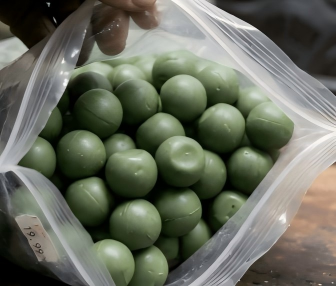
A field owner opens a case of paintballs that has been in storage for two months. The first few shots leave bright, solid marks. Then a shot hits a player and leaves a watery, faint mark. The next shot is bright again. The inconsistency is not the shell or the marker — it is the fill. The fill formula is starting to separate, and some balls are getting more pigment than others.
Paintball fill separation occurs when the components of the liquid fill begin to separate from each other. The PEG and water can separate into distinct layers, or the pigment can settle to the bottom of the fill. This instability creates inconsistent marking performance and is a sign of poor formulation or improper storage.
What It Is What fill separation means
Paintball fill is an emulsion: a mixture of PEG, water, dyes, and stabilizers that normally remain uniformly mixed. A stable fill stays mixed for the products full shelf life (6-12 months). An unstable fill begins to separate into its component parts over days or weeks.
Separation can take two forms:
- PEG-water separation. PEG and water have different densities. Without proper emulsifiers, they can separate into layers, with the lighter PEG rising and the heavier water settling. This creates balls with inconsistent fill consistency.
- Pigment settling. The dye or pigment particles can settle to the bottom of the fill over time. Balls filled from the top of the batch get less pigment (faint marks), while balls from the bottom get more (bright marks). In extreme cases, the first balls from a case can be nearly clear.
Causes What causes fill separation
Four factors contribute to fill separation:
- Poor formulation. The most common cause. A fill formula that lacks proper stabilizers, emulsifiers, or has an incorrect PEG-to-water ratio will separate faster. Quality manufacturers invest in formulation stability testing to ensure the fill remains uniform for the products shelf life.
- Temperature cycling. Repeated heating and cooling breaks down the emulsion structure. Paintballs stored in environments that fluctuate between hot and cold temperatures are more likely to experience fill separation. This is why stable storage conditions (60-75F) are important.
- Age. All paintball fill will eventually separate over time. The stabilizers and emulsifiers have a limited effective life. Even well-formulated fill will begin to separate after 8-12 months under ideal storage conditions.
- Freezing. If paintball fill freezes, the ice crystals physically break the emulsion structure. When the fill thaws, the components remain permanently separated. Frozen paintballs should be discarded, not used.
Detection How to spot separated fill
You do not need laboratory equipment to detect fill separation. Here are the signs to look for:
Impact How separation affects performance
Fill separation degrades paintball performance in several ways:
- Inconsistent marks. Some shots leave clear marks; others leave faint, watery marks. This creates confusion during gameplay and disputed eliminations.
- Reduced visibility. Separated fill that has lost its pigment concentration produces marks that are difficult to see on dark clothing and at distance.
- Clogged markers. In extreme cases, settled pigment can create a thick sludge that clogs the marker breech, bolt, or barrel. This is rare but can happen with severely separated fill.
Prevention How to prevent fill separation
Buyers can reduce the risk of fill separation through smart purchasing and proper storage:
- Choose quality manufacturers. A reputable manufacturer tests fill stability as part of their QC process. Ask your supplier about their fill stability testing protocol. A manufacturer who cannot describe their stability testing may not be performing it.
- Check manufacture dates. Fresher paint is less likely to have separated fill. Use FIFO rotation and avoid storing paint beyond 6-8 months from manufacture, even if the stated shelf life is longer.
- Store at stable temperatures. Keep paintballs at 60-75F. Avoid temperature fluctuations. Do not store paintballs in areas that experience daily temperature swings.
- Inspect on arrival. Cut open a sample ball from every new shipment. Check that the fill is uniformly colored and has not separated. This simple test takes 30 seconds and catches most fill stability issues.
- Rotate inventory. Use older stock first. Even well-formulated fill will eventually separate. Keep production dates visible on your storage racks and use FIFO strictly.
? Frequently Asked Questions
Can I shake paintballs to remix separated fill?
Shaking may temporarily remix the fill, but the separation will return quickly because the emulsion structure has already broken down. The stabilizers and emulsifiers that keep the fill mixed are no longer effective once separation has started. Affected paintballs should be used as soon as possible or returned to the supplier.
How quickly can fill separation happen?
Poorly formulated fill can start separating within 2-4 weeks of production. Well-formulated fill remains stable for 6-12 months under proper storage. Temperature extremes accelerate separation significantly — paint stored at 90F+ can show separation in days.
Do different fill colors separate at different rates?
Some colors are more prone to separation than others. Heavy pigments used in darker colors can settle faster than lighter dyes. Bright colors like yellow and pink use lighter, more stable dye molecules. If you are ordering custom dark colors, ask your supplier about the fill stability of that specific color formulation.
Is fill separation covered under quality guarantees?
It should be, if the separation occurs within the expected shelf life under proper storage conditions. Include fill stability language in your quality agreement. Specify that the fill must remain uniformly mixed for a minimum of 6 months from the date of manufacture under standard storage conditions (60-75F, below 60% humidity). Document your storage conditions to support any claims.
+ The short version
Paintball fill separation occurs when the PEG, water, and pigment in the fill begin to separate, causing inconsistent marks and reduced visibility. It is caused by poor formulation, temperature cycling, age, or freezing. Quality manufacturers use stabilizers and emulsifiers to prevent separation for the products full shelf life.
Buyers can detect separation by shaking paintballs near their ear (listening for a loose internal layer), cutting balls open (checking for uniform color), or firing test shots onto white paper (comparing mark intensity). Prevent separation by buying from quality manufacturers, checking manufacture dates, storing at stable temperatures, and inspecting shipments on arrival.
Concerned about fill stability in your paintballs? Contact CS Paintballs for fill stability data and quality guarantees on all formulations.