
Why Do Some Paintballs Leave Clearer Marks Than Others? Fill Visibility Explained
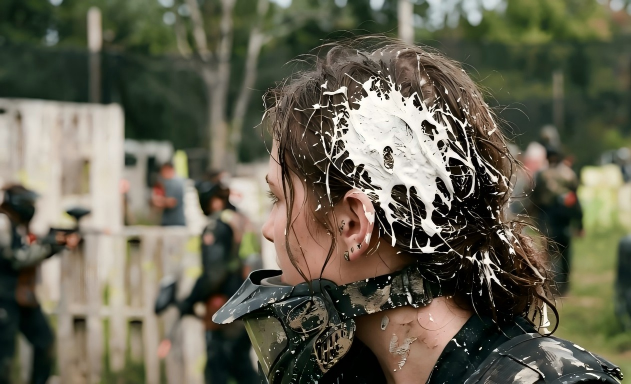
Two players are hit in the same match. The first player has a bright yellow mark the size of a fist on their chest — clearly visible to the referee from 50 feet away. The second player has a faint orange-pink smear that the referee has to walk over to confirm. Both were solid hits, but only one mark decided the elimination clearly.
The difference is not the marker, the velocity, or the shell. It is the fill formulation. Paintball fill visibility is determined by four factors: opacity, viscosity, color, and surface adhesion. Understanding these factors helps you choose the right paint for your game and explains why premium paint sells for a premium price.
Factor 1 Fill opacity: pigment concentration
Fill opacity is determined by how much pigment or dye is suspended in the PEG-water solution. Higher pigment concentration creates a more opaque mark that blocks light and appears bright against any background. Lower pigment concentration creates a translucent mark that lets the target fabric color show through.
Standard fill uses a baseline pigment concentration designed for adequate visibility on most surfaces. Premium fill uses 20-40% more pigment for significantly better opacity. Custom color fill can achieve any level of opacity depending on the pigment loading specified by the buyer.
The tradeoff: higher pigment loading increases fill density, which makes the ball slightly heavier. A premium fill ball may weigh 0.2-0.5 grams more than a standard fill ball, which affects trajectory at longer ranges.
Factor 2 Fill viscosity: thickness matters
Fill viscosity is controlled by the ratio of PEG to water. Higher PEG concentration produces thicker, more gel-like fill. Thicker fill creates more concentrated marks because the fill does not spread as thinly on the target surface. It stays in place rather than running or dripping.
Standard fill (40-60% PEG): Adequate mark visibility. Fill spreads and dries relatively quickly. May appear translucent on dark surfaces.
Thick fill (60-70% PEG): Significantly better mark clarity. Fill stays concentrated, creates a more opaque mark, and dries more slowly, keeping the mark visible longer. Thick fill is the preferred choice for tournament play where mark clarity affects referee decisions.
The tradeoff: thicker fill makes the ball heavier and can slightly affect flight trajectory. Players often compensate by increasing velocity by 5-10 fps.
Factor 3 Fill color and contrast
Fill color determines how visible the mark is against different backgrounds. The human eye perceives some colors as brighter and more contrasting than others.
Yellow is the most visible fill color on most surfaces. It has high contrast against dark colors (black, navy, dark green) and stands out against most natural backgrounds (grass, dirt, concrete). This is why tournament paint is traditionally bright yellow.
Pink is the second most visible color, especially against green foliage and grass. It also contrasts well with dark clothing.
Orange provides good visibility on most surfaces but is less commonly used than yellow and pink.
Custom colors. Bright custom colors (neon pink, lime green, bright blue) can achieve comparable visibility to standard colors when formulated with premium pigments. Dark custom colors (purple, dark blue, dark green) are inherently less visible because they do not contrast as strongly with dark clothing.
Factor 4 Surface adhesion and material interaction
Different target materials affect how the fill mark appears. A fill that creates a bright mark on cotton may produce a faint, beaded mark on nylon or polyester performance fabrics.
Cotton and natural fibers. Paintball fill absorbs into cotton fabric, creating a clear, lasting mark. Most paintball fill formulations are optimized for cotton, which is the most common fabric for paintball jerseys and clothing.
Nylon and polyester (performance fabrics). These synthetic fabrics resist moisture absorption. Fill tends to sit on the surface rather than soaking in, which can create a less defined mark. Higher viscosity fill (thick fill) adheres better to synthetic fabrics because the thicker gel does not bead up or run off.
Hard surfaces (bunkers, plastic, metal). Fill on hard surfaces can run or drip before drying. Thicker fill stays in place better on vertical hard surfaces. Fill color is more visible on lighter-colored surfaces.
Comparison Fill types compared
| Fill Type | Opacity | Viscosity | Mark Clarity | Best For |
|---|---|---|---|---|
| Standard fill | Medium | Thin (40-60% PEG) | Adequate | Recreational play, practice |
| Thick fill | Medium-High | Thick (60-70% PEG) | Excellent | Tournament play, events |
| Premium pigment | High | Standard | Very good | Premium field-grade paint |
| Custom bright color | High (formulated) | Adjustable | Excellent | Branded paint, events |
| Custom dark color | Medium | Standard | Lower | Specialty applications |
Choosing Choosing the right fill for your needs
When selecting paintballs based on mark visibility, consider these factors:
- For tournament play: Choose thick fill in bright yellow or pink. The combination of high viscosity and high-contrast color provides the clearest, most indisputable marks.
- For field owner / private label: Custom bright colors with premium opacity give your branded paint a distinctive look and excellent mark clarity. Neon pink, bright orange, and lime green are popular choices.
- For recreational play: Standard fill in yellow or pink provides adequate visibility at a lower cost. Thick fill is not necessary for casual play.
- For dark-colored rental jerseys: Bright yellow or pink fill is essential for visibility. Dark fill colors will be nearly invisible on dark fabric.
? Frequently Asked Questions
Does fill visibility affect referee decisions in tournaments?
Absolutely. Tournament referees must see marks from a distance to make quick elimination calls. Bright, opaque fill that creates clear marks on any surface makes the referees job easier and reduces disputed calls. This is why tournament paint uses higher pigment loading and thicker fill than recreational paint.
Can I improve mark visibility by increasing my marker velocity?
Increasing velocity within legal limits (up to 300 fps) can improve mark size because the fill is expelled with more force, creating a larger splatter pattern. However, the effect is modest compared to changing fill formulation. A 10 fps increase creates approximately 10-15% more mark area, while switching from standard to thick fill can double mark clarity.
Does the weather affect paintball mark visibility?
Yes. Rain can wash away or dilute marks, especially with standard viscosity fill. Thick fill is more resistant to rain because it adheres better to surfaces. Cold weather slows the drying time of standard fill, keeping marks visible longer but also making them more prone to smearing.
Can I get custom color fill with the same visibility as standard yellow?
Yes, if you choose bright colors and specify premium pigment loading. Neon pink, bright orange, and lime green can achieve comparable visibility to yellow. Darker custom colors will always have lower visibility because they do not contrast as strongly with dark surfaces. Request a color match sample and test visibility on your specific target surfaces before committing to a full production run.
+ The short version
Paintball mark clarity is determined by four fill factors: opacity (pigment concentration), viscosity (PEG-to-water ratio), color (contrast with target surface), and surface adhesion (how the fill interacts with different fabrics).
For the clearest marks, choose thick fill (60-70% PEG) in bright yellow, pink, or custom bright colors. Premium pigment loading adds 20-40% more opacity for better mark clarity. For field owners and private label buyers, custom bright colors with optimized viscosity create branded paint that performs visibly better than standard fill.
Looking for paintballs with superior mark visibility? Contact CS Paintballs for thick fill and custom color options with premium opacity.