
Paintball Pre-Shipment Inspection Checklist for Importers
What Importers Should Confirm Before Shipment Approval
A useful paintball pre-shipment inspection should confirm five things before the buyer approves loading: the packed goods match the purchase order, the cases and bags can be identified by batch, the cartons and pallets are ready for normal export handling, the import document pack is prepared, and any sample-based quality checks are recorded clearly. It should reduce order risk, not pretend to guarantee perfect quality, customs clearance, or shipping performance.
For paintball importers and distributors, the commercial problem is timing. Once an order has left the supplier, correcting label errors, carton count differences, missing documents, private-label artwork mistakes, or unclear batch records becomes slower and more expensive. A structured inspection gives the buyer evidence before final balance payment, shipment booking, or broker preparation.
This checklist is written for B2B import decisions. It is not a player guide, legal advice, or a promise that inspection eliminates breakage, leakage, storage, or transport risk.

Start With The Purchase Order And Packing List
The first inspection question is simple: does the packed shipment match what the importer ordered? Before looking at random cartons or sample bags, the inspector should compare the purchase order, proforma invoice, packing list, and any approved private-label artwork.
Buyers should confirm the product name and grade, quantity by case, bag, pallet, and SKU, buyer-approved artwork version, destination-market label requirements, and any approved sample reference. If the buyer approved a specific bag layout, carton mark, or case label, the inspection record should show that exact version, not a similar design.
For importers, this is not paperwork for its own sake. A mismatch between carton labels, packing lists, and warehouse receiving records can create downstream disputes with distributors, retailers, fields, or private-label customers.
[INTERNAL LINK: private-label paintball packaging approval workflow]
Check Batch And Lot Identification
Paintball importers need traceability because commercial complaints often arrive after distribution has started. If a customer reports leaking bags, damaged cartons, unexpected fill appearance, or mixed labels, the distributor needs to know which batch, carton group, or shipment is affected.
Importers should ask whether the supplier uses batch or lot identification on cases, bags, or cartons. When those identifiers are used, request photos and connect them to the packing list and shipment quantity. If a production date, batch reference, or internal lot code appears on the goods, record it exactly. Do not convert supplier batch codes into marketing claims unless the meaning of those codes has been confirmed in writing.
Good traceability is practical: it helps importers isolate a claim, compare receiving photos with supplier photos, and discuss corrective action without arguing from memory.
[INTERNAL LINK: paintball batch consistency for distributors]
Inspect Bags, Cases, Cartons, And Pallets
The physical inspection should focus on the packaging layers that protect the order and help the receiving team identify it. For paintballs, importers should request clear photos of sealed bags, open-carton views, case labels, full carton labels, pallet condition before wrapping, and pallet condition after wrapping.
Look for visible leaks, crushed cartons, moisture marks, torn outer packaging, unreadable labels, mixed carton marks, or inconsistent case counts. These checks do not prove a shipment will arrive without damage, but they help the buyer decide whether the order is ready to leave the supplier.
When container or truck loading photos are part of the buyer-supplier agreement, they should show the order-specific goods, not generic loading images. AI-created or stock images are never inspection evidence.
[INTERNAL LINK: paintball pallet and container loading guide]

Use Sample-Based Checks Without Overclaiming
Sample-based inspection can make a pre-shipment review more consistent, especially when the buyer and supplier agree on defect categories before inspection. ISO 2859-1:2026 provides current context for AQL-indexed lot-by-lot sampling plans [SOURCE: ISO 2859-1:2026]. That reference can support the idea of structured sampling, but it should not be used to claim that a full paintball shipment is defect-free.
Before inspection, buyers and suppliers should define what counts as a critical, major, or minor defect. For a paintball order, examples may include wrong artwork, unreadable labels, visible leakage, carton damage, incorrect quantity, or document mismatch. The final record should show sample size, criteria used, defects found, corrective actions requested, and the buyer’s decision.
Do not state a specific AQL level, defect allowance, breakage rate, or inspection pass rate unless it is confirmed for the order and approved by the buyer and supplier.
[INTERNAL LINK: paintball AQL inspection guide]
Practical Pre-Shipment Inspection Checklist
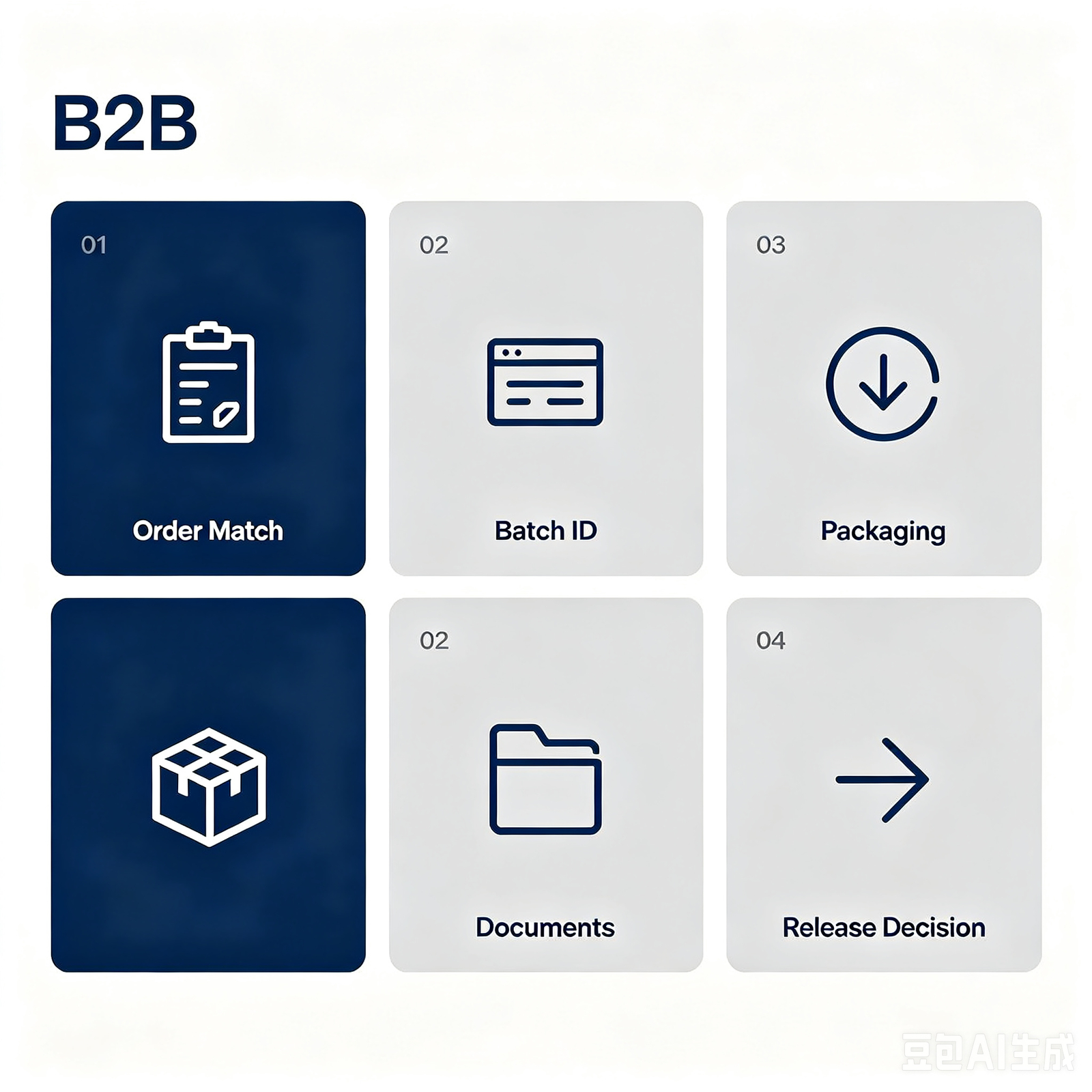
| Inspection area | What to check | Evidence to request | Buyer decision |
|---|---|---|---|
| Order match | Product, quantity, SKU, artwork, and case count | PO, packing list, carton photos | Approve or hold for correction |
| Batch identity | Batch or lot code on cases, bags, or cartons, where used | Close-up label photos and shipment summary | Record for traceability |
| Packaging condition | Leaks, crushed cartons, moisture marks, torn wrap, unreadable labels | Open-carton, sealed-bag, pallet photos | Accept, rework, replace cartons, or re-inspect |
| Sample checks | Buyer-approved criteria and defect definitions | Inspection sheet, photos, defect notes | Approve, reject, or request corrective action |
| Import documents | Invoice, packing list, origin, supplier details, SDS where relevant | Document pack for broker and warehouse review | Release only when core data is ready |
Confirm The Import Document Pack Before Loading
For U.S. vessel cargo, Importer Security Filing rules make supplier and shipment data important before loading. The eCFR page for 19 CFR Part 149 lists data elements such as seller, buyer, importer number, consignee, manufacturer or supplier, ship-to party, country of origin, HTSUS number, container stuffing location, and consolidator [SOURCE: eCFR 19 CFR Part 149]. This article does not provide tariff advice, but it does show why importers should check data readiness before goods leave the supplier.
Importers should ask which documents apply to the shipment and destination market. The review may include a commercial invoice, packing list, product description, country of origin, supplier name and address, HS or HTS information for broker review, SDS or safety document where relevant, and private-label artwork approvals.
For warehouse or downstream customer questions, safety documentation may also matter. OSHA’s Hazard Communication standard provides U.S. context for labels, safety data sheets, and transmission of hazard information where applicable [SOURCE: OSHA 1910.1200]. Do not claim a paintball product is hazardous, non-hazardous, compliant, or exempt without product-specific documentation.
[INTERNAL LINK: paintball import document checklist]
Supplier Questions To Ask Before Shipment
- Which batch or lot does this shipment come from?
- Can each case or bag be traced to that batch?
- Which inspection criteria were used?
- Which photos show the exact goods for this order?
- Were any cartons, bags, labels, or pallets corrected before shipment?
- Are the invoice, packing list, product description, origin, and supplier details ready for the importer or broker?
- Is the SDS or safety document current for this shipment where relevant?
- Who approves shipment release on the buyer side?
Shipment Release: Approve, Hold, Correct, Or Escalate
A useful inspection should end with a decision. Approve shipment only when the core order details, packaging evidence, batch identity, and document pack are aligned. Hold shipment if there are unresolved quantity, label, artwork, carton, pallet, or documentation issues. Request correction photos after rework. Escalate if the supplier cannot connect the inspection evidence to the actual order.
European importers should also consider traceability and product-information expectations under the wider EU product-safety context [SOURCE: European Commission product safety]. The article should not claim legal compliance unless the specific product, packaging, documents, importer role, and destination market have been reviewed.
FAQs
Is pre-shipment inspection the same as quality certification?
No. A pre-shipment inspection is an order-specific review before goods leave the supplier. It can record evidence and support a release decision, but it is not the same as certification, compliance approval, or a guarantee of shipment performance.
Should importers require AQL inspection for every paintball order?
Not automatically. AQL-style sampling can be useful when buyer and supplier agree on criteria, sample size, and defect categories. The buyer should avoid copying a generic AQL level without matching it to the order risk and commercial agreement.
What photos are most useful before shipment?
Order-specific photos are most useful: open cartons, sealed bags, case labels, batch codes where used, full carton labels, pallet condition before and after wrapping, and loading photos when agreed. Generic factory photos do not prove the condition of the current order.
Can inspection prevent paintball breakage during transport?
No inspection can guarantee transport outcomes. It can help identify visible problems before shipment and create a record of packaging, labels, and pallet condition before the goods leave the supplier.
What should be checked before paying the final balance?
Importers should review order match, batch identity, packaging condition, sample-check records, correction photos if needed, and document readiness for broker, warehouse, and customer-service use.
Practical Next Step
Contact C-STAR Paintballs to discuss your destination market, expected order volume, packaging format, and sample requirements.
Sources
- [SOURCE: ISO 2859-1:2026, International Organization for Standardization, accessed 2026-07-07]
- [SOURCE: 19 CFR Part 149 – Importer Security Filing, eCFR, accessed 2026-07-07]
- [SOURCE: 1910.1200 – Hazard Communication, OSHA, accessed 2026-07-07]
- [SOURCE: Product safety, European Commission, accessed 2026-07-07]