
Paintball Thick Fill: Viscosity, Performance, and Applications
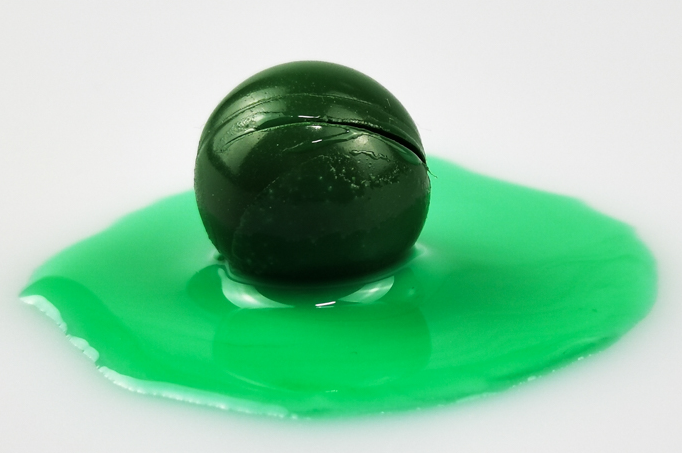
The fill inside a paintball is not just colored liquid. Its viscosity — how thick or thin it is — affects how the paint behaves when it hits a target, how visible the mark is, and even how the ball flies through the air. While most players focus on shell quality and diameter tolerance, the fill is what creates the mark that determines whether a hit is confirmed or disputed.
Paintball thick fill refers to paintballs with higher fill viscosity than standard. The fill is more gel-like, creating a thicker, more adherent mark on targets. This guide explains the science, the performance differences, and when thick fill makes sense for your game.
Basics What is thick fill in paintballs?
Paintball fill is a water-based solution containing three main components: water (40-60%), polyethylene glycol or PEG (20-40%), and coloring agents and additives (5-10%). The viscosity of the fill is controlled primarily by the ratio of water to PEG.
Standard fill has a water-to-PEG ratio of approximately 60:40. Thick fill shifts this to approximately 40:60, with a higher concentration of PEG. The result is a more viscous, gel-like fill that adheres better to surfaces and creates a thicker, more visible mark.
Science The science behind fill viscosity
Fill viscosity is measured in centipoise (cP), a standard unit for dynamic viscosity. Water at room temperature has a viscosity of approximately 1 cP. Standard paintball fill typically ranges from 50-100 cP. Thick fill paintballs range from 150-300 cP.
The PEG concentration is the primary viscosity control. PEG is a polymer that dissolves in water and increases the solution’s resistance to flow. Higher molecular weight PEG creates higher viscosity at the same concentration, allowing manufacturers to fine-tune the fill’s thickness.
Comparison How thick fill compares to standard fill
The differences between thick fill and standard fill are subtle but measurable. Here is how they compare across key dimensions.
- Weight. Thick fill adds 0.5-1.0 grams per ball. A standard paintball weighs approximately 3.0-3.2 grams. Thick fill weighs 3.5-4.2 grams. The weight difference affects trajectory at longer ranges.
- Mark visibility. Thick fill creates a more concentrated, opaque mark. Standard fill spreads more and can appear translucent on dark surfaces. Thick fill is preferred for tournament play where unambiguous marks are essential.
- Drying time. Thick fill dries more slowly because the higher PEG content retains moisture. This can be an advantage (marks stay visible longer) or a disadvantage (marks smear more easily if touched).
- Cleanability. Thick fill is slightly harder to wash off clothing because it adheres more strongly. Standard fill washes out more easily with water.
- Trajectory. The heavier fill causes the ball to drop slightly more over distance. At 50 feet, the difference is approximately 1-2 inches. At 100 feet, it can be 4-6 inches. Players often compensate by increasing velocity by 5-10 fps.
Users Who uses thick fill and why
Thick fill paintballs serve specific markets within the paintball industry.
- Tournament players. The primary market. In competitive play, the ability to see a clear, unambiguous mark on an opponent’s hit matters. Tournament-grade thick fill paintballs are formulated to create the most visible marks possible.
- Event organizers and referees. For referees, clear marks reduce disputes. Events that use thick fill paintballs report fewer contested eliminations because the marks are more definitive.
- Marketing and media. Paintball videos, photo shoots, and promotional events use thick fill because it photographs better. The thicker mark appears more dramatic on camera and contrasts better with clothing and gear.
- Private label brands. Some branded paintball lines offer thick fill as a differentiator. A field can position its branded paint as “premium thick fill” and charge a higher price compared to standard fill competitors.
Manufacturing Manufacturing thick fill paintballs
Producing thick fill paintballs requires adjustments to the standard manufacturing process. The fill must be mixed to a precise viscosity and maintained consistently throughout the production run.
- Fill mixing. The higher PEG concentration requires longer mixing times and more precise temperature control. PEG thickens as it cools, so the fill must be filled at a consistent temperature to maintain uniform viscosity.
- Fill nozzle calibration. Thicker fill flows more slowly through filling nozzles. Nozzle pressure and timing must be adjusted to deliver the correct fill volume per ball.
- Sealing. Thick fill can affect the sealing process because the thicker liquid may not flow as readily into the seal area. Manufacturers adjust the sealing temperature and pressure to compensate.
- QC testing. Fill viscosity should be tested at the start of production, mid-run, and at the end. A viscometer or flow cup test verifies that the viscosity stays within the target range throughout the run.
Pros and Cons Thick fill at a glance
? Frequently Asked Questions
Can I mix thick fill and standard fill paintballs in the same game?
Yes, but the trajectory difference will be noticeable at longer ranges. If you are switching between standard and thick fill mid-game, chrono the new paint and adjust your velocity if needed. The difference is most noticeable beyond 80 feet.
Does thick fill affect barrel cleaning?
Slightly. Thick fill leaves more residue in the barrel when a ball breaks because the fill is more adhesive. A squeegee with a damp patch cleans thick fill residue effectively. Standard cleaning tools work fine — you may just need an extra pass.
Is thick fill available in all colors?
Most manufacturers offer thick fill in standard colors (yellow, pink, orange) and some offer it in custom colors. The colorant concentration may need adjustment for thick fill because the base fill is more opaque than standard fill. Darker colors (purple, blue) are easier to achieve in thick fill than light pastels.
Does thick fill have a shorter shelf life?
No. The shelf life of thick fill paintballs is the same as standard fill — 6-12 months under proper storage. The higher PEG content may actually improve long-term stability because PEG has antimicrobial properties that help preserve the fill. The shell is the limiting factor for shelf life, not the fill.
+ The short version
Thick fill paintballs offer better marking performance at the cost of slightly higher weight and price. The thicker, more gel-like fill creates clear, unambiguous marks that are preferred in tournament play and media applications. The trajectory difference is manageable with minor velocity adjustment.
For most recreational players, standard fill is perfectly adequate. For tournament players, event organizers, and anyone who needs definitive marks, thick fill is worth the premium. The best approach is to try both and decide based on your specific needs.
Interested in thick fill paintballs for your field or event? Contact CS Paintballs for pricing and availability.