
Private Label · Artwork Handoff · Packaging Control
Private-Label Paintball Artwork Handoff Checklist
A buyer-focused checklist for turning packaging design files into clear supplier instructions before printing or packing begins.
July 10, 2026 · C-STAR Paintballs · 7 min read
A private-label paintball artwork handoff should do more than send a design file. It should tell the supplier which files are approved, which packaging components they apply to, which marks must appear on cartons, and who can approve revisions before production. The goal is to prevent avoidable confusion between design intent, print proof, carton identification, and purchase order requirements.
Brand owners should treat artwork as a controlled purchasing input. A beautiful mockup can still fail commercially if the supplier receives the wrong file version, unclear barcode instructions, missing carton marks, or an unapproved claim. The handoff should make the supplier’s next step obvious: review, question, proof, approve, then use the correct revision.
Buyer objective: create one controlled artwork package that links files, approvals, packaging components, carton marks, and revision decisions.
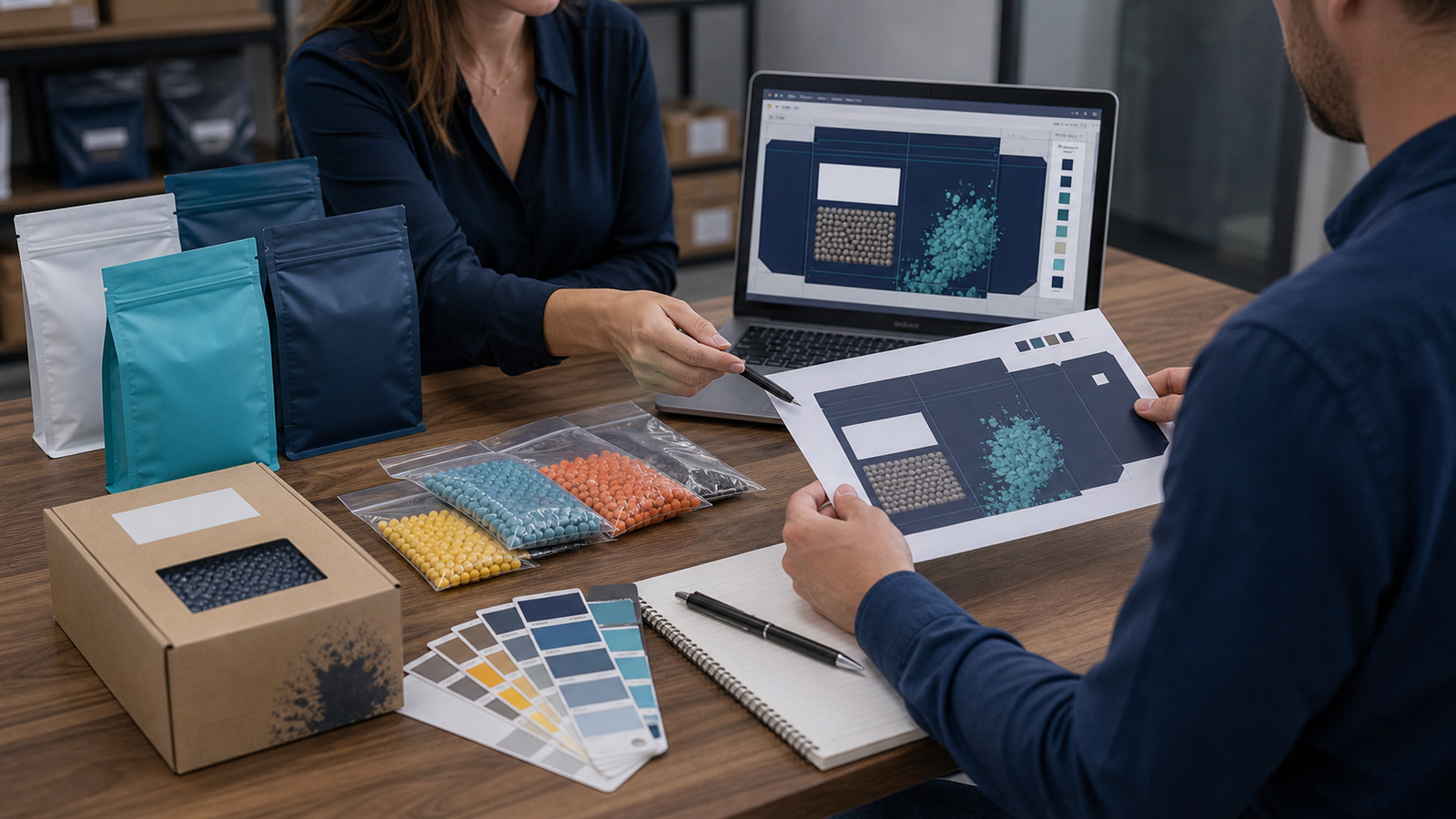
Define What the Artwork Package Includes
The buyer should list each packaging component before sending files. For private-label paintballs, this may include bag artwork, carton artwork, insert cards, barcode placement notes, shipping marks, pallet labels, or other buyer-specific packaging references. Avoid assuming the supplier knows which file belongs to which physical package.
- Approved bag or retail packaging artwork
- Outer carton mark or carton-label file
- Product name and SKU reference used by the buyer
- Barcode or identifier instructions when applicable
- Country-of-origin or market-labeling notes for manual review
- Color reference or print proof expectations
- Revision number and approval date
- Buyer contact authorized to approve changes
This checklist does not replace legal or compliance review. It makes sure packaging instructions are visible before the supplier prepares proofs or production materials.
Control Claims and Market Wording
Private-label brands should be careful with packaging claims. Avoid adding claims about origin, performance, safety, certifications, environmental attributes, or technical measurements unless the brand has support and market-specific approval. If a claim cannot be supported, remove it or move it into an internal question for review.
For U.S. origin claims, FTC business guidance explains that Made in USA claims require careful substantiation. Private-label importers should therefore confirm any origin-related language before artwork approval. For other markets, buyers should ask local advisors or import partners what wording is acceptable.
Artwork should not become a place for unverified promises. When in doubt, ask: who can prove this statement, and should it appear on packaging at all?
Create a Version-Control Record
Artwork mistakes often happen when old and new files circulate at the same time. The buyer should maintain a simple revision record showing file name, date, change description, approved person, and affected packaging component. The supplier should confirm which revision will be used for each order.
[INTERNAL LINK: Private-Label Paintball Supplier Change Control Checklist]
| Handoff field | Buyer instruction | Supplier confirmation needed |
|---|---|---|
| File name | Use a clear name with product and revision | Confirm exact file received |
| Component | Bag, carton, insert, label, or pallet mark | Confirm where it will be applied |
| Approval status | Approved, pending proof, or rejected | Confirm no unapproved file will be used |
| Change summary | Describe what changed from the prior file | Confirm old stock or old artwork handling |
| Order link | Connect artwork to PO or sample approval | Confirm affected order or batch |
Check Barcode and Carton Mark Questions Early
If the brand uses barcodes, marketplace identifiers, or warehouse labels, artwork handoff should involve the operations team before files are approved. The buyer should confirm what must be readable on retail packaging, what must appear on outer cartons, and whether receiving teams need product names, SKU codes, batch identifiers, or destination references.
Do not invent barcode numbers or placeholder claims in final artwork. If a barcode, SKU, or destination mark is not final, label it internally as pending and do not treat the artwork as approved for printing.
[INTERNAL LINK: Paintball Batch Traceability Guide for Importers]
Ask for a Proof Before Production Use
A proof gives the buyer a final chance to compare file intent with supplier interpretation. The proof should show the packaging component, artwork version, important marks, and any placement details that affect retail presentation or warehouse handling. The buyer should record approval or required changes in writing.
Do not approve a proof with vague wording such as “looks fine” if important details remain pending. Use specific approval language: which file, which revision, which component, and whether approval applies to one order or future repeat orders.
Supplier Questions for Artwork Handoff
- Can you confirm the exact artwork files and revisions received?
- Which packaging components will each file be used for?
- What proof format will you provide before production use?
- How will old artwork versions be prevented from being used?
- Who should receive supplier questions about unclear marks or claims?
- Can carton marks, labels, and packing documents use the same product references?
- How will approved artwork be linked to the purchase order?
Frequently Asked Questions
Can a brand send only a mockup image?
A mockup may help visual communication, but the supplier also needs controlled production files, component instructions, and approval status.
Should artwork include certification logos?
Only if the brand has verified permission and evidence. Otherwise, avoid certification logos or move them to an internal confirmation step.
Who should approve final artwork?
The brand should name an authorized approver. Procurement, design, warehouse, and compliance input may be needed depending on the packaging.
What if the supplier suggests a small layout change?
Treat it as a change request. Ask what changed, why, and whether the buyer must approve a new proof.
Make Artwork Handoff a Purchasing Control
Artwork handoff is a commercial control, not just a design task. When files, claims, marks, and approvals are clear, private-label brands reduce avoidable packaging confusion and improve repeat-order consistency.
Contact C-STAR Paintballs to discuss your destination market, expected order volume, packaging format, and sample requirements.